
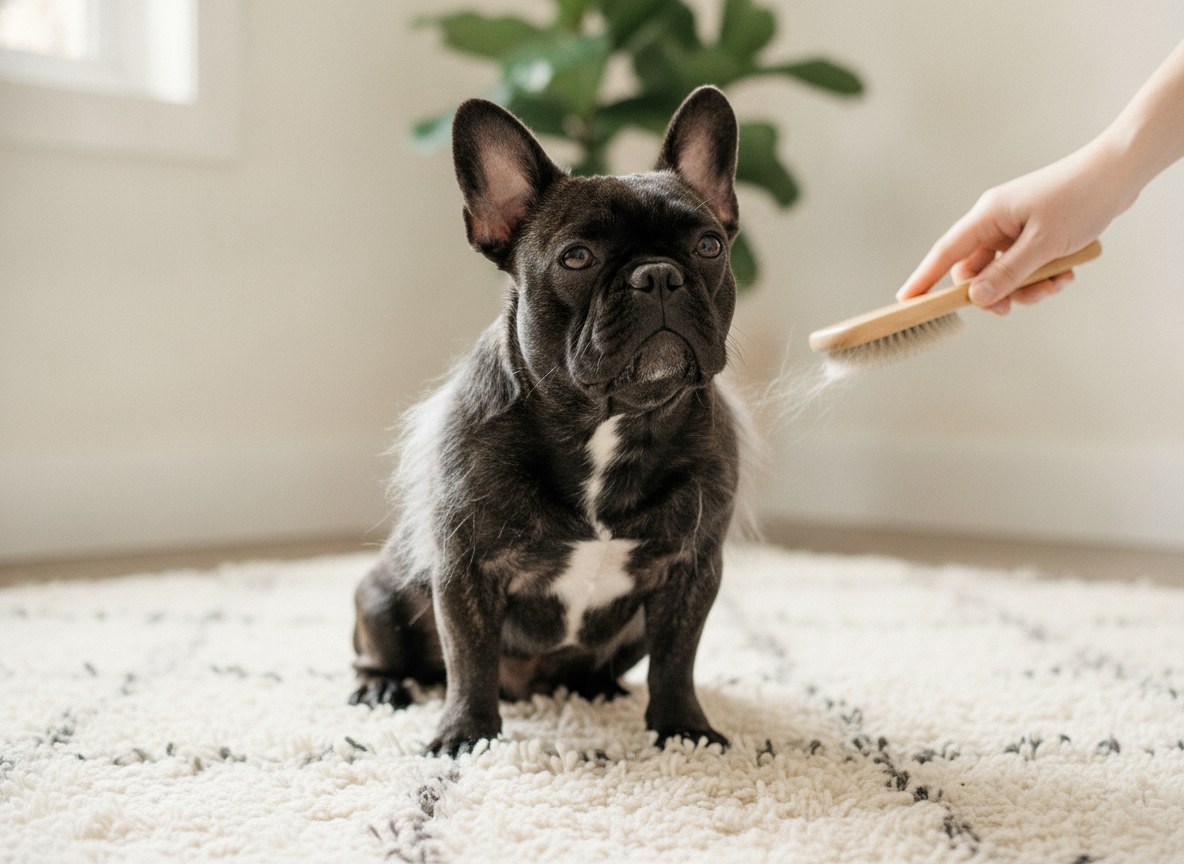

Fluffy Frenchies, the long-haired ones with the soft, slightly scruffy coats and the extra-floofy ears, have exploded in popularity, and the first question buyers ask is whether all that fur means a fur-covered house. Short answer: yes, they shed, and actually a bit more than their smooth-coated cousins. Here’s the honest rundown on the long-haired French Bulldog and its coat.
Key takeaways:
- Yes, fluffy French Bulldogs shed, and they tend to shed slightly more than smooth-coated Frenchies because of their longer hair.
- They’re a long-haired variant caused by a recessive gene (often called LH), not a separate breed, and they’re not hypoallergenic.
- Their longer coat needs more brushing to prevent tangles and to keep loose hair off your furniture.
Do fluffy French Bulldogs shed?
They do. A fluffy Frenchie is simply a French Bulldog carrying two copies of a recessive long-hair gene, so it’s the same dog with a longer coat, not a magically non-shedding version. Because that coat is longer, the shed hairs are more noticeable and there can be a bit more of them, plus a greater tendency to tangle. Breeders who specifically select for the lowest-shedding genetics still report that their fluffies shed. The coat is longer, but the shedding biology is the same as any smooth-coated Frenchie that sheds.
Are fluffy Frenchies hypoallergenic?
No. This is the big myth, and it’s worth being clear: no French Bulldog, fluffy or smooth, is hypoallergenic. Allergic reactions come from proteins in a dog’s dander, saliva, and urine, not just the length of the fur, and the breed’s coat sheds those allergens regardless of style. If anything, a longer coat can hold more dander. Anyone told a fluffy Frenchie is “allergy-safe” is being misled.
Grooming a fluffy French Bulldog
The longer coat means a bit more upkeep than a smooth Frenchie, though it’s still a low-maintenance dog overall. Brush several times a week to prevent matting (especially behind the ears, the armpits, and the rear) and to capture loose hair, a slicker or short-coat brush works well. Keep up the same fold, ear, and nail care every Frenchie needs, and don’t shave a fluffy down to “stop” shedding, the coat protects their skin. A quality, omega-rich diet supports a healthy coat from the inside.
One genuine caution: “rare” and “exotic” Frenchie types are sometimes bred more for looks and markup than health, so if you’re buying a fluffy, vet the breeder as carefully as you would for any Frenchie, exactly the due diligence in my guide to finding a responsible breeder.
This is one Frenchie parent’s experience, not veterinary advice.
FAQ: fluffy French Bulldog shedding
Do fluffy Frenchies shed more than regular Frenchies?
Slightly, yes. They have the same shedding biology, but their longer coat makes the shed hairs more visible and a little more prone to tangling. Both fluffy and smooth Frenchies shed year-round; neither is a non-shedding dog.
Are fluffy French Bulldogs hypoallergenic?
No. No French Bulldog is hypoallergenic. Allergens come from dander, saliva, and urine, not coat length, and a fluffy’s longer coat can even trap more dander. They’re not a safe choice for allergy sufferers.
Are fluffy Frenchies high maintenance?
More than smooth Frenchies, but still fairly low overall. The longer coat needs brushing several times a week to avoid mats and manage loose hair, on top of the usual fold, ear, and nail care every Frenchie requires.
What makes a French Bulldog fluffy?
A recessive long-hair gene (often called LH). A fluffy Frenchie inherits two copies of it, giving a longer, softer coat and floofier ears. It’s a coat variation, not a separate breed or a mix, though responsible testing and breeding still matter.
Should I shave my fluffy Frenchie to reduce shedding?
No. Shaving doesn’t stop shedding and removes the coat’s protection for their skin against sun and irritation. Stick to regular brushing and a good diet to manage the coat rather than shaving it down.
Are fluffy French Bulldogs worth more?
They’re often priced higher because they’re trendy and less common, but price reflects demand, not health or quality. Focus on health testing and a reputable breeder rather than paying a premium just for the fluffy coat.