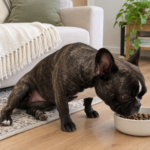

Most of the time, Nina smells completely fine. She’s not a muddy outdoor dog, she doesn’t roll in anything suspicious, and her short coat doesn’t hold odors the way long-haired breeds do. Then, without any obvious explanation, she doesn’t smell fine, and her folds are one of the first places I check. A full bath and a careful fold check solve different problems.
For Frenchies, bathing the coat and cleaning skin folds are separate routines. A bath does not replace checking the places where moisture or debris can collect.
Key takeaways
- Bath frequency depends on dirt, skin health and the shampoo—not a universal calendar.
- Check folds between baths and keep them clean and dry.
- Use a dog-appropriate product; persistent odor, redness or discomfort needs attention rather than repeated washing.
How often should you bathe a French Bulldog?
For Nina, a gap of about four to five weeks has usually suited her quiet indoor life and short walks, unless something specific happens. That is our routine, not a rule for every Frenchie. A dog who is comfortable and clean does not need a bath simply because a calendar reminder appeared.
VCA’s coat-care guidance bases bathing on factors including lifestyle and skin health. Dogs with particular skin conditions may need a prescribed shampoo schedule. Ask your vet if you are unsure, especially when itching or odor keeps returning.
The short coat does not make weekly bathing always wrong, and it does not make frequent washing automatically necessary. Product choice, rinsing and the reason for bathing all matter. Do not keep adding baths to cover an unexplained smell.
What changes the bathing schedule
Use the condition of your dog’s coat and skin to decide whether the routine needs changing.
Your Frenchie’s lifestyle
Mud, a toileting accident or a messy outing may call for a wash sooner than usual. If only the paws are dirty, cleaning that area may be enough. Nina’s mostly indoor routine is why we rarely need to shorten her usual interval; a different dog may need a different approach.
Skin conditions and allergies
A vet may prescribe more frequent baths, including weekly or more often, for a specific condition. Follow the recommended product, contact time and frequency. Do not replace that treatment with a general “Frenchies need fewer baths” rule.
Temperature and seasons
After wet or muddy outings, check the coat and folds rather than automatically adding another full bath. In dry weather, watch for irritation and discuss it if it persists. Keep bathing and drying comfortable; a hot room or heated dryer is not helpful for a dog who struggles with heat.
Skin folds are a completely separate routine
The folds on Nina’s face and around her tail need attention between full baths. Check them regularly and ask your vet which cleaning routine suits your dog. The depth of the folds, moisture and any previous skin trouble matter more than copying someone else’s schedule.
Use a soft cloth or a product your vet considers suitable for that location, then gently dry the area. Avoid getting cleaner in the eyes or nostrils. Do not scrub sore skin or keep experimenting with wipes when a fold looks inflamed.
Watch for:
- Redness or soreness along the fold
- A new or persistent unpleasant smell
- Repeated rubbing or scratching
- Crusts, discharge or broken skin
These signs deserve veterinary advice. They do not tell you whether bacteria, yeast or another problem is responsible, and more vigorous cleaning is not a substitute for treatment.
How to actually bathe a French Bulldog
The technique matters as much as the timing, because Frenchies have a specific combination of features that make bath time a little more complicated than it sounds. Brachycephalic muzzle, skin folds, upright open ears, and a tendency to overheat all require a bit of extra thought.
- Prepare a stable, comfortable space. Use a non-slip surface, have towels ready and keep the room comfortable. Test the water so it is gently lukewarm, not hot. See our heat-care guide for why overheating matters.
- Keep water away from ears and face. Direct a gentle flow onto the body. Do not pour water over the head or insert anything into the ear canals as part of a general bath routine.
- Wash the body gently. Apply a suitable dog shampoo as directed. Use your hands without harsh scrubbing; an optional soft rubber body brush should only be used if the skin is healthy and your dog is comfortable. Keep ordinary body shampoo away from the eyes, nose and facial folds.
- Rinse according to the label. Remove residue thoroughly from the washed coat. Medicated products may need a specified contact time before rinsing, so follow the veterinary instructions rather than guessing.
- Handle the face separately. Use a soft damp cloth where appropriate, keeping moisture out of the nose and eyes. Dry folds gently. Stop if your dog becomes distressed or has difficulty breathing.
What you put on their skin matters
Choose a shampoo formulated for dogs and suitable for your dog’s age and skin. “Hypoallergenic,” “natural” and “oatmeal” do not guarantee that a formula will suit every Frenchie. A reaction to one product is a reason to stop and ask for advice, not to layer on another scented product.
For diagnosed skin problems, use the product your vet recommends. Our allergy shampoo comparison can help you understand options, but it does not diagnose the cause of itching. For ordinary coat washing, see the French Bulldog shampoo guide.
Avoid substituting human shampoo or household cleaners. Read the directions, including whether a product needs dilution and where it can be used. Do not assume something intended for body fur is appropriate inside a facial fold.
Drying is where most owners rush, and it shows
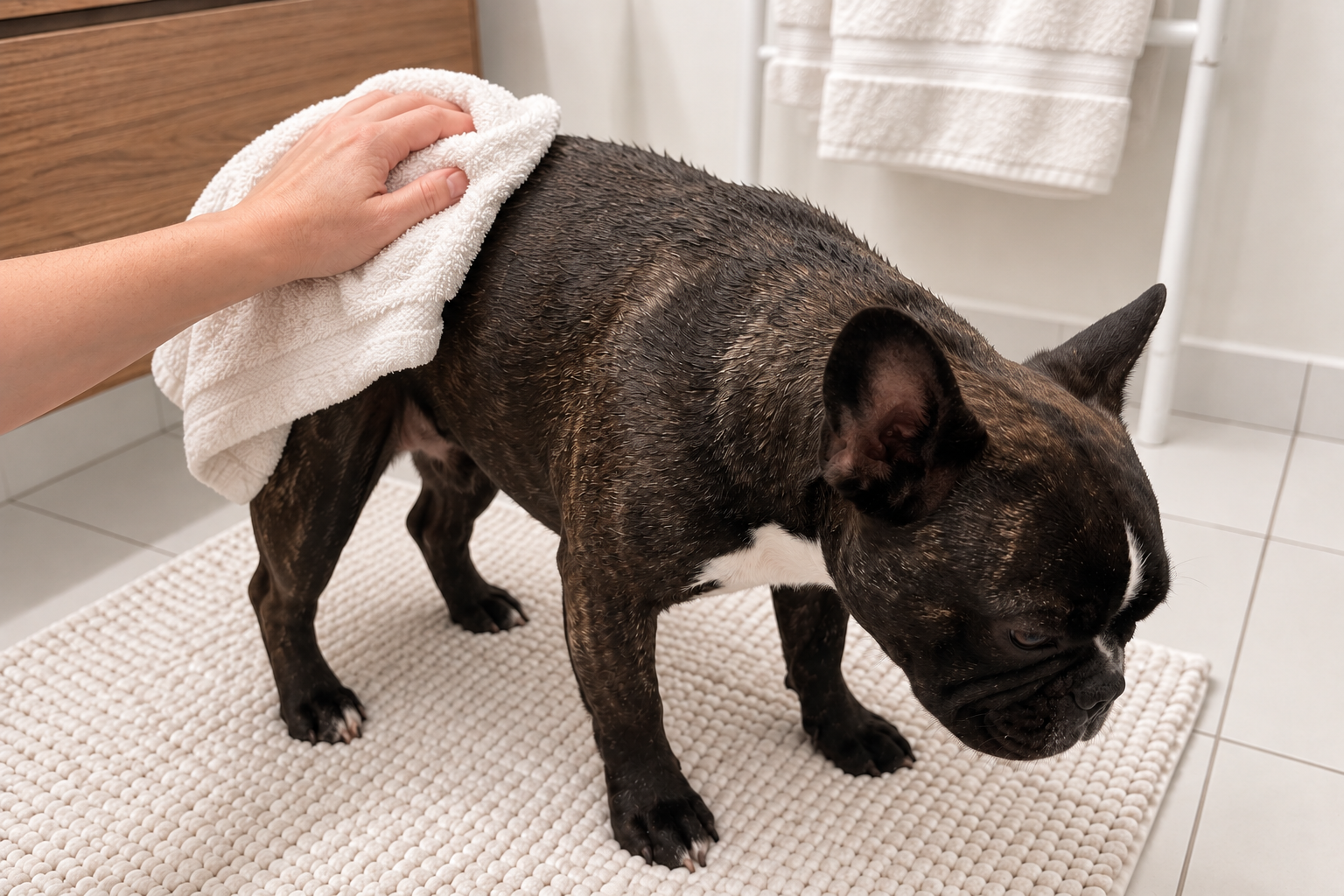
Pat the coat with a clean towel and gently dry folds and creases. Check the tail pocket if your dog has one. Avoid rubbing sore skin or leaving a wet towel wrapped around the dog.
A dryer is optional. If your dog tolerates one, use cool air at a comfortable distance, keep it moving and stop if the noise or airflow causes distress. Do not use hot air or leave a dog unattended with a dryer.
Once the coat is dry, gentle grooming can help remove loose hair if your dog enjoys it. Our French Bulldog brush guide compares softer options. Brushing is not required to repair the skin after a bath, and irritated skin should not be scrubbed.
Signs you’re bathing too often, or not enough
Dryness or itching after a bath
Note whether the problem started after a new product or change in frequency. Residue, irritation or an underlying skin problem can look similar. The timing is useful information for your vet, not proof that bathing frequency is the only cause.
Dirt or odor between baths
A visibly dirty coat may need cleaning, but persistent odor can come from folds, ears, the mouth or other problems. Do not assume another full bath will fix it. Check where the smell seems to originate and seek advice if it keeps returning.
A workable routine leaves your dog comfortable. The aim is healthy skin and a clean coat, not a strong shampoo fragrance or an exact number of weeks.
A quick note on bathing French Bulldog puppies
For a young puppy, check the shampoo’s minimum age and ask your vet about bathing if the puppy is very young, unwell or has a skin problem. Spot cleaning may be enough for a small mess. Do not use an adult dog’s medicated product without advice.
Keep the puppy warm and comfortable, use a non-slip surface and dry promptly. Introduce the space, towel and gentle handling gradually, with rewards. There is no need to force a frightening full bath just to meet a monthly target.
FAQs about bathing a French Bulldog
How often should I bathe my French Bulldog?
Base it on dirt, skin health and the product used. Nina’s usual four-to-five-week interval is personal experience, not a universal recommendation. Follow your vet’s schedule for a diagnosed condition and check folds between baths.
How often should I bathe my French Bulldog puppy?
Use an age-appropriate product when a bath is needed, with spot cleaning for small messes. Ask your vet for a very young puppy or one with skin problems. A fixed monthly schedule does not suit every puppy.
Can I bathe my Frenchie once a week?
Sometimes a vet-directed routine calls for weekly or more frequent bathing. Whether it suits your dog depends on the condition and product. Do not begin frequent baths just to mask recurring odor or itching.
Why does my Frenchie still smell after a bath?
The source may be a fold, an ear, the mouth or a skin problem rather than dirty body fur. Persistent odor, especially with redness or discomfort, needs assessment instead of repeated shampooing.
Do French Bulldogs need baths more often in summer?
Not automatically. Actual dirt, wet outings and skin health matter more than the season alone. Check and dry folds as needed, and avoid overheating during bathing or drying.
What happens if I don’t clean my Frenchie’s skin folds?
Moisture and debris can contribute to irritation and skin-fold problems. Check regularly, clean appropriately and dry gently. Redness, soreness, odor or discharge needs veterinary advice; no cleaning schedule guarantees prevention.
What shampoo should I use on a French Bulldog?
Choose a dog shampoo suited to age and skin health. Marketing terms such as hypoallergenic do not guarantee tolerance. Use medicated products under veterinary direction and follow the label carefully.
Can I use baby wipes on my Frenchie’s folds?
Do not assume a baby wipe is suitable for a dog’s facial folds. Ask your vet about an appropriate product or gentle cloth cleaning, keep it away from eyes and nostrils, and dry the area afterward.
My Frenchie hates baths. What can I do?
Offer a stable non-slip surface and introduce handling, the bathroom and water gradually with rewards. Keep the experience quiet and comfortable. If fear is strong or worsening, ask a qualified reward-based professional for help rather than forcing the dog through it.