
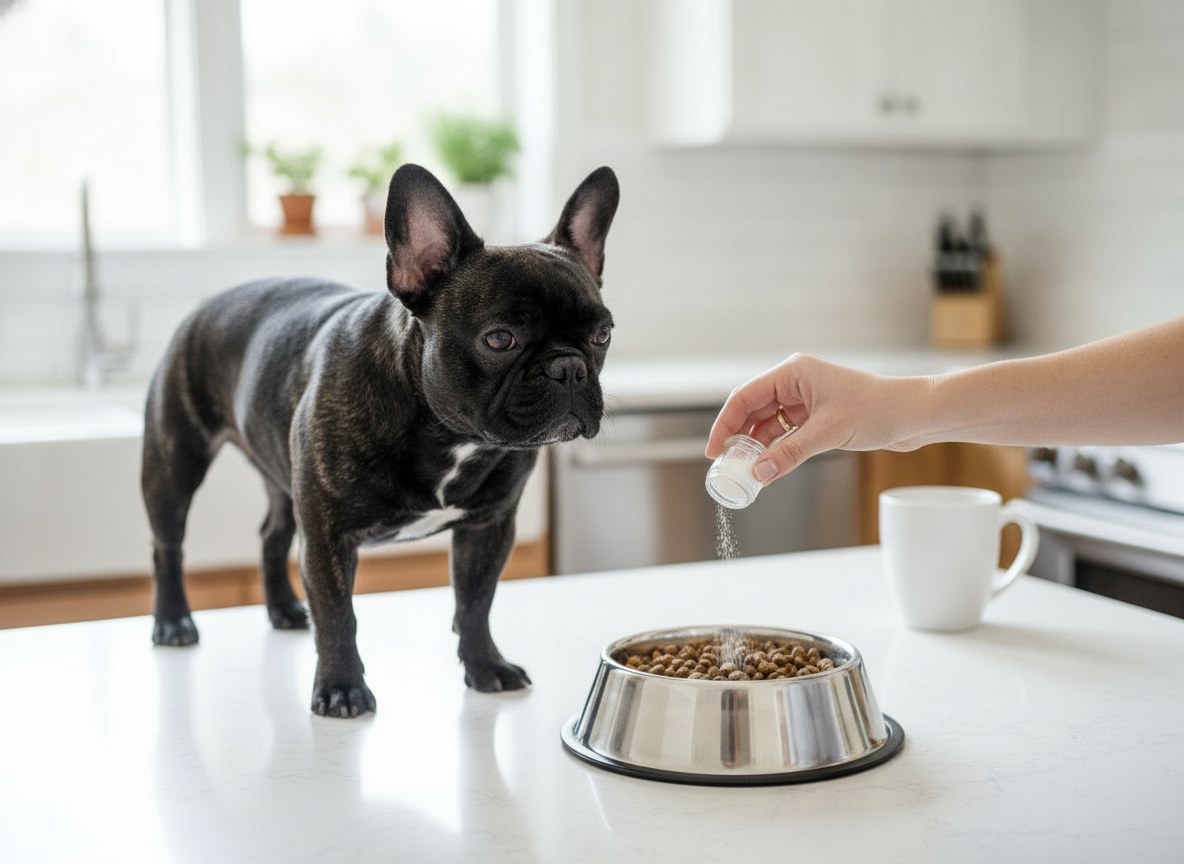

I came to probiotics the way most Frenchie owners do: reluctantly, after a bad week. Nina had been on antibiotics for an ear thing, her stomach went sideways, and my vet said the words “try a probiotic” the way she says most things, like it was obvious and I was a little slow. She wasn’t wrong. A good probiotic has since become one of the few supplements I actually keep restocked.
Our breed runs into gut trouble more than most, so this is worth getting right. Here’s how I think about picking one, and the specific products I’d trust for a French Bulldog.
Key takeaways:
- Probiotics help most during the predictable rough patches: after antibiotics, during a food switch, and through bouts of gas or loose stools.
- FortiFlora is the one most vets reach for first because it’s simple, single-strain, and it works. Multi-strain options exist if you want broader coverage.
- A probiotic supports the gut, but it won’t fix a food allergy or an environmental one. If the skin and ears are flaring, you’re treating the wrong end of the problem.
When a Frenchie actually needs a probiotic
You don’t need to dose a healthy dog forever. The clear wins are: bouncing back after a course of antibiotics (which wipe good bacteria along with bad), smoothing out a food transition, calming everyday gas and soft stools, and supporting a dog under stress, travel, boarding, a new puppy in the house. Some owners also use them as part of managing the gut-skin connection, since a balanced gut can take a little pressure off an allergy-prone Frenchie.
How I chose
Strains that are actually named, with a guaranteed live count (CFUs) on the label, not vague “probiotic blend” language. A form your dog will take, because the best probiotic is the one that gets eaten. Powders you sprinkle on food tend to win with picky Frenchies over chews they spit out. Clean ingredients, no pile of sugar and fillers. Vet credibility, and real US availability so reordering is easy.
Quick scan: the short version
- Best overall (vet favorite): Purina Pro Plan FortiFlora
- Best clean-label powder: Native Pet Probiotic
- Best chew: Zesty Paws Probiotic Bites
- Best multi-strain coverage: Native Pet’s synbiotic blend
- Best for everyday gut + budget: PetHonesty Digestive Probiotics
The picks, and who each suits
Purina Pro Plan FortiFlora
This is the one your vet has probably already named. It’s a single strain, Enterococcus faecium, in easy single-serve sachets you sprinkle over food, and it works fast for diarrhea and post-antibiotic recovery. Its single strain, Enterococcus faecium SF68, is also the one with the most research behind it: when scientists followed shelter dogs given SF68, it helped maintain a more diverse gut microbiome and raised protective IgA antibodies, which is the kind of evidence my own vet actually weighs. The flavoring is liver-ish, so even fussy dogs usually inhale it. The trade-off is that it’s single-strain and the sachets add up.
Best for: acute stomach upset, after antibiotics, or anytime you want the vet-standard choice. About $28 for a 30-sachet box, roughly $1.50 a day.
Native Pet Probiotic
A powder with a short, transparent ingredient list and prebiotics included to feed the good bacteria, not just add them. I like it as a daily-maintenance option because it mixes into food cleanly and there’s no mystery filler. Powders like this are also great for Frenchies who treat pills as a personal insult.
Best for: steady daily gut support with a clean label. Usually $30 to $40 per pouch depending on size.
Zesty Paws Probiotic Bites
If your dog actually likes chews, these make dosing effortless, no measuring, just a treat. They pair probiotics with prebiotics and pumpkin, and they’re easy to find and affordable. The catch is that chews carry some calories and fillers, which matters for a breed that gains weight quickly.
Best for: dogs who happily eat chews and owners who want zero fuss. Often $15 to $25 a jar.
Native Pet’s synbiotic (multi-strain) blend
When I want broader coverage than a single strain, a synbiotic that combines several bacterial strains with a yeast like Saccharomyces boulardii covers more bases. It’s a reasonable step up for a dog with chronic, stubborn digestive issues rather than the occasional off day.
Best for: ongoing, more complex gut problems. Mid-tier pricing, roughly $1 to $1.50 a serving.
PetHonesty Digestive Probiotics
A solid, affordable everyday option that’s widely stocked. It won’t have the clinical reputation of FortiFlora, but for general maintenance in a basically healthy Frenchie, it does the job without much spend.
Best for: budget-minded daily support. Typically $20 to $30.
Getting the most out of it
Two things matter more than brand. Give it consistently, daily for maintenance or through the whole rough patch, since a single dose does little. And pair it with the right diet, because a probiotic can’t out-work the wrong bowl: a more digestible, low-filler diet quiets a gassy Frenchie, while a gentler, single-protein formula suits a Frenchie with a sensitive stomach.
And the honest caveat: a probiotic is support, not a cure. Persistent diarrhea, vomiting, weight loss, or a dog who seems unwell needs a vet, not another supplement. Always check with yours before starting anything new, especially if your Frenchie is already on medication. It helps to picture what these actually are, live beneficial bacteria that keep the gut’s microbe balance in check, rather than a cure for any single symptom.
FAQ: probiotics for French Bulldogs
What is the best probiotic for a French Bulldog?
For most Frenchies, Purina Pro Plan FortiFlora is the best first choice, it’s the strain most vets recommend, comes in easy sachets, and works quickly for diarrhea and post-antibiotic recovery. For clean daily maintenance, a powder like Native Pet is a strong pick.
Do French Bulldogs need probiotics?
Not all the time, but the breed’s digestive sensitivity means many benefit during specific situations: after antibiotics, during food changes, through bouts of gas or loose stools, or under stress. A healthy dog with a settled gut doesn’t necessarily need a daily one.
Can probiotics help my Frenchie’s gas?
Often, yes. By helping balance gut bacteria, probiotics can reduce the fermentation that causes gas, especially alongside a more digestible diet. They work best as part of the picture, not as the only change.
How long do probiotics take to work?
For acute issues like post-antibiotic diarrhea, many owners see improvement within a few days. For general gut and stool quality, give it a couple of weeks of consistent daily use before judging it.
Will a probiotic fix my Frenchie’s itchy skin?
Not directly. A balanced gut may take some pressure off an allergy-prone dog, but probiotics don’t treat food or environmental allergies. If the skin, paws, or ears are flaring, that needs a vet and an allergy plan, not just a supplement.
Can I use human probiotics for my dog?
No, it’s not recommended. Dog-specific probiotics use strains studied for the canine gut and are dosed for dogs. Stick to a product made for dogs, and ask your vet if you’re unsure.
How can I improve my French Bulldog’s gut health?
Feed a digestible, consistent diet, avoid constant food-switching, add a quality probiotic through rough patches, and keep treats and table scraps in check. A little plain pumpkin adds gentle fiber. A steady routine does more for a Frenchie gut than any single miracle product.
What’s the best probiotic for a Frenchie with allergies or diarrhea?
For diarrhea, FortiFlora is the vet go-to and works fast. For an allergy-prone dog, a clean multi-strain probiotic with prebiotics supports the gut without piling on fillers, but it won’t treat the allergy itself, that still needs a diet review and your vet.