
Nobody warns you that owning a French Bulldog is less “dog” and more “tiny, snorting roommate with strong opinions and a medical chart.” I adore Nina, but caring for a Frenchie is genuinely different from caring for a Lab or a terrier, and the things that keep her healthy aren’t always obvious until something goes wrong. Consider this the guide I wish I’d had on day one.
Key takeaways:
- The non-negotiables for a Frenchie are heat safety, fold and skin care, weight control, and a gut-friendly diet, those four prevent most of the trouble.
- They need far less exercise than people assume, but far more attention to temperature, because their flat faces make overheating a real danger.
- Most Frenchie problems are cheaper to prevent than to fix. A few small daily habits save you a lot of vet visits.
Keeping a flat-faced dog safe (heat and breathing)
This is the one that’s actually dangerous, so it goes first. French Bulldogs are brachycephalic, that shortened skull and muzzle make breathing less efficient and leave them poorly equipped to cool themselves down. They can overheat fast, and heatstroke in this breed is an emergency, not an inconvenience.
In practice: walk in the cool of early morning or evening, never midday in summer. Keep them out of hot cars and off scorching pavement. Watch for heavy, frantic panting, and give them shade and water. And know that Frenchies essentially can’t swim, their dense, front-heavy build sinks, so never leave one unattended near a pool without a life jacket.
Skin, folds, and coat
That gorgeous wrinkly face is also a moisture trap. Food, water, and bacteria collect in the folds, and left alone they turn into irritation or infection. Wipe the facial folds with a damp cloth or pet-safe wipe a few times a week (daily if your dog is prone to it), and, crucially, dry them afterward, leftover moisture is what causes problems.
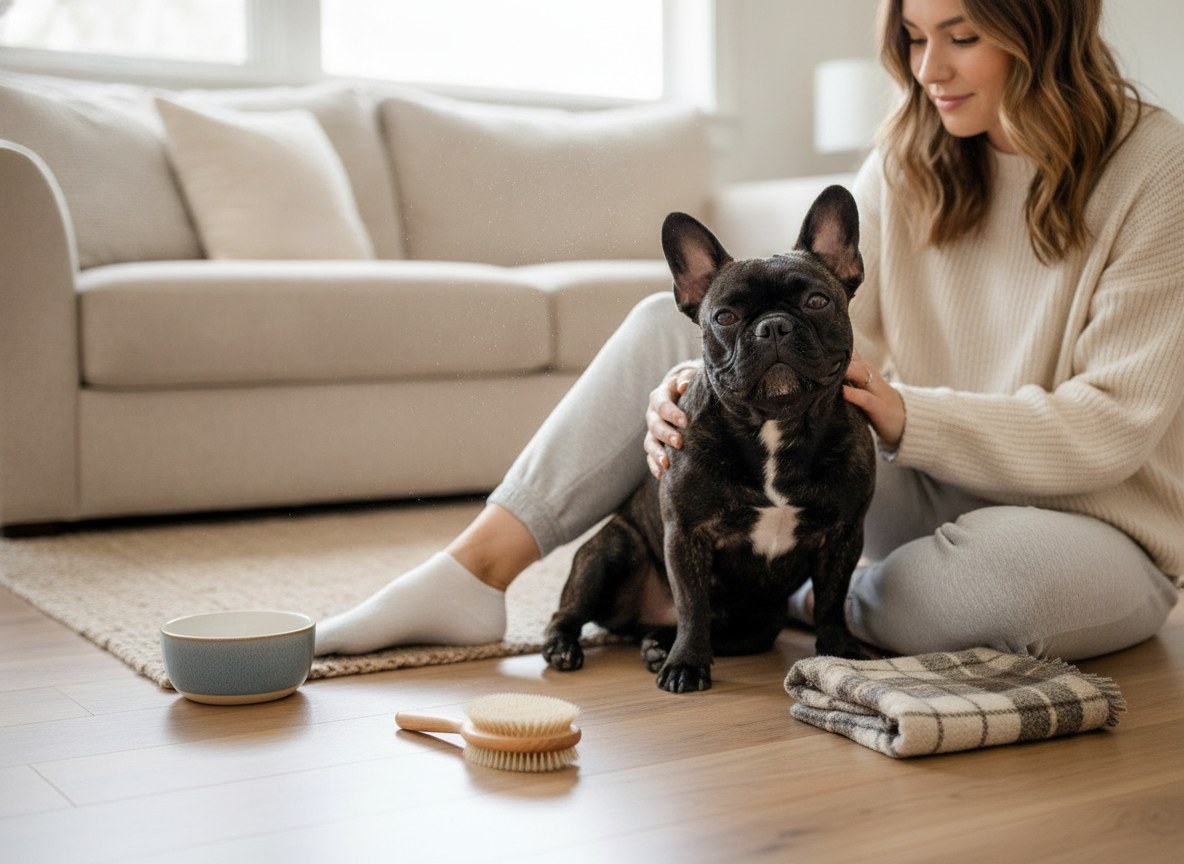
Their short single coat is otherwise low-maintenance: a weekly brush handles the moderate shedding and spreads skin oils. They don’t need frequent baths, in fact, over-bathing strips the natural oils and can make skin problems worse, which is why most Frenchies only need a bath every few weeks to a couple of months unless they roll in something. A good brush made for short coats makes the weekly routine quick.
Don’t skip ears (clean weekly, they trap gunk), nails (trim every two to three weeks), and teeth (brush regularly, small breeds are prone to dental disease).
Feeding a Frenchie
Two themes dominate Frenchie nutrition: sensitive guts and easy weight gain. Feed a quality, age-appropriate food, puppy food until about a year, then adult, twice a day for grown dogs. Measure it, because this breed will convince you it’s starving while quietly getting round, and extra weight is brutal on a body already prone to breathing and back issues.
Many Frenchies have touchy digestion, gas, soft stools, food sensitivities. A more digestible, lower-filler food usually settles a sensitive or gassy stomach, and a daily probiotic can smooth out the rough patches during a food change. Chicken is the most common food allergen in the breed, so persistent itchy skin and ear trouble are often the first sign a Frenchie is reacting to chicken.
Exercise (less than you think, smarter than you think)
Frenchies need only mild to moderate exercise, think two short, relaxed walks a day, roughly 30 to 45 minutes of activity total for an adult, plus mental stimulation. What matters more is how you do it: keep it low-impact, avoid the heat, and don’t let them fling themselves off the couch or pound up and down stairs, because their long backs are prone to spinal injury (IVDD). Use a ramp or carry them for big drops. Puzzle toys and indoor games burn energy without the risks.
Health issues to keep on your radar
Knowing the breed’s weak spots means you catch things early. The big ones: brachycephalic airway issues (noisy breathing, heat intolerance), spinal and disc problems (IVDD), hip dysplasia, and allergy-driven skin and ear infections. None of this is scaremongering: a UK study that looked at how Frenchies stack up against other breeds found them at significantly higher risk for 20 of 43 common disorders, with breathing trouble and skin fold dermatitis near the top. My vet frames it kindly but plainly: this is a breed that asks for a slightly more attentive parent than most. Paw-licking is so common it deserves its own attention, since constant licking usually means an allergy or a yeast infection between the toes rather than a harmless habit. Stay current on vet checkups, vaccines, and parasite prevention, and don’t wait out symptoms that linger.
The daily and weekly rhythm
It sounds like a lot written out, but it settles into a routine fast: daily, fresh water, measured meals, a cool-hours walk, a quick fold-and-eye wipe if needed; weekly, brush the coat, clean the ears, deeper fold check; every few weeks, trim nails; ongoing, watch the weight and the breathing, and keep up with the vet. It helps to remember the Frenchie is a brachycephalic companion breed built for life indoors beside you, not for heat, hard exercise, or water, which is the thread running through every care rule above.
This guide is what I’ve learned as Nina’s parent, general information rather than veterinary advice. Your vet knows your own Frenchie best.
FAQ: caring for a French Bulldog
Are French Bulldogs high maintenance?
In some ways, yes. Their grooming is easy, but they need careful heat management, regular fold and skin care, weight control, and attention to a long list of breed-specific health risks. They’re not a high-energy dog, but they are a high-awareness one.
How much exercise does a French Bulldog need?
Not much, around 30 to 45 minutes of gentle activity a day for an adult, split into short walks plus play. Keep it low-impact and out of the heat, and prioritize mental stimulation over intense exercise.
How do I keep my French Bulldog cool in summer?
Walk only in early morning or evening, avoid hot pavement and hot cars, provide shade and water, and never leave them near water unattended. Watch for heavy panting and distress, overheating is a genuine emergency for this breed.
How often should I clean my Frenchie’s folds?
Wipe the facial folds a few times a week, or daily if your dog is prone to irritation, and always dry them afterward. Trapped moisture and debris are what cause fold infections.
What should I feed a French Bulldog?
A quality, age-appropriate food with a named protein, fed in measured portions twice a day for adults. Because the breed is prone to sensitive stomachs and food allergies, a gentle, digestible diet, sometimes chicken-free, works best for many Frenchies.
How long do French Bulldogs live?
Typically around 10 to 12 years. Good weight management, heat safety, and staying on top of their breed-specific health issues give your Frenchie the best shot at the higher end of that range.
What should you not do with a French Bulldog?
Don’t exercise them in the heat, leave them near water unsupervised, or let them leap off furniture and pound up stairs, their breathing and their backs can’t take it. Don’t overfeed, skip the fold cleaning, or ignore noisy, labored breathing. Most Frenchie emergencies trace back to exactly these.
Can a French Bulldog be left alone for 8 hours?
Not happily. Frenchies are companion dogs that bond hard and are prone to separation anxiety, so a full 8-hour stretch every day is a lot for them. If your schedule demands it, a dog walker, daycare, or a midday check-in makes a real difference.
Do you have to wipe a Frenchie after they poop?
Often yes, and you should also check the tail pocket, the small recessed spot under the tail that many Frenchies have. It traps moisture and debris and gets infected if ignored, so a quick wipe of the rear and the tail pocket a few times a week heads off a sore, smelly problem.