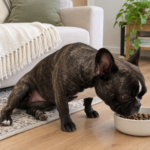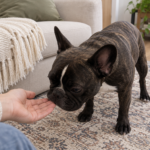
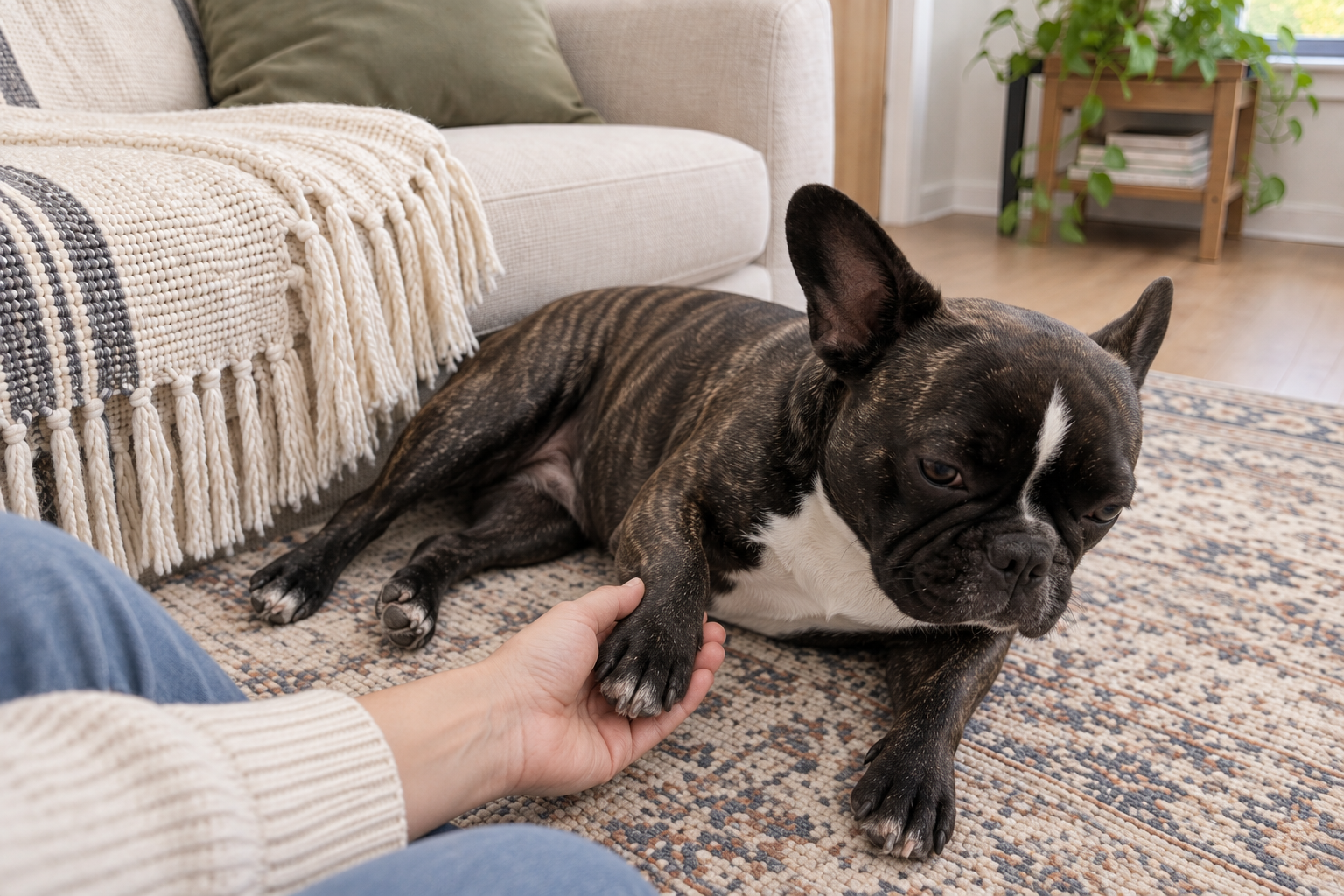

There’s a specific sound every Frenchie owner knows: the wet, rhythmic slurp-slurp-slurp of a dog going to town on their own foot at 2 a.m. The first few times, I thought Nina was just grooming. Then I noticed the paw had gone pink-brown and faintly smelled like corn chips, and I realized we’d quietly crossed from “cute habit” into “actual problem.”
Occasional paw-licking is normal. Persistent licking deserves a closer look, especially with soreness or a change in walking. Our guide to itchy-skin care covers one part of the routine; paws also need checking for injuries and other causes.
Key takeaways
- Frequent paw-licking can reflect allergies, injury, infection or pain.
- Corn-chip smell and brown staining cannot diagnose yeast or a food allergy.
- Gently clean dirty paws and dry them. Pain, swelling, bleeding or limping need prompt veterinary advice.
Why your French Bulldog licks their paws
Dogs lick paws to soothe an itch or irritation, the same way you’d scratch a bug bite. The trick is figuring out the source. In Frenchies, a few causes come up again and again.
Allergies and contact irritation
Environmental allergies and food allergies can both cause itchy skin. Irritation after contact with a surface or cleaning product is another possibility. Note which paws are affected and whether symptoms recur in a season, but neither a four-paw pattern nor the timing after a meal identifies the cause.
Frenchies do have several skin-health vulnerabilities. A large UK study that compared French Bulldogs against other dogs found higher odds of skin-fold dermatitis and ear discharge. That does not diagnose an individual dog’s feet. When I first described Nina’s feet to my vet, her opening question wasn’t about the paws at all, it was about her ears and folds.
Yeast and the licking spiral
Here’s the loop that catches owners off guard. Repeated licking keeps skin damp and can worsen irritation. Bacteria or yeast may be involved, sometimes alongside an underlying allergy. Smell, staining and redness are observations to report, not reliable ways to tell which organism is present. A vet may examine a skin sample under a microscope.
Other causes worth ruling out
Don’t forget the simple stuff: a stuck grass seed or thorn, a small cut, a torn nail, dry cracked pads from winter salt or hot pavement, or even boredom and anxiety, some dogs lick to self-soothe. Pain from arthritis or an injury can also focus a dog on one specific paw.
What to note before the vet visit
- Which paws? Note whether one foot or several are affected.
- What changed? Record redness, swelling, discharge, odor, damaged nails or limping.
- When does it happen? Note walks, surfaces, seasons and time alone without assuming they prove a trigger.
- Elsewhere too? Mention itchy ears, folds or other skin changes.
Photographs and a short symptom diary can make the history clearer. The VCA guide to inflamed paws describes why several causes can look similar and require different tests.
What actually helps
Wipe the paws after every walk. If they are dirty or have contacted an irritant, gently rinse or use a damp cloth, then dry between the toes. Avoid vigorous scrubbing or fragranced products. This supports hygiene; it does not treat every cause of itch.
Keep the area clean and dry. Check for lingering moisture without repeatedly washing sore skin. The gentle routine described in our guide to keeping a Frenchie’s skin folds healthy applies to the paws.
Investigate diet with your vet. Paw-licking cannot identify chicken or another food as the trigger. A strict veterinary elimination diet followed by a planned food challenge is the diagnostic approach; randomly switching to a retail chicken-free food is not the same test. Our Frenchie chicken-allergy guide explains that distinction, and the allergy-food comparison separates therapeutic options from ordinary foods.
Match treatment to the cause. Medication, parasite control, injury care and allergy management address different problems. The AAHA explanation of allergy testing distinguishes dietary investigation from tests used in environmental-allergy management. A blood, saliva or hair panel is not a shortcut to diagnosing food allergy.
When to see the vet
Seek prompt advice for a swollen, bleeding or painful paw, limping, a damaged nail, discharge or a suspected embedded object. Do not dig into the skin to remove something. If your dog cannot bear weight, is severely distressed or seems unwell, contact an urgent veterinary service. Persistent or recurrent licking also deserves an appointment, even without an obvious wound; do not wait a week or two when the paw is already inflamed.
Until you get advice, avoid human creams, harsh disinfectants or improvised bandages. Ask the vet how to prevent further chewing without trapping moisture or using a device that restricts breathing.
Reduce everyday pad hazards
Before a walk, choose the surface as carefully as the route. AAHA notes that pavement and other surfaces can be much hotter than the air. Choose cooler, shaded options and check paws for changes afterward; protective gear is not permission to continue on an uncomfortable surface. If using boots, introduce them gently and check for rubbing.
In winter, remove salt and grit from paws after walks, as advised by the RSPCA, then dry carefully. New cracks, soreness or a changed gait belong in the veterinary conversation above, not under an extra layer of an unfamiliar balm.
FAQs about French Bulldog paw-licking
Why does my French Bulldog lick their paws so much?
Possible causes include itching, contact irritation, injury, infection or pain. Repetition and soreness matter more than the breed label. An examination is more useful than assuming every Frenchie has the same allergy.
What does it mean when my Frenchie’s paws smell like corn chips?
A mild smell can occur on otherwise healthy paws. Odor alone does not prove yeast infection. New strong odor alongside redness, discomfort or persistent licking deserves a vet check; brown staining is not a diagnosis either.
How do I stop my French Bulldog from licking their paws?
Find and treat the cause. Gently clean and dry dirty feet, check for visible injury without probing, and arrange care for persistent or painful licking. Preventing access to the paw may protect the skin temporarily but does not explain why it itches.
Can food cause paw-licking in Frenchies?
Food allergy can cause itchy skin, but paw symptoms cannot identify a particular ingredient. Ask your vet whether a controlled elimination diet and food challenge are appropriate. Removing chicken alone does not establish or rule out food allergy.
Is paw-licking ever normal?
A little is. Dogs groom their paws occasionally, and a quick clean-up after a walk is fine. It becomes a problem when it’s frequent, focused, or producing redness, smell, staining, or hair loss.
Should I use an anti-itch spray or apple cider vinegar?
Do not apply vinegar, essential oils or human anti-itch products to sore paws. They may irritate the skin or be unsafe when licked. Use a treatment recommended for your dog and the diagnosed problem.
Why does my Frenchie lick their paws at night?
You may notice licking more when the house is quiet, but nighttime licking is not a separate diagnosis. Record when it happens and whether it interrupts sleep. Persistent licking still needs the same check for itching, pain and other causes.
How do you treat itchy paws in a French Bulldog?
Treatment depends on the examination and, when needed, skin tests. Cleaning alone will not resolve every cause. Bring a history of symptoms, current food, treats and products so the vet can choose the next step rather than treating by smell.
Does a corn-chip smell always need treatment?
No. If the skin looks healthy and your dog is comfortable, a mild scent alone is not a reason to apply medication. The AKC’s explanation of paw odor distinguishes normal skin bacteria from changes that warrant veterinary attention.