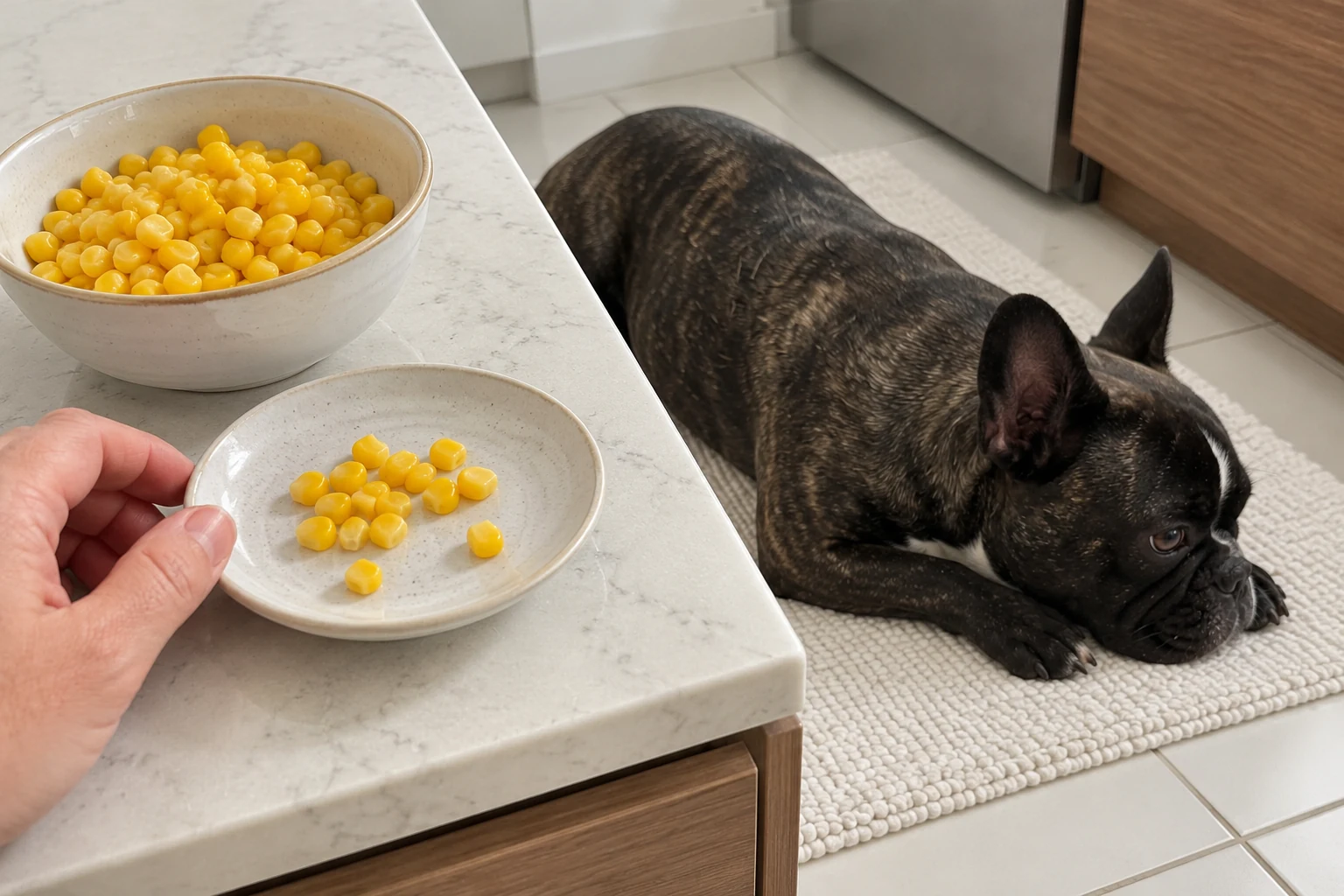

A few plain corn kernels can be an occasional snack for a French Bulldog. The cob must stay out of reach. Dogs can swallow pieces that lodge in the digestive tract, and watching them chew doesn’t make a cob safe.
If your Frenchie has swallowed any corn cob, or you suspect they have, call your veterinarian or an emergency veterinary hospital immediately. Don’t wait for vomiting, a missed meal, or the next bowel movement before making that call.
Key takeaways
- Offer only small amounts of plain kernels, completely removed from the cob.
- A swallowed cob can cause choking or a dangerous obstruction. Contact a vet immediately.
- Normal behavior or passing stool doesn’t rule out a blockage. Follow veterinary instructions rather than trying home remedies.
Where corn fits in a normal diet
Corn can be an ingredient in a balanced dog food. Sharing kernels from your plate is a separate decision: those are extras, and they don’t make a homemade meal nutritionally complete. Our guide to homemade food for French Bulldogs explains why the whole recipe matters.
The AKC’s corn guidance distinguishes ordinary kernels from the physical hazard of the cob. For a healthy dog who tolerates corn, set aside a little plain cooked corn before adding butter, salt, sauces, or spice mixes. Allow it to cool.
- Fresh or frozen kernels: cook plainly and check that no cob fragments remain.
- Canned corn: choose plain, no-salt-added corn and check the ingredients.
- Corn with toppings: skip it. The extras may be fatty, salty, or contain ingredients such as onion or garlic.
- Corn on the cob: don’t offer it, including a stripped cob.
Start with a small taste. There is no universal spoonful allowance for every Frenchie. All treats together should stay within 10% of daily calories, unless your veterinary team has set a different plan. Ask first if your dog has dietary restrictions.
If your dog ate the cob
Move the remaining food out of reach and call now. Tell the clinic when it happened, how much cob may be missing, your dog’s weight, and whether a skewer or corn holder was involved. Say if your dog is vomiting, uncomfortable, weak, or having trouble breathing. If possible, bring a matching cob or a photo to help show its size.
VEG’s emergency veterinarians warn that dogs can appear normal and still pass stool after swallowing a cob. Signs may develop later. A normal-looking walk or bowel movement cannot show where the piece is.
Don’t try to make your dog vomit, and don’t feed oil, bread, or another home remedy to move the cob along. Ask the clinic what to do while traveling and whether to withhold food. Treatment decisions depend on the object, timing, symptoms, and examination.
What the vet may need to check
Possible obstruction signs include repeated vomiting, loss of appetite, abdominal pain, diarrhea, and lethargy. They aren’t specific to corn cobs, and the absence of signs doesn’t clear a known ingestion.
Cornell’s veterinary guidance on foreign bodies describes examination, X-rays or ultrasound, and sometimes further investigation. Some objects in the stomach can be retrieved with an endoscope. An obstruction or damaged intestine may require surgery. The article can’t predict which procedure an individual dog will need.
Make the discarded cob hard to reach
The risky moment often comes after people finish eating. Clear plates promptly, put cobs straight into a secure bin, and keep corn holders with the other utensils. An open trash bag beside a picnic table is still accessible food waste.
Tell guests that the dog can have only the plain portion you’ve set aside. If keeping track of plates becomes difficult, settle your Frenchie away from the dining area with their normal food or an appropriate familiar treat.
FAQs about corn for French Bulldogs
Can a small piece of corn cob pass naturally?
It may, but you can’t judge that safely at home. The size and location matter, and even a fragment can be a problem. Call immediately and let the vet decide how to assess it.
My dog ate a cob yesterday and seems fine. Is it too late to call?
No. Contact a vet now, explain the timing, and report any changes. Don’t assume that the absence of symptoms means the cob has passed.
Is corn in dog food a reason to change brands?
Its presence alone isn’t. A Cornell veterinary nutritionist explains that corn can be suitable in pet food. Evaluate the complete diet and your dog’s needs rather than rejecting an ingredient on its own.
Can puppies eat corn?
Ask the puppy’s vet about suitable extras and portion size. There is no need to introduce corn, and a cob is never an appropriate puppy chew.
What about popcorn or cornbread?
They need their own ingredient check. Plain, fully popped popcorn differs from buttered or flavored popcorn; remove hard unpopped kernels. Cornbread recipes vary, so don’t assume every crumb is harmless without knowing what went into it.