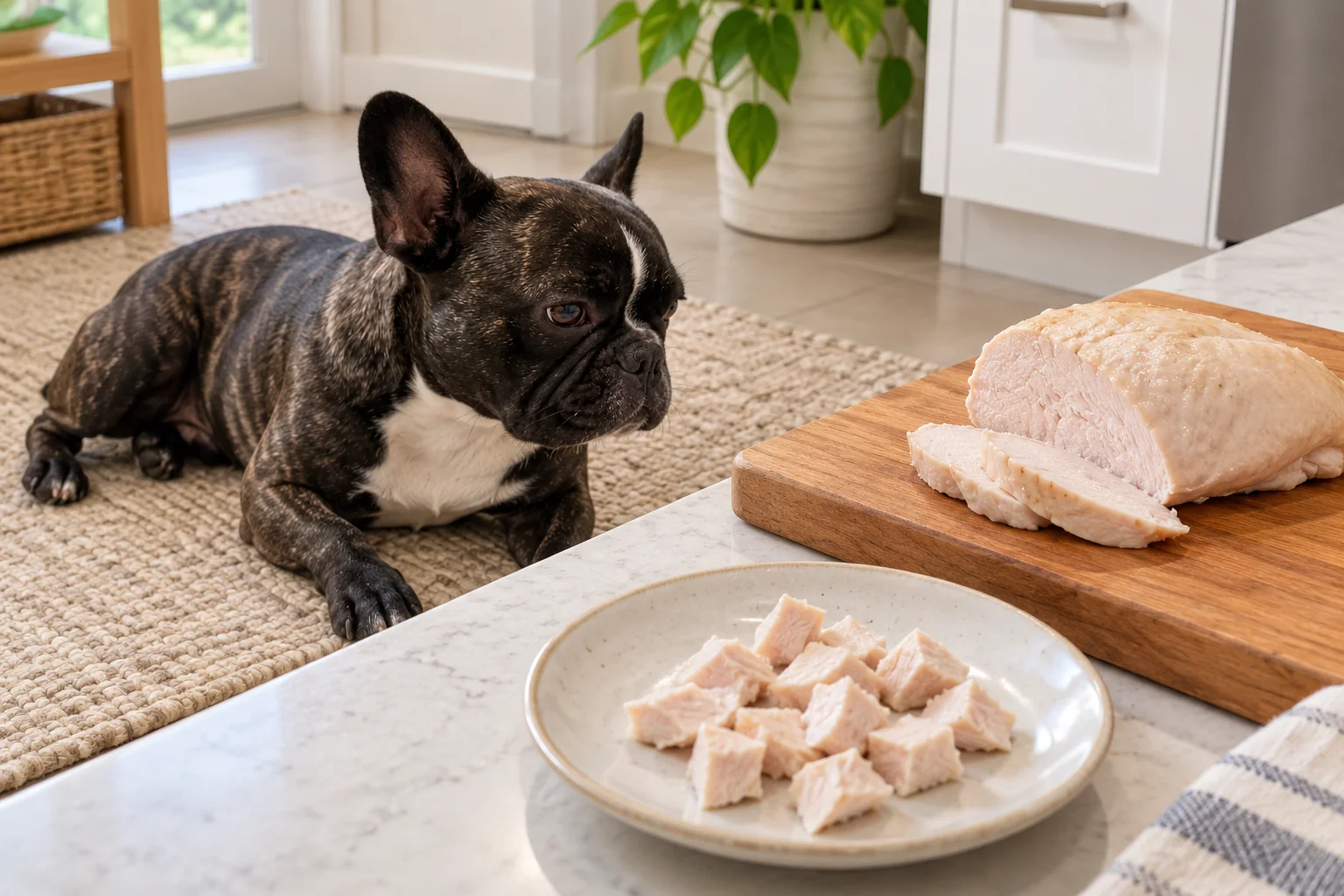

Yes, many French Bulldogs can have a little plain, fully cooked turkey. Choose boneless, skinless meat with no butter, gravy or seasoning, and keep it within your dog’s usual treat allowance. Turkey from a holiday platter needs a closer look than turkey cooked separately.
If your Frenchie has had trouble with poultry, our guide to chicken allergies and diet trials explains why choosing another meat takes more thought than swapping the label. A prescribed diet or known reaction comes before any general yes-or-no food list.
Key takeaways
- Offer only plain, cooked, boneless, skinless turkey that suits your dog’s diet.
- Keep skin, gravy, seasoned scraps and the carcass out of reach.
- Count turkey with all other treats, and call your vet after a suspected bone or toxic-ingredient exposure.
Which turkey can a Frenchie eat?
The simplest choice is a small amount of plain breast meat. AAHA includes plain cooked white turkey among suitable holiday treats when the bones, skin and seasonings are absent. That does not make every turkey product interchangeable.
- Plain roasted or poached turkey: an occasional option for a dog who tolerates it, after removing bones and skin.
- Ground turkey: check that it is unseasoned. Its fat content varies, so read the package rather than assuming ground turkey is always lean.
- Turkey sausage, bacon, deli slices and smoked turkey: skip these as a treat choice. Added salt, seasonings and fat can make the finished product quite different from plain meat.
- Gravy, stuffing, skin and pan drippings: leave them off your dog’s plate.
A bird rubbed with garlic butter, injected with a flavored solution or cooked with onions is not the same as unseasoned turkey. Removing visible onion pieces or peeling off the skin does not establish that the remaining meat is plain. If you want to share, set aside an unseasoned portion before preparing the family meal.
Why the bones, skin and seasoning matter
Cooked turkey bones can splinter, injure the digestive tract or cause a blockage. Rich skin and drippings can cause digestive upset and may trigger pancreatitis. These are the reasons to keep the carcass, carving board and trash out of reach, not just to watch what goes into the bowl. AAHA explains the main holiday-food hazards.
Onion and garlic can damage dogs’ red blood cells. Cooking them does not remove the risk, and powders are concentrated ingredients. The Merck Veterinary Manual describes poisoning from raw, cooked and concentrated forms. There is no reason to add any of them to a homemade dog treat.
How to prepare and portion plain turkey
- Choose unseasoned meat and check for added ingredients on the label.
- Cook turkey to an internal temperature of 165°F (74°C), measured with a food thermometer. This applies to ground turkey too, according to the government food-temperature chart.
- Remove skin, every bone and any string or packaging. Cut or shred a small amount into pieces your dog can manage.
- Let the serving cool before offering it. Keep the rest away from an interested nose.
There is no universal number of turkey cubes for every French Bulldog. The meat’s calories, your dog’s daily allowance, body condition and other treats all count. Veterinary nutrition guidance generally limits treats to 10% of daily calories; a veterinary diet may allow less or none.
If turkey is new, offer only a small taste and stop if it causes a problem. Do not make a first taste into a bowlful, or use turkey to replace a substantial part of a complete diet. A plain meat ingredient is not a balanced meal.
What if chicken has caused itching or stomach trouble?
Turkey is not an automatic allergy-safe alternative to chicken. A dog’s individual diet history matters, and a good day or two after trying a new meat does not diagnose an allergy.
If your vet is running an elimination diet, ask before adding turkey or any other extra. VCA explains why food trials need strict control of treats and other ingredients. Repeated itching, ear trouble or digestive upset deserves assessment rather than an ongoing sequence of home food tests.
For daily home cooking, see planning a balanced homemade Frenchie diet. Adding turkey, rice and vegetables by eye does not establish nutritional completeness.
Store leftovers before settling down after dinner
Refrigerate turkey in shallow containers within two hours, or one hour above 90°F (32°C). Keep it at 40°F (4°C) or below, use within three to four days, or freeze promptly. Thaw in the refrigerator. These are USDA leftover-handling limits.
Keep the dog’s plain portion separate from seasoned leftovers. A labeled container is easier to recognize than trying to remember which slice came from which tray.
FAQs about French Bulldogs eating turkey
What should I do if my Frenchie ate turkey bones or seasoned turkey?
Contact your vet or an emergency veterinary service promptly. Save the ingredients or packaging and describe the amount, time eaten and your dog’s weight. Do not wait for illness after a suspected toxic exposure: onion and garlic poisoning can have delayed signs. Do not induce vomiting unless a veterinary professional directs you.
What symptoms need urgent attention?
Repeated vomiting, obvious abdominal pain, marked weakness, pale gums, breathing difficulty or collapse warrants urgent veterinary care. A dog who seems comfortable immediately after a food theft may still need advice based on what was eaten.
Can puppies have turkey?
Ask your vet whether a small plain treat fits your puppy’s feeding plan. Puppies need a complete growth diet; turkey should not displace it. Skip scraps and new mixed-ingredient foods for a very young or unwell puppy.
Can I use raw turkey instead?
Use cooked turkey. FDA warns that raw pet foods can carry harmful bacteria that affect pets and people. Raw bones add physical hazards too.
Is turkey a treatment for an upset stomach?
No. A vet may recommend a specific short-term feeding plan, but a turkey treat is not treatment for vomiting or diarrhea. Ask about persistent symptoms rather than changing foods repeatedly.