Key takeaways
- Inspect first; clean, brush or trim only when appropriate.
- Keep coat, face, ears and nails on their own individual plans.
- Use short, comfortable sessions instead of holding your dog still to finish everything.
- Pain, new odor, discharge or damaged skin changes the task from grooming to seeking advice.
French bulldog grooming is more than bath day. Coat brushing, fold care, ear checks and nail maintenance are different jobs, and they do not all need doing at once. For Nina, I would build a routine around what she needs today rather than turn every check into a full grooming session.
If you are choosing tools, our grooming collection is the shopping starting point. This guide is the care plan: what to check, which task to choose and when to stop. A brush or shampoo cannot diagnose irritated skin.
Choose today’s job
This is a decision list, not a prescribed timetable. Your vet’s instructions for a diagnosed condition take priority.
- Body coat: Check loose hair, dirt, tangles or sore areas. Next: Choosing a gentle brush for a short coat.
- Bathing: Check whether the coat actually needs washing, and which product is appropriate. Next: Bath timing, washing and drying.
- Face folds: Check debris, dampness, redness or discomfort. Next: Gentle wrinkle care.
- Ears: Check a change from the ear’s usual appearance, smell or comfort. Next: Ear checks and appropriate cleaning.
- Nails: Check length, damage and comfort with paw handling. Next: Nail care without rushing.
A clean coat does not mean a sore ear needs cleaning, and a full bath does not replace a fold check. Use the relevant guide rather than applying the same product to every area.
Start with comfortable handling
Choose a stable surface and a quiet, comfortable space. Have what you need within reach before inviting your dog over. Let her investigate the brush or towel, reward relaxed participation and pause when she needs a break. A short successful practice can be useful even if no grooming gets finished.
Cornell’s cooperative-grooming guidance recommends introducing tools and gentle handling gradually, with positive associations. If handling has become frightening, seek help from your vet or a qualified humane trainer. Do not keep escalating restraint to complete a checklist.
Brush the coat, not an irritated patch
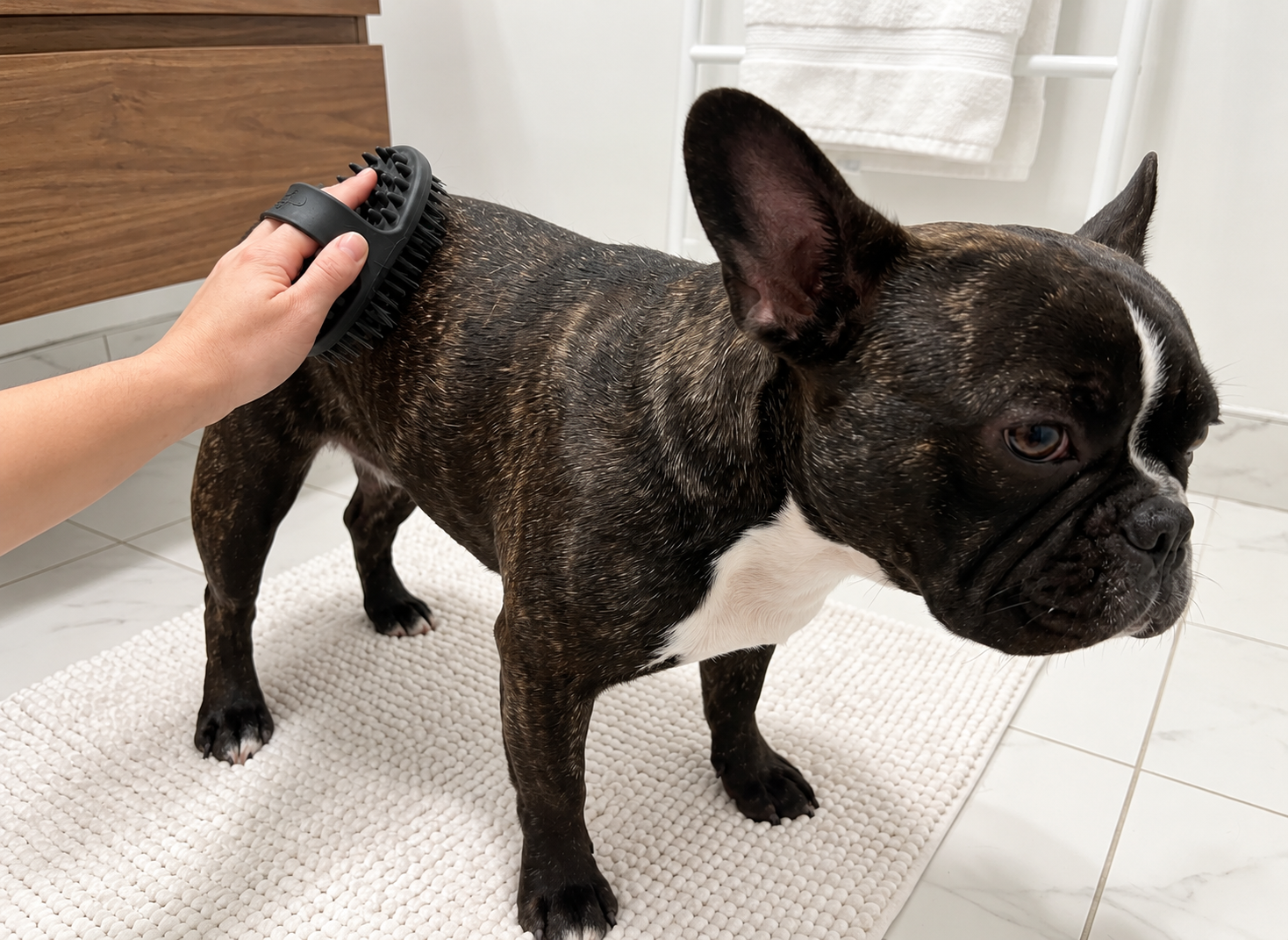
Use gentle strokes and a tool suited to the actual coat. Short-coated and long-haired Frenchies do not have identical detangling needs. VCA’s coat-care guidance stresses gentle brushing and professional help for substantial matting, especially when skin is irritated. Do not cut a tight mat out with scissors.
Brushing is also an opportunity to notice a change. If you find a sore area or unfamiliar lump, stop working over it. A grooming session is not the time to test how firmly it is attached or scrub away a crust.
Keep bath supplies and technique simple
Bath frequency depends on the dog’s coat, lifestyle and skin health. A prescribed shampoo routine may be different from ordinary cleaning. Check the product’s intended use, directions and condition before starting; do not substitute human shampoo or improvise dilution.
Virginia Tech’s veterinary bathing advice warns that harsh scrubbing, contaminated products and inadequate rinsing can harm skin. Use gentle handling, follow contact-time and rinsing directions, and keep shampoo away from the eyes, ears and nose. If a product needs dilution, prepare it according to its instructions for that session rather than storing a leftover diluted mixture.
Have clean towels ready and follow the individual drying plan, including attention to damp folds. If the dog is uncomfortable or struggling, stop rather than rush through the last few steps.
Checking ears does not mean cleaning every time
Some healthy ears need little cleaning. VCA’s ear-cleaning instructions caution against over-cleaning and advise veterinary assessment when an ear is red, inflamed or painful. Ask which cleaner, if any, your dog needs. Do not push cotton swabs down the canal or use a sore ear as a chance to practise.
The same planning principle helps with nails: arrange instruction and a manageable approach before the job becomes urgent. Our linked nail guide covers the detail; you do not need to add all four feet to a bath simply because the dog is already in the bathroom.
Keep a small care record
Instead of a rigid “Frenchie grooming calendar,” keep three short notes:
- What was done: the task and exact product, if one was used.
- How it went: comfortable, needing a shorter session, or a change worth discussing.
- What comes next: a planned check, a professional appointment or a veterinary recheck.
I would rather see “ear check, comfortable, no cleaning needed” than feel obliged to use a cleaner because it was on the shelf. Keep treatments prescribed by your vet separate from optional routine tasks, so neither gets confused with the other.
When to ask for help
A groomer can help with practical coat and nail care, but painful skin, recurrent discharge or a new persistent smell belongs in a veterinary conversation. Tell any professional about relevant medical problems and handling concerns before the appointment. Ask how they will adapt the session and what would make them stop.
This is a routine-planning guide, not treatment for skin or ear disease. Individual veterinary instructions take priority over any general grooming checklist.