
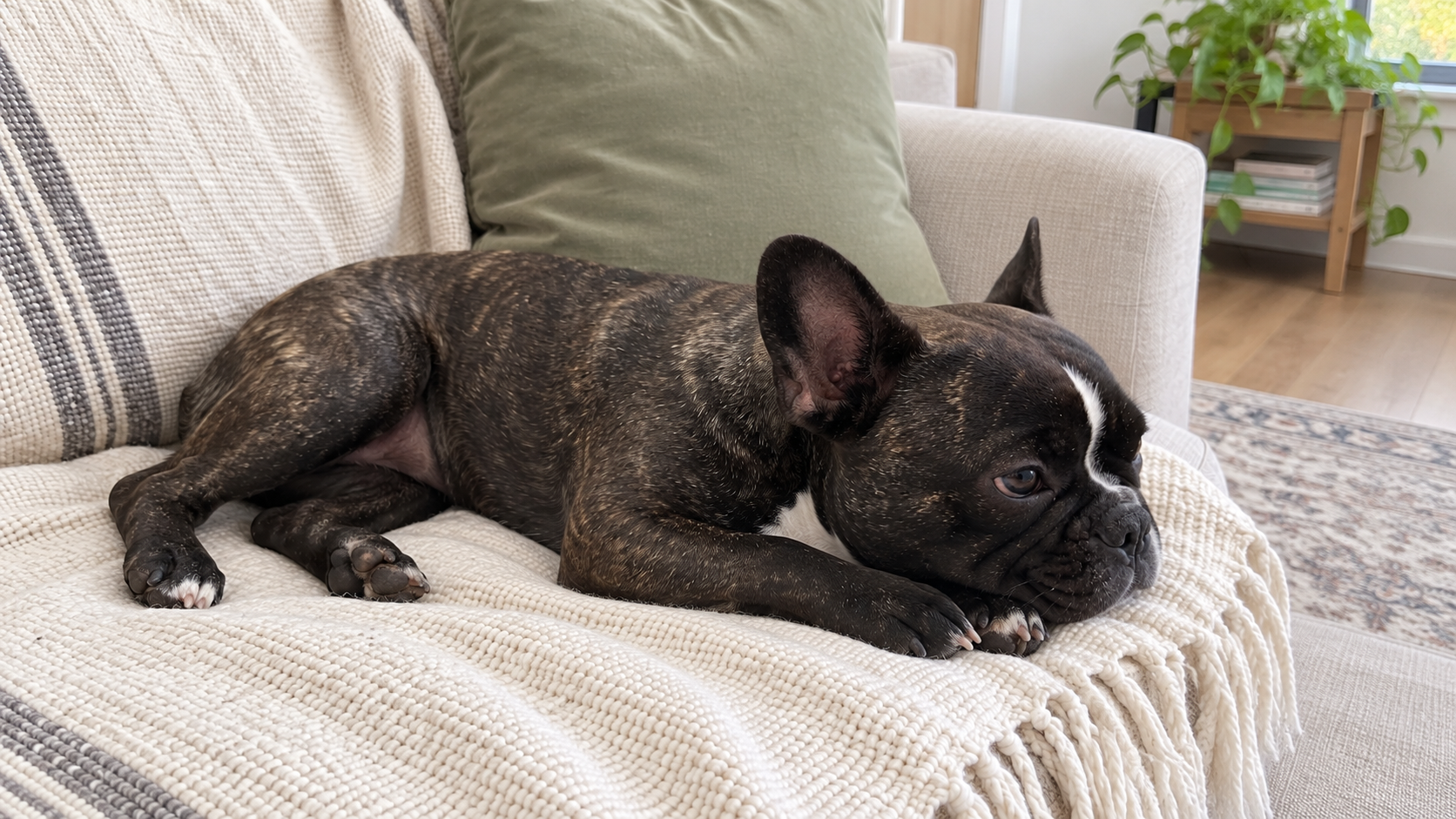

There is a specific stretch of Frenchie ownership, somewhere between getting the puppy and the dog’s second birthday, where you quietly wonder what you’ve done. The zoomies at 11 p.m., the chewing, the gremlin energy that arrives the second you sit down. I’ve been there with Nina, googling “when do french bulldogs calm down” at midnight like it was a countdown. What I wanted was a date on the calendar. What is more useful is knowing how to support rest and calmer habits while your dog grows up.
It helps to remember what you signed up for: the American Kennel Club describes the Frenchie as a playful, affectionate companion, so a lively young one is being completely normal.
Key takeaways
- Maturity can help, but there is no guaranteed calm-down birthday.
- Balance gentle activity with quiet rest; more exercise is not always the answer.
- Reward relaxed behavior, and ask your vet about sudden restlessness or a marked change in energy.
When do French Bulldogs calm down?
You may notice calmer habits as your Frenchie moves out of puppyhood and adolescence, but 18–24 months or two to three years should not be treated as deadlines. There is no breed-specific birthday when every dog switches off. Individual temperament, health, learning and the home environment matter alongside age.
A playful adult can still settle between activities. That is a more useful goal than having a dog who never gets excited. If your Frenchie cannot rest, seems distressed or has changed suddenly, do not wait for another birthday to ask for help.
Why your Frenchie seems so hyper
- Youth and excitement. A young dog is still learning what to do with new experiences and impulses.
- Too little appropriate activity. Sniffing, play and training give a dog useful outlets, but the amount needs to suit the individual.
- Too much going on. Visitors, constant interaction and busy surroundings can make winding down difficult.
- Overtiredness. Another round of play may be the opposite of what a tired puppy needs.
- Stress or discomfort. Restlessness is not always a training problem. Note changes in sleep, appetite, movement and breathing for your vet.
How to help a hyper Frenchie settle
Start by looking at the whole day. Offer gentle exercise suited to your Frenchie, short opportunities to sniff and play, and time when nobody keeps asking the dog to do something. Do not keep increasing walks to exhaust a restless Frenchie, particularly in warm weather.
Use food puzzles or short reward-based training if your dog enjoys them, then allow a quiet break. Enrichment is not a contest to keep the dog occupied every minute. Protect their sleep and downtime from repeated interruptions.
Teach settling in a quiet place
Dogs Trust’s settling exercise starts with a quiet setting and rewards relaxed behavior. Put a comfortable blanket nearby and reward small signs of settling. Gradually build duration before trying busier surroundings. If the dog struggles, reduce the distractions rather than demanding a longer stay.
The aim is comfortable rest, not forcing a dog to hold a pose while still upset. Keep sessions manageable and use qualified reward-based support if you are stuck.
When to ask for help
A sudden inability to settle, pain, unusual panting at rest or a major change in behavior deserves veterinary attention. Struggling to breathe is urgent, not something to address with a calming exercise. For persistent behavior difficulties, a vet can help rule out health causes and advise on appropriate behavioral support.
FAQs about when French Bulldogs calm down
At what age do French Bulldogs calm down?
There is no fixed age. Maturity may bring steadier habits, but 18–24 months and two to three years are broad expectations people discuss, not promises. Support rest and training now instead of waiting for a deadline.
Do French Bulldogs calm down with age?
Many dogs develop calmer habits as they mature, while remaining playful. Age alone will not resolve stress, discomfort or an unsuitable routine. Look at whether your dog can relax between activities.
Why is my French Bulldog so hyper?
Youth, excitement, unmet needs, overstimulation, overtiredness or discomfort can all contribute. Do not assume more exercise is the answer. Note when it happens and what came before it; discuss sudden or persistent changes with your vet.
How do I calm down a hyper French Bulldog?
Reduce overwhelming stimulation, offer appropriate activity and allow undisturbed rest. Practice rewarding relaxed behavior in an easy setting. Avoid scolding or trying to exhaust the dog, and get help if settling remains difficult.
Does neutering calm a French Bulldog down?
Do not choose neutering on a promise that it will make a lively dog calm. Discuss the individual medical and behavioral considerations with your vet. Rest, routine and training still matter.
My Frenchie is 3 and still crazy, is that normal?
A playful three-year-old is not automatically a problem. The more useful question is whether they can rest and cope with ordinary life. Distress, constant restlessness or a sudden change warrants help rather than dismissal as personality.
What can I do if my overtired puppy will not settle?
Check basic needs such as a toilet break, then make the surroundings quieter and give the puppy a comfortable place to rest. More exciting games can make winding down harder. If this happens often, review the routine with a qualified professional.
What time should a French Bulldog go to bed?
There is no breed-wide bedtime. Choose a predictable routine that fits your household and allows enough undisturbed rest. Persistent overnight restlessness or a new change in sleep is worth discussing with your vet.


