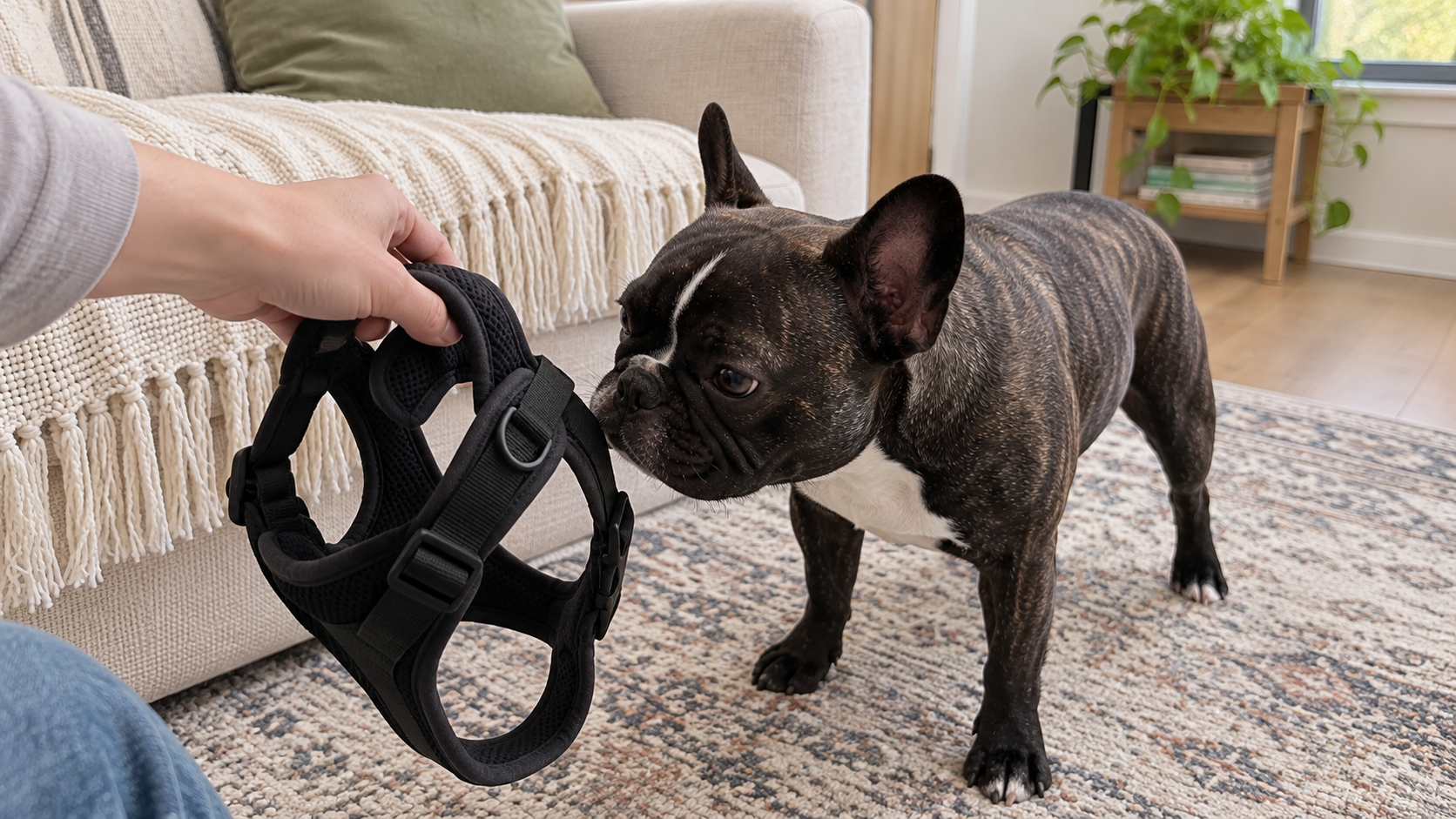

For Frenchie walks, I would start with a well-fitted harness. It gives you a leash attachment away from the neck, which is a practical advantage for a flat-faced dog. But “harness” on the label does not automatically mean comfortable, escape-proof or medically protective.
With Nina, getting ready for a walk already involves finding something that fits her shape properly. Our French Bulldog harness guide compares options; this page explains the collar-versus-harness decision behind them.
Key takeaways
- Start with a well-fitted walking harness to avoid direct leash pressure on the neck.
- A comfortable collar can carry identification; check local requirements and snag risks.
- Fit and calm handling matter more than the clip label. A harness does not treat airway disease or replace loose-leash training.
Collar or harness for a French Bulldog?
A harness is a sensible starting point for walking, particularly if your dog pulls or has neck sensitivity. It moves the leash attachment onto the body rather than a neck collar. VCA’s collar and harness guidance identifies back-clip harnesses as an option for flat-faced puppies.
That is different from saying every Frenchie has a narrowed windpipe or that a harness prevents all breathing trouble. French Bulldogs can have airway problems that equipment cannot correct. Discuss noisy or effortful breathing, exercise intolerance or coughing with your vet; collapse or breathing distress needs urgent help. The Frenchie care guide covers the wider routine.
So is a collar ever okay?
A comfortable, properly fitted collar can hold ID tags while the leash attaches to a harness. Check local identification requirements. At home, consider whether a collar or harness could snag during rest, play or crate time; do not assume equipment should stay on continuously.
Avoid using tightening or punitive equipment to solve pulling. If your dog can back out of their gear, get help with fit and handling rather than simply tightening it further. Our collar guide focuses on comfortable identification options.
Front-clip or back-clip harness?
A back attachment is straightforward for everyday walking, but it may give a strong puller plenty of leverage. A front attachment can help redirect pulling, though the design must still fit without twisting or limiting comfortable movement. Some models offer both.
The AKC fitting guide explains the different layouts. Follow the instructions for the actual harness rather than assuming every front or back clip works the same way. Pair it with a suitable walking leash and reward loose-leash walking; do not jerk the dog into position.
Choosing and checking the right fit
Measure your dog’s chest and any other dimensions the manufacturer requests. Choose adjustability that suits their build, then check the harness while they move, not just while standing still.
- Straps should not press into the throat, rub behind the front legs or block a comfortable stride.
- Use the maker’s fit guidance and make sure the dog cannot slip out. A finger-gap rule alone is not a complete fit check.
- Inspect stitching, buckles and attachment points regularly, and recheck growing puppies frequently.
Dogs Trust’s harness-training guide recommends gradual, positive introductions. Let your dog investigate and progress at their pace. If they retreat or freeze, go back a step instead of forcing the harness on.
Should it stay on all day?
Usually there is no need to leave walking gear on for lounging. Remove it when it is not needed, check for rubbing and let damp equipment dry. A harness is not protection against overheating; keep outings appropriate for the weather and your dog’s breathing and comfort.
FAQs about collars and harnesses for French Bulldogs
Are collars or harnesses better for French Bulldogs?
A well-fitted harness is a sensible walking choice because the leash does not attach directly to the neck. The right model and handling still matter, and it does not treat an underlying airway problem.
Can a French Bulldog wear a collar at all?
Yes, a comfortable collar can carry identification while you attach the leash to a harness. Check fit, local rules and snag risks, especially during crate time or unsupervised rest.
Why do French Bulldogs need a harness?
A harness offers a walking attachment away from the neck. That can be useful for a flat-faced dog, but individual medical and fitting needs should guide the choice. No harness makes breathing difficulty normal or safe.
Should a French Bulldog wear a harness all day?
Usually not. Remove walking gear when it is not needed, inspect skin for rubbing and keep it clean and dry. Continuous wear can create avoidable discomfort or snag risks.
What type of harness is best for a French Bulldog?
One that fits their actual measurements, stays secure and allows comfortable movement. Back clips suit many walks; front clips may help manage pulling. Neither is universally best, and training remains important.
Is a harness or collar better for a French Bulldog puppy?
A soft, correctly fitted harness is a useful starting point for leash training. Introduce it gradually with rewards, check comfort and remeasure as the puppy grows. Ask your vet if there are medical concerns.