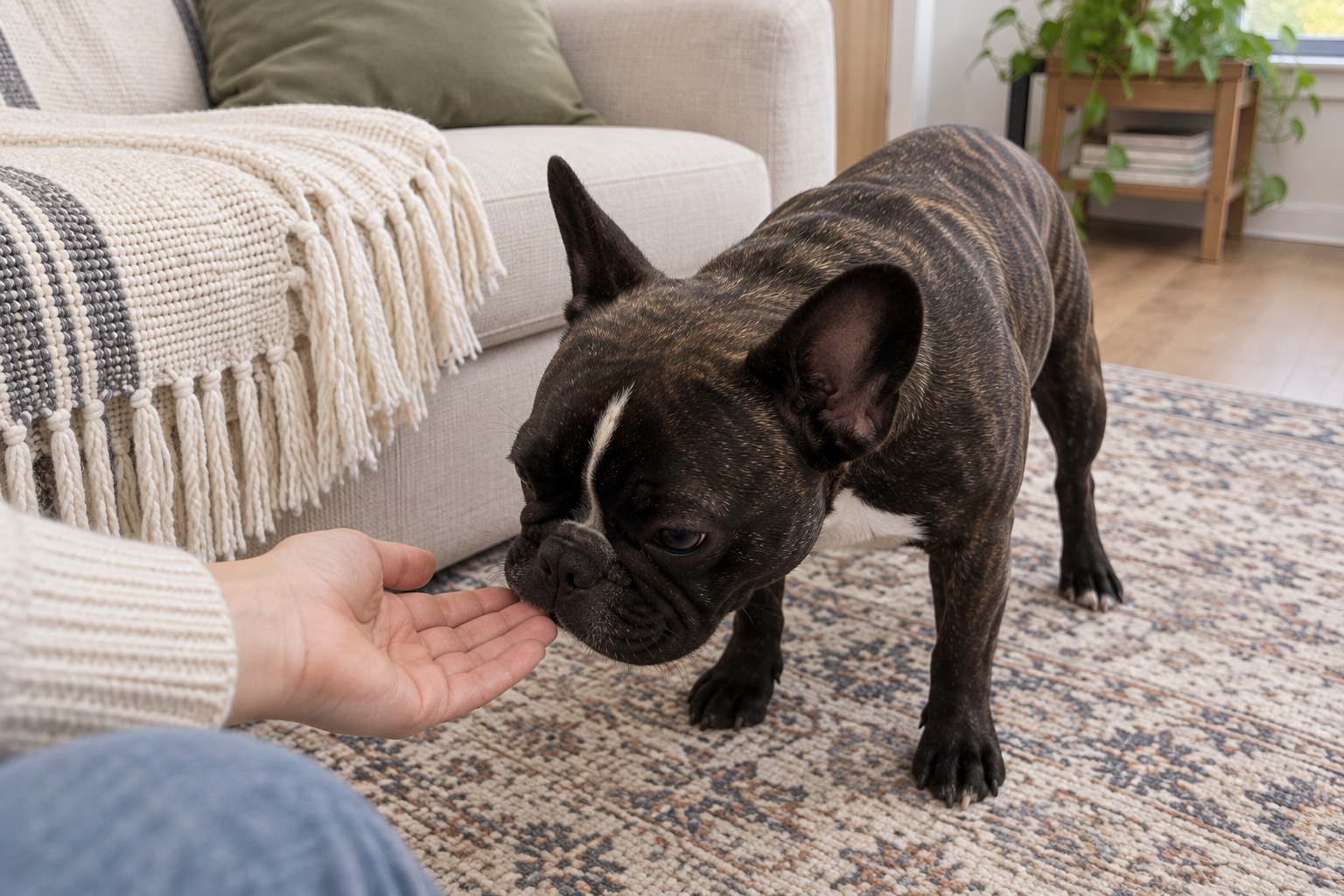

Nobody warns you that owning a French Bulldog is less “dog” and more “tiny, snorting roommate with strong opinions and a medical chart.” I adore Nina, but caring for a Frenchie is different from caring for a Lab or a terrier, and the things that keep her healthy aren’t always obvious until something goes wrong. Consider this the guide I wish I’d had on day one.
Key takeaways
- Watch breathing, temperature, skin comfort and body condition every day.
- Build gentle exercise, measured meals and grooming around your individual dog.
- No routine prevents every health problem. Labored breathing, collapse or heat distress needs urgent veterinary help.
Keeping a flat-faced dog safe (heat and breathing)
This is the one that’s actually dangerous, so it goes first. French Bulldogs are brachycephalic, that shortened skull and muzzle make breathing less efficient and leave them poorly equipped to cool themselves down. They can overheat fast, and heatstroke in this breed is an emergency, not an inconvenience.
In practice: walk in the cool of early morning or evening, never midday in summer. Keep them out of hot cars and off scorching pavement. Watch for heavy, frantic panting, and give them shade and water. Frenchies can struggle in water. Prevent unsupervised access to pools and waterways; a well-fitting dog life jacket never replaces active supervision. If breathing is labored or your dog collapses, seek emergency veterinary help.
Skin, folds, and coat
That gorgeous wrinkly face is also a moisture trap. Food, water, and bacteria collect in the folds, and left alone they turn into irritation or infection. Check the folds daily. Remove debris gently when needed with a suitable cloth or vet-advised product, then dry carefully. Redness, odor, pain or discharge needs assessment rather than more scrubbing. Our wrinkle-care guide explains product choices and limits.
Their short coat often benefits from gentle regular brushing to remove loose hair. Bath frequency depends on skin, activity and any prescribed treatment; choose a bathing routine suited to your Frenchie. A good brush made for short coats makes the weekly routine quick.
Check ears and nails regularly, but do not put every dog on a weekly ear-cleaning schedule. Ask your vet what the individual ears need, and trim nails as their length requires. Aim for daily gentle tooth brushing with dog toothpaste.
Feeding a Frenchie
Two themes dominate Frenchie nutrition: sensitive guts and easy weight gain. Feed a complete, age-appropriate food. Ask your vet when to move from puppy to adult food and how much to offer; many adults eat two measured meals daily. Measure it, because this breed will convince you it’s starving while quietly getting round, and extra weight is brutal on a body already prone to breathing and back issues.
Gas, soft stools, itching and ear problems have several possible causes. A digestive-care food may be appropriate, but vague “filler-free” claims and routine supplements do not establish a treatment. Discuss persistent symptoms with the vet before repeated diet changes. Chicken can be an allergen for some dogs; it is not automatically the cause. Our chicken-allergy guide explains the distinction.
Exercise without pushing through discomfort
Use short, comfortable walks, sniffing and play, adjusted to age, health, weather and recovery. There is no universal daily minute target for every Frenchie. Our exercise guide helps plan the routine. Do not push through noisy or effortful breathing, and do not assume poor tolerance is simply laziness.
Reduce avoidable high-impact jumps and slippery footing, particularly if your vet has identified spinal concerns such as IVDD. A suitable ramp and supervised puzzle activities can help adapt daily life, but no accessory makes every activity safe.
Health issues to keep on your radar
Knowing the breed’s weak spots means you catch things early. The big ones: brachycephalic airway issues (noisy breathing, heat intolerance), spinal and disc problems (IVDD), hip dysplasia, and allergy-driven skin and ear infections. None of this is scaremongering: a UK study that looked at how Frenchies stack up against other breeds found them at significantly higher risk for 20 of 43 common disorders, with breathing trouble and skin fold dermatitis near the top. My vet frames it kindly but plainly: this is a breed that asks for a slightly more attentive parent than most. Paw-licking is so common it deserves its own attention, since persistent licking can reflect allergies, infection, injury or another paw problem and deserves assessment. Stay current on vet checkups, vaccines, and parasite prevention, and don’t wait out symptoms that linger.
The daily and weekly rhythm
It sounds like a lot written out, but it becomes a rhythm: daily, fresh water, measured meals, comfortable activity, tooth brushing and a quick skin-and-breathing check; regularly, brush the coat and check ears and nail length; as needed, clean, bathe or trim according to the individual plan. Keep veterinary checks, vaccinations and parasite prevention current.
PDSA’s French Bulldog care guidance gives further context for the breed’s health and everyday needs. The useful supplies are the ones that fit that routine, rather than every item marketed as a Frenchie must-have.
This guide is what I’ve learned as Nina’s parent, general information rather than veterinary advice. Your vet knows your own Frenchie best.
FAQs about caring for a French Bulldog
Are French Bulldogs high maintenance?
In some ways, yes. Their grooming is easy, but they need careful heat management, regular fold and skin care, weight control, and attention to a long list of breed-specific health risks. They’re not a high-energy dog, but they are a high-awareness one.
How much exercise does a French Bulldog need?
Plan several manageable opportunities for walks, sniffing and play, suited to the individual and conditions. Ask your vet about limitations. Stop for discomfort or breathing difficulty rather than chasing a minute target.
How do I keep my French Bulldog cool in summer?
Choose genuinely cool conditions, keep water available and avoid hot cars and pavement. Time of day alone does not guarantee safety. Labored breathing, collapse or suspected heatstroke needs urgent veterinary help.
How often should I clean my Frenchie’s folds?
Check daily, clean gently when needed and dry afterward. A dog with a skin condition may need a specific veterinary plan. Do not treat redness, pain or odor by repeatedly scrubbing.
What should I feed a French Bulldog?
A complete food appropriate to life stage and health, in measured portions. Discuss persistent digestive or skin symptoms with your vet; neither chicken-free food nor a daily probiotic is automatically necessary.
How long do French Bulldogs live?
Breed profiles commonly give about 10–12 years, while population studies vary. No care routine guarantees a lifespan. Our lifespan guide explains the estimates.
What should you not do with a French Bulldog?
Do not force exercise through heat or breathing distress, allow unsupervised water access, overfeed or ignore pain. Adapt jumping and other activities to the dog’s health rather than assuming every Frenchie has identical limits.
Can a French Bulldog be left alone for 8 hours?
That can be too long without a toilet and care break, especially for puppies or distressed dogs. Build alone time gradually and arrange appropriate support. Persistent panic needs a veterinary and behavior plan.
Do you have to wipe a Frenchie after they poop?
Check for soiling and clean gently if needed, then dry. Some have a tail pocket needing particular care, but not every dog does. Pain, odor or repeated soiling warrants a vet check.