Key takeaways
- There is no single outdoor temperature or walking allowance that suits every Frenchie.
- Plan short, supervised outings with a quick way back indoors, and turn back when your dog is uncomfortable.
- Check and clean paws after winter walks. Suspected cold injury or poisoning needs veterinary help, not a home remedy.
A winter walk does not need to become a test of how much cold your Frenchie can tolerate. I would rather plan an easy return home than rely on a temperature chart that promises every dog will be fine for a set number of minutes.
French bulldogs in cold weather need a plan that accounts for the dog, the conditions and the route. This guide covers that seasonal decision; our French bulldog exercise guide covers the wider activity routine.
Check the dog, not just the forecast
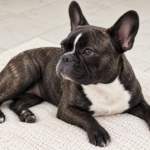
Short-coated dogs have less protection than thick, double-coated breeds. Age, body condition, health and familiarity with cold weather also affect tolerance, according to Cornell’s winter safety guidance. A puppy, an older dog or a dog with a medical condition may need a different plan from a healthy adult.
Shivering, lifting paws, hunching, whining or refusing to continue are reasons to get into a warm, dry place. Do not dismiss reluctance as stubbornness. Ask your vet about a new change in comfort or stamina, particularly if it continues indoors.
A useful question for the clinic is: “Given this dog’s breathing, mobility and health, how should we change toilet trips and exercise when it is cold or slippery?” That is more actionable than asking for a breed-wide cutoff.
Make the outing easy to shorten
Before leaving, look beyond the weather app: is the path icy, is rain soaking everything, is the route exposed, and how quickly can you get home? My practical preference is a nearby loop with several easy turnbacks, not a destination that commits us to the same distance home.
The RSPCA’s winter guidance recommends keeping dogs away from frozen ponds and lakes, making them visible in dark conditions and providing a comfortable indoor resting space. Do not leave your Frenchie alone in a cold car or treat a kennel as the winter plan.
On days when outdoor time needs to be limited, keep toilet opportunities separate from exercise ambitions. Gentle indoor play or a short training game can add variety without making a long walk the goal. Keep the activity comfortable rather than trying to compensate with frantic exercise.
A coat is one layer of the plan
A well-fitting jacket can help a short-coated dog stay comfortable, but it is not permission to ignore the conditions. AAHA advises choosing clothing that covers the chest and back while allowing easy movement, and introducing it gradually.
Check your own dog’s movement and toilet access before relying on an outfit. A product’s appearance, price or “winter” label does not establish a safe exposure time. This is a care checklist, not a claim that a particular coat has been tested on Nina.
Do a return-home paw check
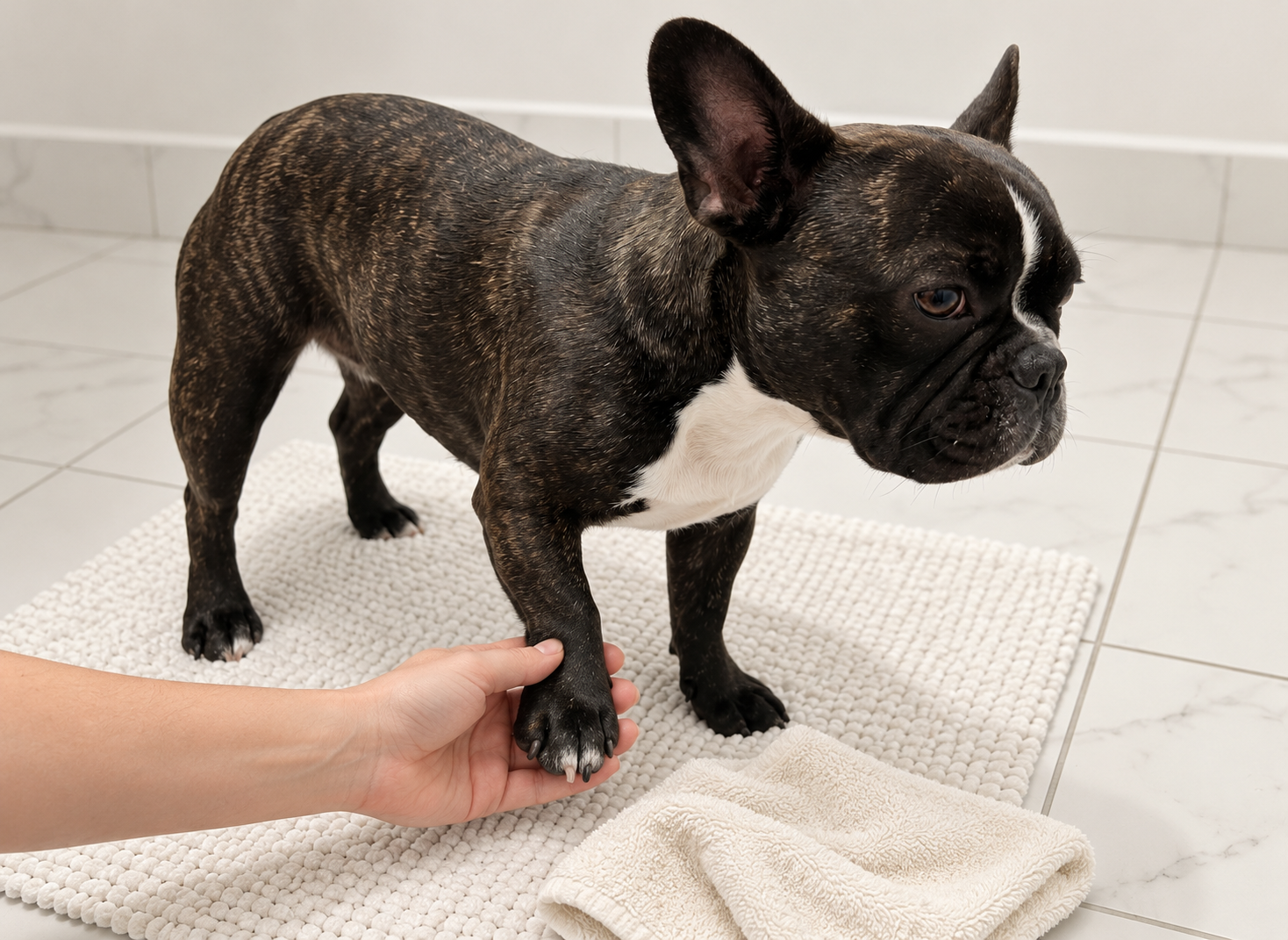
After each walk, wash and dry the feet and underside to remove salt, ice and chemical residues. Look between the toes and check for redness or cracked pads. These steps follow the ASPCA’s cold-weather advice.
Keep antifreeze and de-icing products out of reach and clear spills. If you suspect ingestion of antifreeze or another winter chemical, contact a veterinarian immediately, even before symptoms appear. Do not let “pet-friendly” packaging replace storage precautions or supervision.
A simple home setup is enough for the routine: a towel ready to use and a place where you can see each paw without rushing. If a paw is painful, bleeding or persistently irritated, stop handling it and ask your vet what to do next.
Know when cold exposure is urgent
After cold exposure, weakness, confusion, unusual drowsiness or slow breathing can indicate hypothermia. Move your dog indoors, wrap them in warm blankets and contact an emergency veterinarian immediately. Do not delay care to see whether a nap fixes it.
Discolored, swollen or painful skin can be a sign of frostbite. Seek prompt veterinary advice and do not rub the affected area. AAHA’s guidance explains both conditions; a photograph or an outdoor temperature reading cannot rule them out.
Common questions
Can French bulldogs play in snow?
Snow is not automatically safe or automatically off limits. Use the individual plan, supervise closely and leave as soon as your dog is uncomfortable. A brief enjoyable outing is different from prolonged exposure.
What temperature is too cold for a Frenchie?
A universal number would leave out too much: health, coat, wetness, exposure and the dog’s response. Ask your vet for individualized limits and have an indoor alternative ready.
Do I need to buy winter gear first?
Start with the route, supervision and a warm place to return to. Discuss clothing or paw protection appropriate for your dog, but do not make a purchase the substitute for those basics.