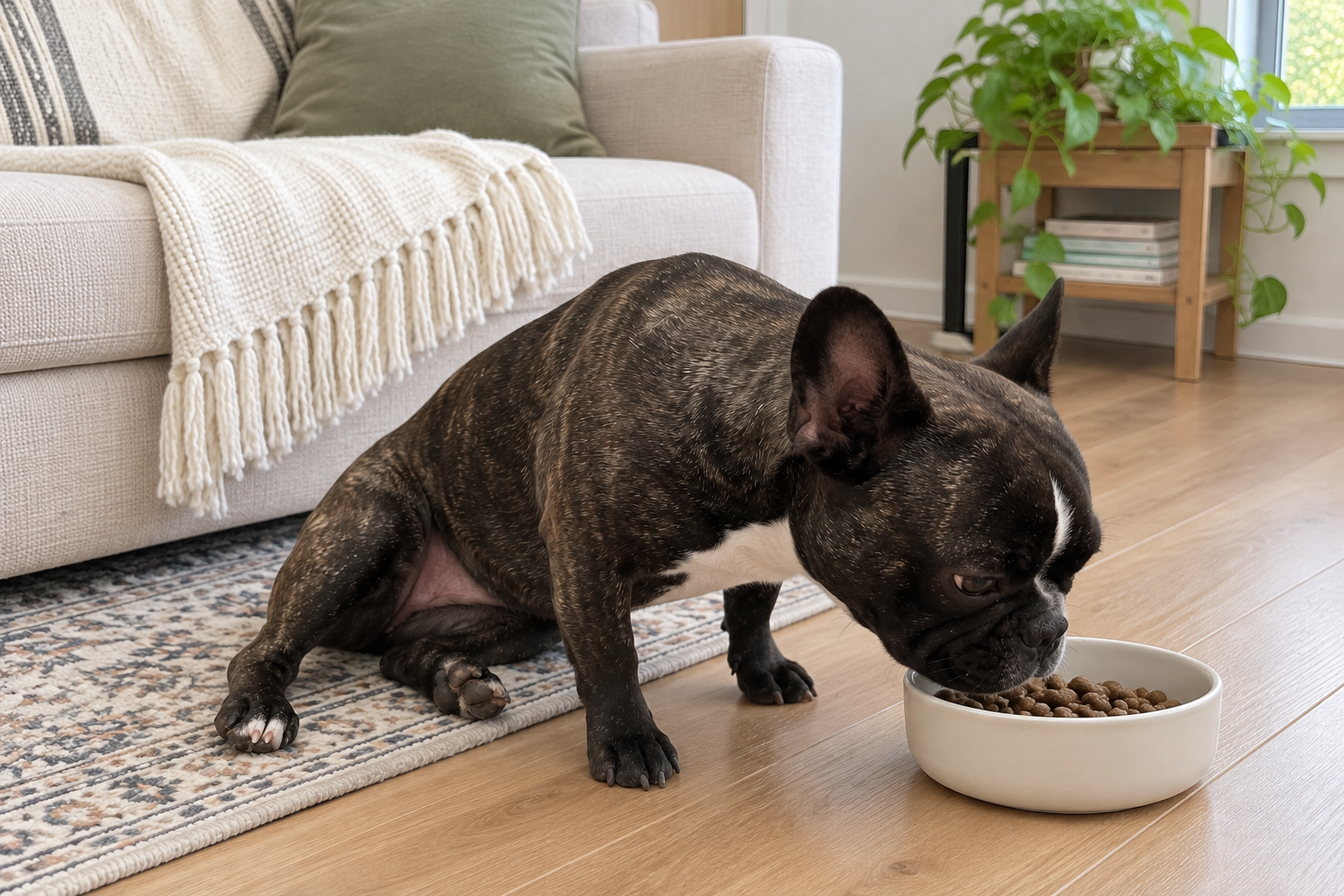

Nina eats her meals like she’s won them in a heist, and she watches ours like an unpaid consultant. If enthusiasm equaled nutrition knowledge, she’d have a PhD.
It doesn’t, which is how I ended up doing the homework instead. Here’s the feeding guide I wish someone had handed me on day one: what goes in the bowl, how much, when, and which human foods are fine versus genuinely dangerous.
Key takeaways
- Choose a complete and balanced food appropriate for your Frenchie’s life stage and health.
- AAFCO sets nutritional standards; it does not approve individual foods.
- Measure portions using the exact label and count treats. Food format and a breed picture matter less than nutritional suitability, tolerance and regular follow-up.
What to feed a French Bulldog: start with life stage
Choose a complete and balanced food appropriate for growth or adult maintenance, with any medical needs considered. Our French Bulldog food comparison looks at specific options; this guide explains the feeding decisions behind them.
On a US label, look for the nutritional adequacy statement. AAFCO explains that it does not approve or certify foods. Its standards inform those statements. A topper labeled for supplemental feeding is different from a complete daily diet.
Kibble, wet and cooked foods can all be options when properly formulated. A named meat first, a short ingredient list or a Frenchie on the bag does not establish suitability by itself. Consider the finished diet, manufacturer information and your dog’s health. Homemade meals need a properly formulated recipe from a qualified veterinary nutrition professional, not a casual mix of meat, rice and supplements.
How much to feed: use the individual plan
There is no one calorie range that fits every adult Frenchie. Use the exact food’s energy density, your dog’s individual starting allowance and follow-up on weight and body condition. Our portion and meal-timing guide shows how to calculate grams or cups without duplicating a breed-wide guess here.
When I asked our vet why Nina had gained a pound between visits, the answer was a polite interrogation about “just a few” training treats. Weighing portions and counting those extras makes the conversation much more useful than describing the bowl as small.
WSAVA’s treat guidance recommends keeping treats below 10% of daily calories. That is a ceiling, not a target; prescribed diets or other needs can require tighter restrictions.
A feeding schedule for puppies, adults and seniors
- Young puppies: several small meals, commonly three or four, with a complete growth diet and regular review of growth and portions.
- Older puppies: adjust meal frequency gradually according to the individual plan. Do not switch to adult food or restrict calories simply because the puppy reaches a generic weight-chart number.
- Adults: two measured meals is a practical routine for many dogs. Health needs can call for a different schedule.
- Seniors: review appetite, muscle, weight and health. Age alone is not a reason to reduce every portion.
Use the exact puppy food’s guide and veterinary follow-up. Our growth-tracking article explains why the trend matters more than a universal monthly target.
Human foods: the safe list and the danger list
For dogs without relevant allergies or dietary restrictions, these can be occasional plain treats in suitable small pieces, not complete meals:
- Plain cooked chicken, turkey, or lean beef (no seasoning, no bones)
- Carrots, green beans, cucumber, plain pumpkin
- Blueberries, apple slices without seeds, banana
- Plain cooked rice and plain scrambled egg
Keep the following away from your dog. Contact your vet promptly after a possible ingestion and do not induce vomiting unless instructed:
- Grapes and raisins
- Onions, garlic, and chives
- Chocolate and anything caffeinated
- Xylitol (in sugar-free gum and some peanut butters)
- Cooked bones, corn cobs, alcohol, macadamia nuts
Food allergies: a separate decision from everyday food choice
Recurring itching, ear problems or digestive changes deserve assessment. They do not identify a food allergen by themselves. Our chicken-allergy story describes Nina’s experience and the veterinary process.
A controlled elimination diet and appropriate challenge are used to investigate food allergy. Swapping to an ordinary salmon or lamb recipe is not automatically the same thing. Follow the whole plan, including treats and flavored medications, instead of relying on an ingredient popularity list.
Switching foods without wrecking their stomach
For a routine change, a gradual transition over about 7 to 10 days is a common starting approach: 25 percent new food for a few days, then 50, then 75, then fully switched, checking with your vet if digestive problems develop rather than repeatedly switching recipes. The one exception is a vet-directed switch after illness. Follow their schedule instead.
This is one Frenchie parent’s routine, not veterinary advice. Your vet should sign off on anything beyond the basics, especially for puppies and dogs with health issues.
FAQs about feeding a French Bulldog
What should a French Bulldog eat in a day?
A measured amount of complete, life-stage-appropriate food with fresh water available. Include treats in the individual calorie allowance; there is no single adult portion that fits the whole breed.
What should I not feed my Frenchie?
Keep grapes, raisins, onions, garlic, chocolate, xylitol, alcohol, macadamia nuts, cooked bones and corn cobs away. Avoid seasoned or fatty scraps and follow any allergy restrictions. Contact your vet after a concerning ingestion.
What are Frenchies most allergic to?
No ingredient list can diagnose your dog. Food and environmental problems can produce overlapping signs. A vet-guided investigation is more useful than assuming chicken, grain or another ingredient is responsible.
What is the best meat for French Bulldogs?
There is no universal best meat. A complete diet and individual tolerance matter; plain meat alone is not balanced. Do not use a new protein as an informal substitute for a prescribed allergy trial.
Is grain-free food better for Frenchies?
Not automatically. Choose for nutritional suitability and actual medical needs, not the grain-free label. Discuss any reason for excluding an ingredient with your vet.
How many times a day should a French Bulldog eat?
Two meals is a common adult routine, while young puppies often need three or four smaller meals. Adjust for the individual, growth and medical requirements.
Can I make homemade food for my French Bulldog?
Use a complete recipe formulated for your dog by a qualified veterinary nutrition professional and follow it precisely. Meat with rice or vegetables is not automatically balanced.
What feeding chart should I use for a Frenchie puppy?
Start with the exact complete puppy food’s guide and a veterinary plan, then monitor growth and body condition. Charts for another recipe cannot account for different calorie densities.