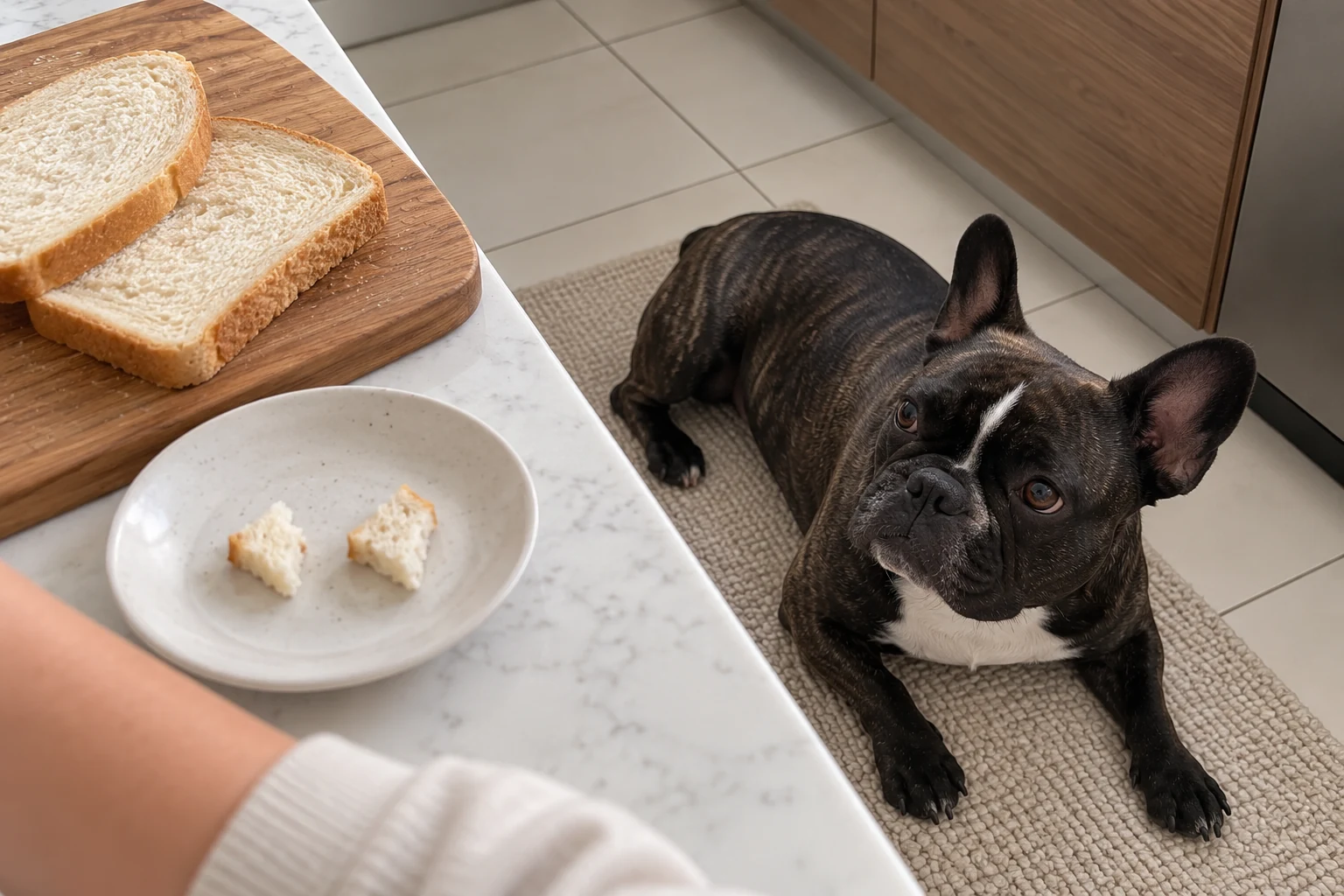

A dropped crust of plain, fully baked bread is usually little cause for concern for a healthy French Bulldog. The answer changes when the bread contains raisins, garlic, chocolate, or another unsafe ingredient. Raw yeast dough is a separate emergency: call a vet immediately if your dog eats it.
For a dog with dietary restrictions or suspected French Bulldog food allergies, even plain bread may be off the menu. Check the whole recipe, the amount eaten, and your dog’s own feeding plan before deciding whether a snack was harmless.
Key takeaways
- A small piece of plain baked bread is generally suitable only as an occasional extra.
- Raw yeast dough needs an immediate veterinary call, even without symptoms.
- Check bread and toppings for raisins, onion, garlic, chocolate, macadamias, or xylitol; keep moldy bread away too.
Raw yeast dough needs immediate help
Raw bread or pizza dough containing yeast can keep expanding in a dog’s warm stomach. Fermentation also produces alcohol, which the dog can absorb. Pet Poison Helpline warns about both stomach distension and alcohol poisoning.
Call your vet or an emergency clinic as soon as you discover the exposure. Explain the recipe, roughly how much is missing, when it happened, and your dog’s weight. Keep any packaging. Do not wait for a swollen belly, unsuccessful retching, weakness, or staggering to appear.
Sourdough starter and unbaked sourdough dough also contain active yeast. Leaving the bowl on a counter does not reliably put it out of reach. Use a closed area your dog cannot access while the dough rises.
Do not try to induce vomiting or give a home remedy unless a veterinary professional directs you. Pet Poison Helpline’s dough guidance specifically cautions that misguided home treatment can make the situation worse.
Which breads should Frenchies avoid?
“Baked” only answers the yeast-dough question. It does not make every ingredient safe.
- Raisin bread, fruit buns, and loaves containing sultanas or grape-derived currants: these can cause kidney injury. Cornell advises an immediate call after grape or raisin ingestion. Do not rely on picking the visible fruit out.
- Garlic bread or onion bread: onion-family ingredients can damage dogs’ red blood cells. Garlic powder and onion seasoning still count.
- Chocolate bread and macadamia baked goods: these contain ingredients that are toxic to dogs. The dose and recipe affect the risk, so get professional advice after ingestion.
- Sugar-free or specialty sweetened bread: check for xylitol. It can cause dangerous poisoning in dogs.
- Rich dessert breads: even without a toxic ingredient, added fat and sugar make them poor routine treats.
The ASPCA’s people-food hazard list covers these major ingredients. A nut loaf is not automatically poisonous because it contains any kind of nut, but its exact contents matter. When the recipe is unknown, tell the vet that too.
Plain bread adds calories without being necessary
A small piece of plain white or wheat bread is generally tolerated by dogs without a relevant allergy, according to the AKC’s bread guidance. Bread offers no essential addition to a complete diet, so there is little reason to make it a daily habit.
Keep any offered piece small and easy to chew, and supervise rather than letting your dog gulp a large wad. Avoid butter, rich spreads, and unverified toppings. Toasting does not remove unsafe additions already baked into the loaf.
Count bread with all other extras. UC Davis recommends that treats stay within 10% of daily calories, with the remainder supplied by complete, balanced food. That is a combined ceiling, not a bread allowance to use up.
Stale bread and mold are different concerns
Do not use your dog to finish questionable food. Moldy bread can contain toxins that cause serious illness, including tremors and seizures. Pet Poison Helpline’s mold guidance recommends professional help after a suspected exposure.
Secure the bread bin, trash, and compost. If your dog raided a bag, check whether packaging was swallowed too and mention that to the vet. Do not dismiss shaking, unusual behavior, or vomiting as ordinary indigestion.
FAQs about French Bulldogs and bread
Can French Bulldogs eat toast or crusts?
Occasionally, a small piece of plain baked bread or toast can fit a healthy dog’s diet. The same ingredient checks apply to the crust and the center.
Can they eat sourdough?
Plain, fully baked sourdough is different from raw dough or starter. A small baked piece may be suitable; raw yeast-containing dough or starter requires an immediate veterinary call.
Will bread settle an upset stomach?
Do not use bread as treatment. Ask your vet what food is appropriate, especially with vomiting, pain, reduced appetite, or persistent diarrhea. A short-term digestive diet is a medical decision.
Should I give bread after my dog swallows a bone or sharp object?
No home padding remedy is reliably safe. Call a vet for instructions before feeding anything. The object, its location, and the dog’s symptoms determine what should happen next.
Can French Bulldog puppies eat bread?
There is no nutritional reason to introduce it. Prioritize complete puppy food and suitable training rewards. A plain crumb and a piece of raisin bread require very different responses.
Does gluten-free bread make a better dog treat?
Not automatically. It can still contain unsafe ingredients or be high in calories. Choose treats for the individual dog’s needs, and follow the vet’s instructions during any allergy investigation.