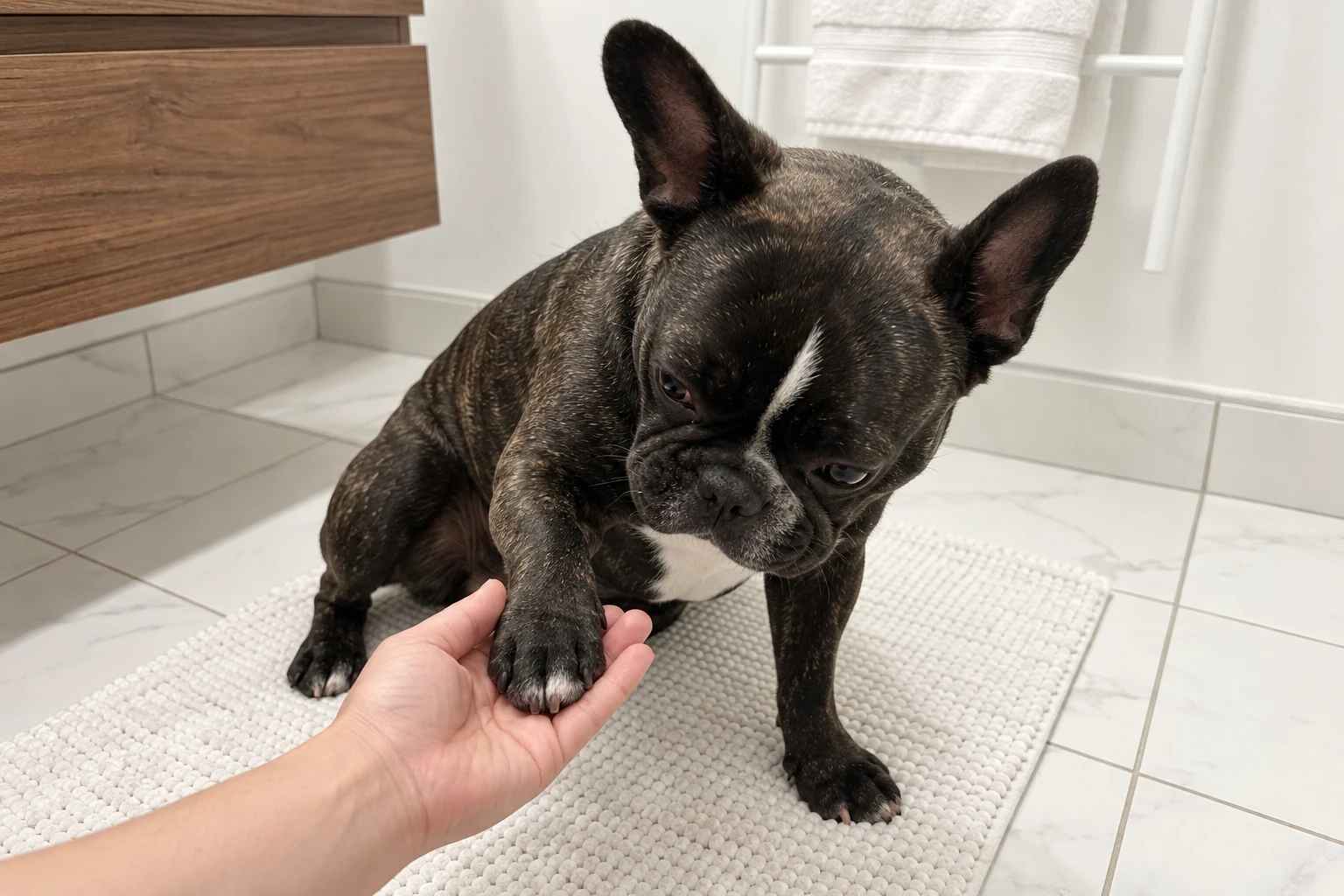

French Bulldog allergies often show up as itchy paws, face rubbing, irritated skin or recurring ear trouble. Food, environmental allergens and flea bites can produce overlapping signs, so a new bag of food or bottle of shampoo isn’t a diagnosis.
Nina has a chicken allergy. Our guide to Frenchies and chicken allergy covers that specific concern, but chicken isn’t the explanation for every itchy dog. The useful starting point is to document the pattern and have your vet check for parasites, infection and other causes.
Key takeaways
- Itchy paws, irritated ears and red skin can fit allergies, but other conditions look similar.
- Food allergy needs a controlled diet trial; seasonal timing alone cannot identify the trigger.
- Work with your vet on itch relief, infection treatment and a practical long-term plan.
Urgent: breathing difficulty, collapse or rapidly developing facial swelling needs emergency veterinary advice. A sudden reaction involving swelling plus vomiting or diarrhea is also urgent. Don’t wait to see whether an antihistamine works. VCA describes these as possible signs of anaphylaxis.
What French Bulldog skin allergies can look like
Look for changes from your dog’s normal behavior: repeated chewing between the toes, rubbing the face on furniture, scratching that interrupts rest, or persistent head shaking. Redness, hair loss, crusts and a new odor are worth noting, too.
Allergy-related itch often affects the paws, face, ears, belly and armpits. Recurrent ear inflammation can be an important clue. However, a smelly ear isn’t proof of a food allergy, and a dog licking one sore paw may have an injury or something lodged between the toes. Cornell’s allergy guidance emphasizes checking other causes of itch, including fleas, mites and skin infection.
Frenchie folds deserve attention because moisture and friction can create a separate skin problem. A rash in a wrinkle, or a belly rash after a hot day, shouldn’t automatically be labeled an allergy or “heat rash.” Tell the vet where it started and whether it hurts, spreads, weeps or smells.
Food, environment or fleas?
| Possible cause | Useful clues | What the clue cannot tell you |
|---|---|---|
| Environmental allergy, often called atopic dermatitis | Itch may flare with pollen seasons, though indoor allergens can cause year-round trouble. | A seasonal pattern doesn’t identify a particular plant, and year-round itch doesn’t rule this out. |
| Food allergy | Persistent itch, ear problems, sometimes vomiting or loose stool. | Symptoms alone don’t identify an ingredient; food intolerance and other digestive conditions can overlap. |
| Flea allergy | A sensitive dog can react to a small number of bites. | Not seeing a flea doesn’t exclude flea exposure. |
| Infection, mites, irritation or another skin disorder | Pain, crusting, discharge, localized sores or worsening odor. | These may mimic allergy or occur alongside it. |
More than one problem can be present. Treating yeast or bacteria may improve a flare while leaving an underlying allergy unresolved. Conversely, changing food won’t remove a foreign body from a paw.
How vets work out what is causing the itch
Bring a list of current and previous foods, treats, chews, medications, supplements and parasite prevention. Add photos of flare-ups and a short note about when the itch began. Those details are often more useful than a shopping list of products you’ve seen recommended.
The examination may include looking at skin or ear samples under a microscope and checking for parasites. Your vet decides which tests fit the signs. AAHA’s overview of canine allergy care explains why history, examination and ruling out other disease come before choosing treatment.
A food trial is more than changing the main food
When food allergy is suspected, a vet may prescribe a hydrolyzed diet or a carefully chosen novel-protein diet. “Novel” means new to that dog, not simply unusual on a shop shelf. VCA describes an elimination trial lasting 8–12 weeks, followed by a planned food challenge when appropriate to confirm the diagnosis.
The whole household must follow the plan: no unapproved treats, chews, scraps or food used to hide tablets. Ask about flavored medications and toothpaste rather than stopping prescribed treatment yourself. Ordinary retail “limited ingredient” labels may not provide the manufacturing controls needed for a diagnostic trial.
Blood, saliva and hair tests marketed for food sensitivity should not replace that veterinary process. Improvement after a food switch can have several explanations; the supervised challenge helps distinguish allergy from coincidence. Once a trigger is confirmed, avoiding it controls the reaction. It doesn’t mean the underlying allergy has been cured.
Environmental testing has a different job
Skin or blood tests for environmental allergens are generally used to help select allergens for immunotherapy after a clinical diagnosis. A positive result by itself doesn’t prove why a particular dog is itchy. The Merck Veterinary Manual makes that distinction between diagnosis and treatment planning.
What an allergy treatment plan may include
A plan usually has separate jobs: make the dog comfortable, treat complications and reduce future flare-ups. Ask which treatment is doing which job, how soon you should see improvement and when to recheck.
- Prescription itch control. Your vet may consider targeted oral or injectable treatments or other anti-inflammatory medicines. The choice depends on age, health history, infection risk and other medication. There is no one best drug for every Frenchie.
- Treatment for infection. Ear and skin infections need appropriate diagnosis and treatment. Repeatedly reusing old ear drops can miss a changed problem.
- Consistent flea prevention. Use a vet-recommended plan for the pets in the household. Check that doses haven’t been missed.
- Skin care. A prescribed shampoo, wipe or topical treatment can be part of the plan. Ask for exact frequency, contact time and drying instructions rather than bathing more often by guesswork.
- Dietary management. A confirmed food trigger needs consistent avoidance, including treats and flavored extras.
- Allergen-specific immunotherapy. In suitable dogs, customized injections or drops aim to change the immune response. It takes months to assess and does not promise a permanent cure.
Merck’s veterinary review of atopic dermatitis supports a combination of treatments and regular progress checks. If a plan is difficult to afford or maintain, say so. A routine you can carry out consistently is more useful than one that looks tidy on paper.
A home routine that supports the plan
Keep a simple diary: date, itchy areas, severity, food changes, medicines given and whether sleep was disturbed. Use the same scale each time, such as mild, moderate or severe. Photograph the same area in similar light so the vet can compare it.
After outdoor time, gently wipe paws with a damp cloth if your vet recommends it, then dry them, including between the toes. Keep folds clean and dry with the method your vet has shown you. Wash bedding regularly and avoid strongly scented cleaning or grooming products that seem to irritate the skin. Don’t scrub inflamed areas.
Don’t start several shampoos, supplements and diet changes together. Apart from the chance of irritation, it makes it harder to tell what helped. Discuss fish oil or any supplement with your vet first; “natural” doesn’t establish a useful dose, effectiveness or compatibility with a food trial.
When to book an appointment
Arrange a veterinary visit for persistent or recurring itch, ear discharge, swollen paws, broken skin, painful folds or a dog who cannot settle. Seek prompt advice for a spreading wet sore, marked pain or a dog who seems generally unwell. You don’t need to wait two weeks while trying shop-bought remedies.
If treatment is helping only briefly, ask about rechecking for infection, reviewing the diet trial or referral to a veterinary dermatologist. Bring the diary and the actual ingredient labels. The goal is a dog who can sleep, walk and relax comfortably, with a clear plan for the next flare.
FAQs about French Bulldog allergies
What are French Bulldogs most allergic to?
There isn’t one trigger shared by the breed. Environmental allergens, flea bites and food ingredients can all matter. Chicken can be a food allergen, as it is for Nina, but assuming chicken is always responsible can delay the right diagnosis.
How can I tell food allergy from environmental allergy?
You usually can’t tell by appearance. Seasonal flares provide a clue, but environmental allergy can continue all year and more than one allergy can coexist. A vet-supervised elimination diet and challenge are the practical route for evaluating food allergy.
Can I give my Frenchie Benadryl or another antihistamine?
Only after your vet confirms the exact product and dose for your dog. Combination human medicines can contain unsuitable ingredients, and antihistamines aren’t reliable treatment for a significant flare. Breathing difficulty or collapse requires emergency care, not a trial of home medication.
Is grain-free food best for allergies?
No single label solves food allergy. A grain-free food may still contain the ingredient causing the problem. Choose a diagnostic or long-term diet with your vet based on the dog’s history and confirmed needs.
Why do ear infections keep returning?
Allergy is one possible underlying factor, but it is not the only one. The ears need examination and appropriate samples; treating repeated episodes without investigating the cause can leave the cycle unresolved.
Can grass cause a rash on my Frenchie’s belly?
Grass pollen or contact irritation may be involved, but red belly skin has several possible causes. Note the timing, take photos and mention recent outdoor exposure. Avoid putting human creams on skin your dog can lick without veterinary approval.
Does coconut oil cure skin allergies?
It should not be treated as an allergy cure or a replacement for diagnosis. Adding oils or greasy products can complicate skin care and diet control. Ask your vet which skin-support products, if any, fit your dog’s plan.
Do allergies go away?
Some triggers can be avoided and symptoms controlled, but environmental allergic skin disease often needs ongoing management. A return of itch warrants reassessment; it doesn’t automatically mean the treatment has stopped working or that a new food is required.