A French bulldog losing hair in patches needs a closer look than a Frenchie leaving loose hairs on the sofa. New bald spots, visible thinning or irritated skin are reasons to contact your vet, even if the dog is not scratching. “Alopecia” describes hair loss; it does not tell you what caused it.
If the coat still looks evenly covered and you are mainly dealing with loose hairs, our French bulldog shedding guide covers that different problem. Here, the focus is a change in the coat itself and how to get useful help without guessing at a treatment.
Quick takeaways
- New bald patches or thinning are not something to dismiss as routine shedding.
- Itching, skin changes and the timing help your vet investigate, but appearance alone does not establish a diagnosis.
- Record what changed and arrange veterinary advice before trying a new cream, supplement or shampoo.
Shedding or hair loss?
Normal moulting should not leave a newly bald or patchy coat. That distinction is made in PDSA’s veterinary guidance on fur loss. It also notes that a new location or pattern of hair loss can matter even when some areas have always been sparsely covered.
Compare with your dog’s own earlier photographs, not a different Frenchie on social media. Look in similar light and avoid pulling at the hair to see whether it comes out. A phone photo can help record a change, but it cannot replace a skin examination.
Why might a Frenchie develop bald spots?
There are several possible routes to a thin coat. Some conditions affect the hair or follicles directly; in others, a dog damages the coat by licking, rubbing or scratching uncomfortable skin. The Merck Veterinary Manual describes hair loss as a sign whose cause must be established before treatment can be chosen.
- Itchy skin: allergies and parasites can lead to rubbing or scratching. Our French bulldog allergies guide explains that topic further, but a bald spot alone does not prove an allergy.
- Skin infection or inflammation: bacteria, fungi and other skin problems can affect the coat. Redness, crusting or discomfort helps describe the problem, not identify it at home.
- Friction: repeated rubbing from equipment or a surface can shorten or remove hair. Check what touches the area, but do not assume friction explains an inflamed patch.
- Problems with hair growth: some hormonal, inherited or hair-cycle conditions can cause loss without obvious itching. Lack of scratching is not an all-clear.
The location is a clue, not a diagnosis
Around the eyes, along the back, beneath a collar or on both flanks: tell your vet where you first noticed the change and whether it has spread. Resist matching a photograph to a disease name and buying the suggested treatment.
For example, Cornell’s explanation of sarcoptic mange describes itching, crusting and hair loss, with examination and testing involved in assessment. That does not mean every itchy bald patch is mange. Tell the clinic if other pets or people are also itchy, since some causes can spread between animals or affect people.
Likewise, the FDA explains that hypothyroidism can affect the coat, but diagnosis involves interpreting blood tests alongside the dog’s broader condition. A symmetric patch or darkened skin is not enough to diagnose a hormone problem yourself.
What to note before the appointment
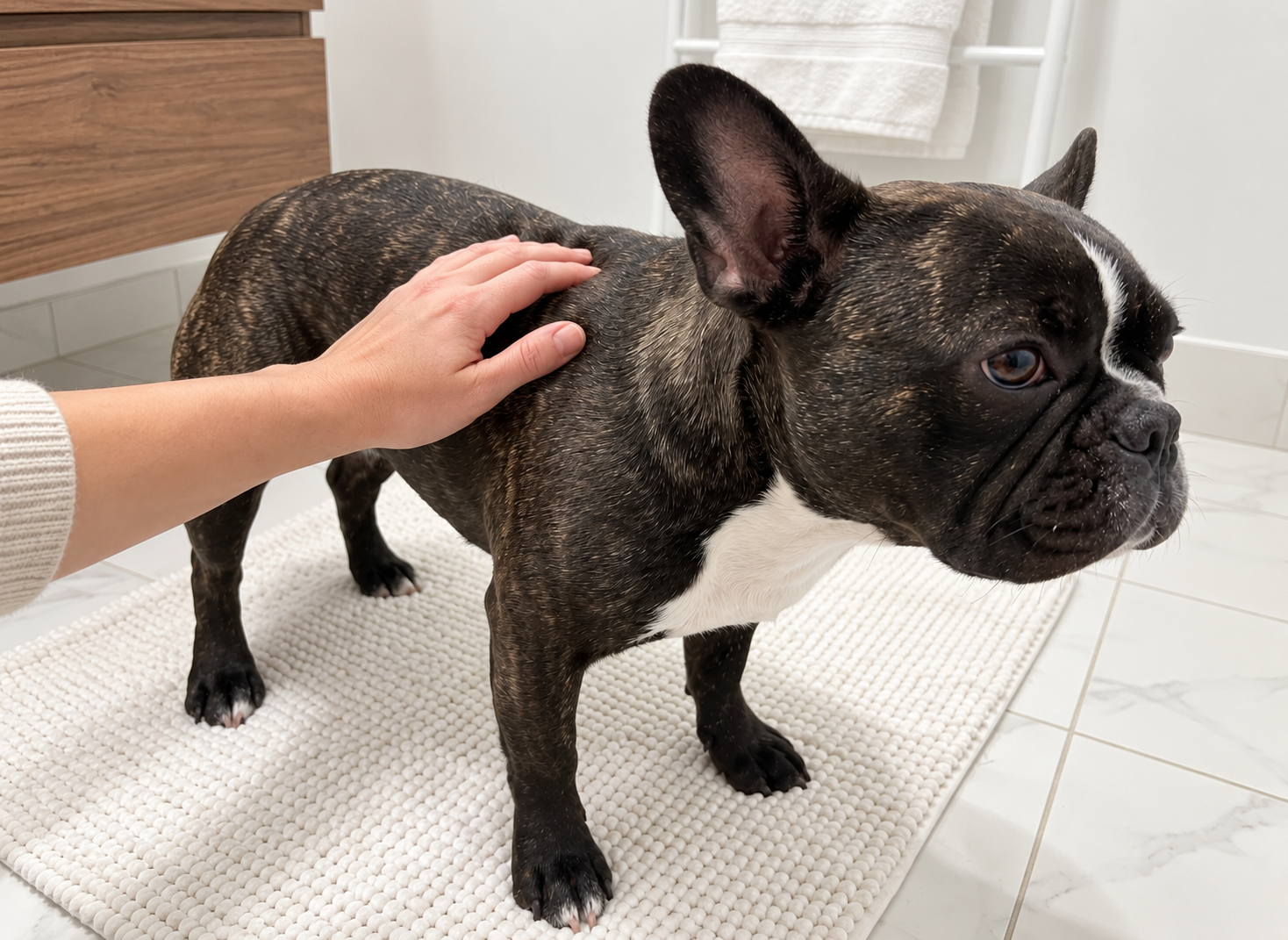
A short record is more useful than a long list of internet diagnoses. Write down:
- When you first saw the change and whether it is growing or recurring.
- Whether your dog scratches, licks, rubs or seems uncomfortable when touched.
- Any redness, flakes, crusts, odor, moisture or broken skin.
- Recent grooming, clipping, new products, medication or changes to parasite prevention.
- Any changes in appetite, thirst, energy, weight or general behavior.
Take a clear photograph of the area and a wider photo showing where it is on the body. Keep the original dates. Bring product names and current medication details rather than relying on memory.
When to call the vet
Arrange veterinary advice for new or unexplained hair loss. When you call, mention pain, raw or weeping skin, rapid spread, persistent licking or a dog who seems unwell so the clinic can judge how soon they need to be seen. Hair loss near an eye deserves particular care if the eye is red, held closed or being rubbed. Tufts recommends a veterinary examination for eye discomfort or redness.
Do not wait for a large bald area before asking. PDSA recommends having dogs checked when they begin losing fur because skin problems can be painful or irritating.
What treatment might involve
The appointment may include a skin examination and samples, with other tests chosen from the history and findings. Your vet may need to investigate more than one issue rather than prescribe a single “hair growth” product.
Ask what the working diagnosis is, what each test is checking and how you will judge improvement. Comfort and skin healing matter as well as hair regrowth. If the plan is not helping, agree on a review rather than adding several new products at once.
A seasonal pattern, coat color or breed name should not be used as a shortcut to treatment. Follow the individual plan and ask what regrowth, if any, is realistic; there is no reliable universal timetable for every cause.
What not to try while waiting
Never use human minoxidil to treat a dog’s thinning coat. The American Academy of Dermatology warns that minoxidil can poison pets. Do not apply essential oils, leftover medication or a new medicated shampoo without veterinary guidance. Avoid repeatedly scrubbing, brushing or clipping an irritated area to “clean it up.” Ask the clinic how to prevent further licking or scratching safely if that is happening.
Keep your dog comfortable, use clean soft bedding and avoid unnecessary changes to their food or skincare routine. Do not stop prescribed medication on your own; tell the vet what your dog is taking.
FAQs about French bulldog hair loss
Can my Frenchie have alopecia without itching?
Yes. Not all causes make a dog scratch. New thinning still deserves assessment, especially if there are changes in energy, weight, thirst or skin appearance.
Does a bald patch mean a food allergy?
No. Several skin and hair-growth problems can look similar. Changing food repeatedly without a plan can make the history harder to interpret; discuss the investigation with your vet.
Will the hair grow back?
That depends on the cause and what has happened to the follicles. Ask for expectations after the problem has been assessed rather than relying on a fixed number of weeks.
Should I brush more to remove the loose hair?
Gentle routine grooming and an irritated bald patch are different situations. Do not brush over sore or damaged skin. Get advice about the patch rather than treating it as a shedding problem.