

Key takeaways
- Choose short, accessible outings around your dog’s health and usual comfortable activity, not a mileage goal.
- Heat, humidity, climbing and difficult footing can change what a dog can manage.
- Have an easy exit before you leave; a carrier is not permission to continue through unsafe conditions.
- Stop at fatigue, pain or breathing changes. Suspected heatstroke needs cooling and urgent veterinary care.
Hiking with a French Bulldog should start with a small question: is this particular outing comfortable and sensible for this particular dog? A quiet, level nature path near the car is a very different proposition from a steep trail with no easy exit. Reaching a viewpoint is never more important than your Frenchie’s breathing and comfort. For Nina, I would plan around an easy return rather than a landmark I wanted to reach.
Our French Bulldog exercise guide covers everyday activity. This page is the practical planning layer: choosing a route, deciding when to cancel, packing and knowing when the outing is over.
First decide whether a trail outing is appropriate
If your Frenchie struggles on ordinary walks, has noisy or labored breathing, limps or recovers poorly afterward, arrange a veterinary assessment before planning a hike. Cornell’s BOAS guidance lists reduced exercise tolerance, breathing difficulty and collapse among possible signs of airway disease. Don’t dismiss those problems as simply how Frenchies sound.
Ask your vet about activity suited to your dog’s age, airway, joints, spine and other health needs. A puppy, older dog or dog recovering from illness needs an individual plan. Staying home with appropriate care can be the right choice while the humans take a more demanding route.
Choose an easy exit, not just an easy-looking trail
Virginia Tech’s veterinary rehabilitation advice recommends starting with shorter, flatter walks and recognizing individual limits. That does not mean every Frenchie should eventually progress to longer or steeper hikes.
For an initial outing, look for:
- Level, predictable footing. Avoid routes that require scrambling, repeated jumping or negotiating sharp, slippery ground.
- A quick return. Prefer a short out-and-back or a route with frequent exits over a loop you must complete.
- Space to pause. Look for shade and room to step aside without approaching a drop, traffic or water.
- Manageable surroundings. Crowds, loose dogs or livestock may make a physically easy path stressful.
Check the land manager’s current access rules and conditions. “Dog-friendly” does not mean every trail permits dogs. The US National Park Service’s pet-hiking checklist emphasizes checking access, matching the route to the animal and preparing before arrival. Rules differ by location, so don’t assume another park’s leash policy applies.
Use the weather as a go-or-no-go decision
Check conditions for the outing and return journey, not only the temperature when you leave home. There is no universal safe temperature or distance for every Frenchie. An early start doesn’t guarantee a cool return, and shade does not make exertion harmless.
PDSA recommends slower, shorter outings, water and shade, with particular care around hot surfaces. For a vulnerable flat-faced dog, canceling the trail plan is preferable to trying to solve dangerous heat with extra equipment. Choose a cool indoor activity instead.
Pack for a short outing and an early return
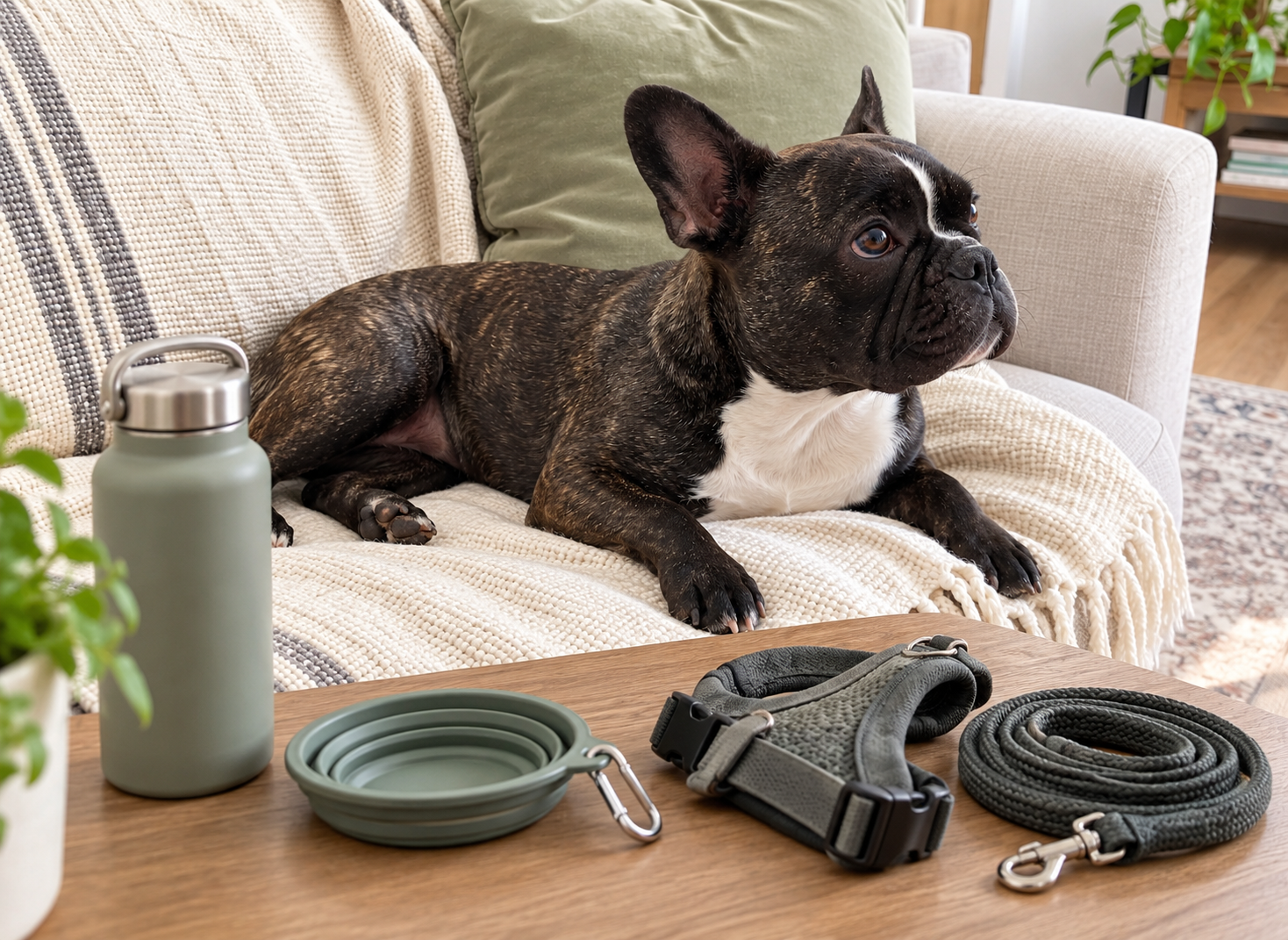
- Fresh drinking water and a bowl, including enough for an unexpected delay.
- A familiar, well-fitting harness and lead, checked before leaving.
- Waste bags and a way to carry them out.
- Your phone, route information and the nearest available veterinary service’s contact details.
- Any medication or care items required by your dog’s existing veterinary plan.
Keep your dog under control and give other trail users space. Carry drinking water rather than planning around a stream or pond. Ask your vet which parasite prevention and vaccinations fit the destination; local exposure matters.
Think through the return if your dog cannot walk comfortably. Can you get back promptly without a difficult climb? Don’t assume you can carry a struggling dog a long distance. If the route depends on that assumption, choose another route.
On the path: let comfort set the pace
Begin gently, allow sniffing and offer pauses before your dog struggles. Do not use excitement as proof of physical capacity. Watch your dog rather than trying to match another person’s pace.
End the outing for lagging, repeated lying down, limping or unusual reluctance. Virginia Tech also highlights early fatigue and difficulty getting up afterward as reasons for a veterinary review. A rest that briefly restores enthusiasm does not oblige you to continue toward the destination.
Breathing distress or suspected heatstroke
Severe breathing difficulty, collapse or abnormal gum color needs emergency veterinary help. If overheating is suspected, stop immediately and move into shade or a cool place.
PDSA’s heatstroke first aid advises starting cooling straight away with cold water over the body, keeping water away from the nose and mouth, and adding airflow. Offer water but don’t force drinking. Don’t cover or wrap the dog in a wet towel.
Call a vet as soon as possible and arrange prompt transport, continuing cooling safely where possible. This is not a situation for finishing the walk or waiting to see whether the dog can rally.
Check again after you get home
Look at paws for soreness or debris and check for ticks. Notice appetite, movement and recovery rather than marking the outing a success solely because you reached the car. Persistent stiffness, reduced energy or breathing changes deserve veterinary advice.
Write down the route, conditions and how your dog responded. That makes the next decision more useful than “we managed it once.” You can shorten the plan, choose easier ground or decide that ordinary neighborhood sniff walks suit your dog better.
FAQs about hiking with a French Bulldog
How many miles can a French Bulldog hike?
There is no dependable breed-wide allowance. The dog’s medical fitness, terrain, weather and response matter more than a distance someone else’s Frenchie completed.
Does a backpack make a longer route safe?
No. A carrier must fit the dog and be appropriate for their health, but it cannot cancel heat risk or replace emergency transport. Plan an easy exit rather than relying on a bag to extend an unsuitable outing.
Is a short nature walk still worthwhile?
Yes. An outing can be about comfortable sniffing and a change of scene. It does not need a summit, a long route or a tired dog at the end.


