Some French Bulldogs enjoy other dogs; others prefer more space or being the only dog at home. The breed label cannot tell you whether two particular dogs will be compatible. A friendly greeting on a walk is also different from sharing beds, food and attention every day.
I would choose a potential companion by the dogs’ actual needs, not a list of “best breeds for a Frenchie.” Before arranging a meeting, learn to notice discomfort with our French Bulldog body-language guide. Then build an introduction that lets both dogs move at a comfortable pace.
Before choosing another dog
Consider age, play style, exercise ability and how each dog copes with other animals. An energetic puppy may overwhelm an older dog who needs quiet. A dog who enjoys brief greetings may still dislike sharing their home. PDSA’s introduction guidance emphasizes matching the individuals rather than assuming a second dog will suit every household.
Ask the rescue or current caregiver about known interactions, guarding and any bite history. If either dog has shown significant fear or aggression around dogs, get a qualified behavior professional’s assessment before attempting introductions. Do not bring home a second dog to test whether the first will “get over it.”
Plan a low-pressure first meeting
Dogs Trust recommends a separate handler for each dog, space and gradual introductions. For dogs medically ready to meet:
- Choose a quiet, neutral outdoor location with room to move away, not a crowded dog park or a narrow doorway.
- Keep each dog on a lead with their own capable adult. Begin walking at a distance where both remain comfortable.
- Only reduce the gap if both dogs remain relaxed. Do not pull them nose-to-nose or insist on contact.
- If they choose a brief greeting comfortably, move on again rather than holding them together.
- Increase distance or end the meeting when either dog becomes uncomfortable. Several short sessions may be more appropriate than one prolonged encounter.
Ask your vet about vaccination and infection precautions, particularly for puppies or dogs with an uncertain history. Do not use a strenuous walk to tire a Frenchie into accepting contact; keep conditions and activity appropriate to their health.
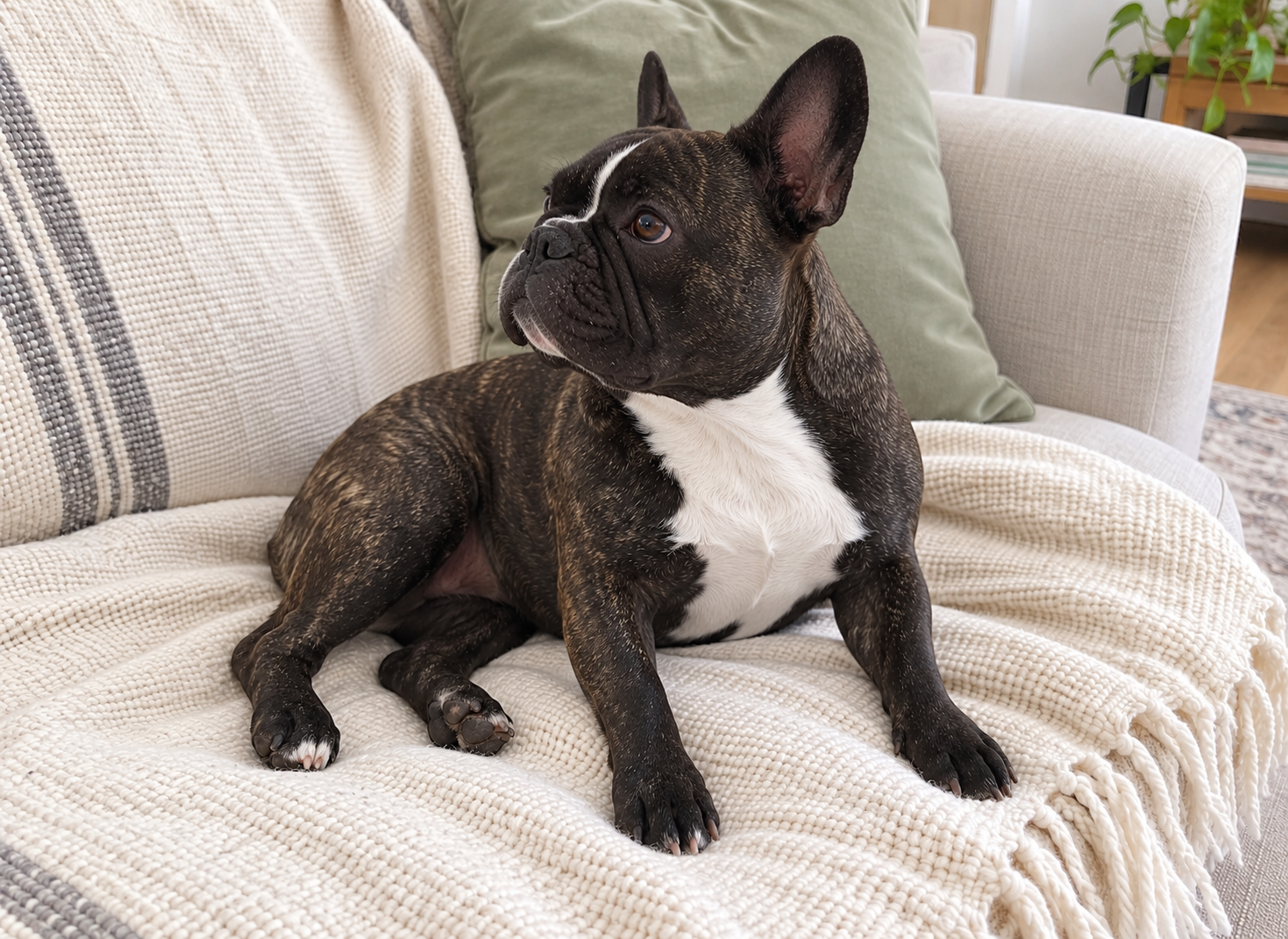
Sharing a home needs another plan
Battersea notes that meeting on neutral ground is not the same as living together. Prepare the house before the new dog arrives:
- Give each dog a separate resting area and the ability to retreat.
- Feed in separate rooms, preventing either dog from reaching the other’s meal.
- Put away contested toys and chews during initial shared time; offer valued items separately.
- Provide access to water without making the dogs compete over one location.
- Plan individual attention and quiet breaks, not constant togetherness.
Arrange secure separation when you cannot supervise. A gate is not adequate if either dog can jump it or harass the other through it; use a suitable closed-door arrangement instead. Plan separate, secure travel arrangements too, rather than putting newly acquainted dogs together in one carrier.
Pause before play becomes pressure
Watch both dogs, not just the one you think is “friendly.” If one keeps trying to leave, becomes tense or is repeatedly pursued, create space. Short breaks can help you see whether both dogs voluntarily want to resume; a dog who withdraws should not be followed and pestered.
The Irish Blue Cross recommends monitoring play and allowing breaks when interaction becomes too intense. Do not expect a resident dog to discipline a puppy or let dogs fight to establish a relationship. Repeated conflict is a reason for professional help, not another unsupervised trial.
When to stop and seek help
Lunging, snapping or escalating conflict means introductions should stop. Keep the dogs safely apart and consult a qualified behavior professional before trying again. Injuries need veterinary assessment. Humane Colorado cautions against reaching between fighting dogs or grabbing their collars; avoid putting yourself within biting reach.
There is no deadline for friendship. Some pairs can live comfortably with careful management; others are not a suitable match. A plan that protects both dogs matters more than a photograph of them sharing the sofa.