
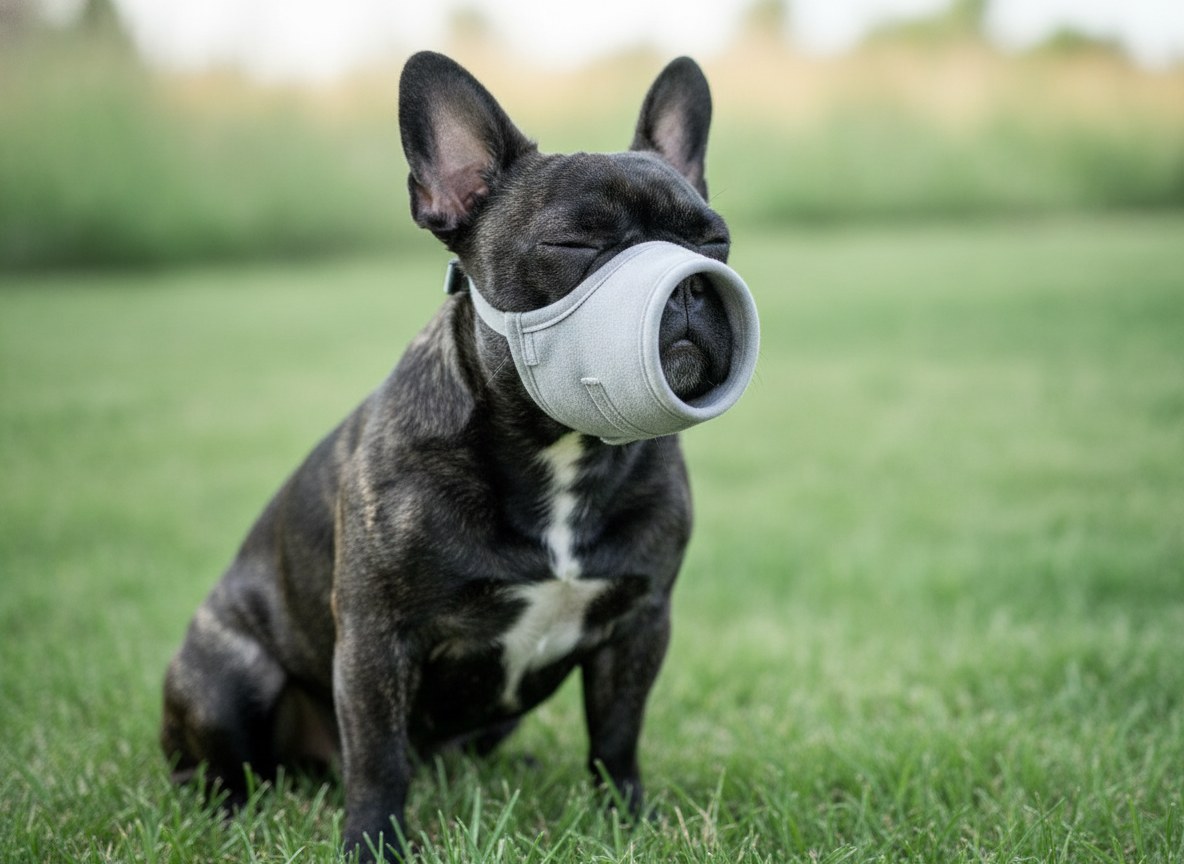

Muzzles get a bad rap, but used right they’re a kindness, for vet visits, grooming a wriggly dog, a reactive phase, or stopping a scavenger from eating sidewalk garbage. The catch with Frenchies is that a normal muzzle can be dangerous: a flat-faced dog cools itself by panting, and a muzzle that blocks that can cause overheating fast. So you need a short-snout design. Here’s what works.
Key takeaways:
- A Frenchie needs a brachycephalic (short-snout) muzzle that still lets them pant, drink, and take treats, never a standard long-snout muzzle.
- The best options are soft mesh or soft silicone designs made for flat faces, often with an open mouth area and an eye cutout.
- A muzzle is a temporary tool for specific situations, paired with training, not an all-day fix.
How I chose for a Frenchie
Breathability first. A flat-faced dog must pant to cool down, so tight, blocked muzzles are out. Short-snout fit, shaped for the breed’s face so it sits securely. Room to pant and drink, ideally take a treat too, which makes training easier. Secure but comfy straps, and real availability. Airflow beats everything.
Quick scan: the short version
- Best breathable mesh: Barkless Short-Snout Mesh Muzzle
- Best soft silicone: Barkless Soft Silicone Flat-Face Muzzle
- Best for regular wear: a custom short-snout basket muzzle
The muzzles, and who each suits
Barkless Short-Snout Breathable Mesh Muzzle
Lightweight breathable mesh built for flat faces, with an open area so your Frenchie can pant and an eye cutout that reduces anxiety. It’s the everyday pick for vet trips or a reactive stretch, airflow is the priority and this delivers it.
Best for: general use where panting and cooling matter most. Usually $10 to $18.
Barkless Soft Silicone Flat-Face Muzzle
A soft silicone design shaped for short snouts, with a multi-hole layout for airflow and a wider field of vision. It stops biting, chewing, and licking during grooming or recovery while still letting the dog breathe and pant, and it wipes clean easily.
Best for: grooming, nail trims, or stopping licking. Around $12 to $20.
The basket / custom option
For dogs who need to wear a muzzle more regularly (serious reactivity work), a custom short-snout basket-style muzzle fitted to the individual dog gives maximum airflow and room to pant, drink, and take treats. It costs more and takes measuring, but for ongoing training it’s the gold standard. Ask your trainer or vet whether your dog needs this level.
Using a muzzle the right way
A muzzle never replaces behavior work, it buys safety while you train. Introduce it slowly and positively (treats through the muzzle, short sessions), and never leave a muzzled dog alone or in the heat, since overheating is the real danger for this breed. Keep sessions short and watch the breathing, the same heat-and-air caution that runs through all good French Bulldog care.
This is one Frenchie parent’s experience, not training or veterinary advice, a professional can help with reactivity or fitting.
FAQ: muzzles for French Bulldogs
What kind of muzzle is best for a French Bulldog?
A short-snout (brachycephalic) muzzle in soft mesh or silicone that lets them pant, drink, and ideally take treats. Standard long-snout muzzles don’t fit and can block panting, which is dangerous for a flat-faced dog.
Can a French Bulldog safely wear a muzzle?
Yes, if it’s a short-snout design that allows panting and it’s used for short periods, never in the heat or unattended. For vet visits, grooming, or training, a well-fitted muzzle is safe and humane.
What size muzzle does a French Bulldog need?
Measure your dog’s snout circumference and length and match it to the brand’s short-snout sizing chart, most Frenchies fall in small/XS short-snout sizes. A good fit is snug but lets the mouth open for panting.
Do muzzles stop French Bulldogs biting?
A properly fitted muzzle prevents biting in the moments you need it, like vet handling or a reactive encounter. But it manages the symptom, not the cause, so pair it with training to address why it’s happening.
Can my Frenchie pant in a muzzle?
With the right short-snout muzzle, yes, and that’s essential. Choose an open mesh or multi-hole silicone design that leaves the mouth free to pant and drink. Never use a tight muzzle that holds the mouth shut.
How do I get my Frenchie used to a muzzle?
Go slow and make it positive: let them sniff it, feed treats through it, then build to short wears with rewards. Never force it on or use it as punishment. A dog that links the muzzle to treats tolerates it calmly.