
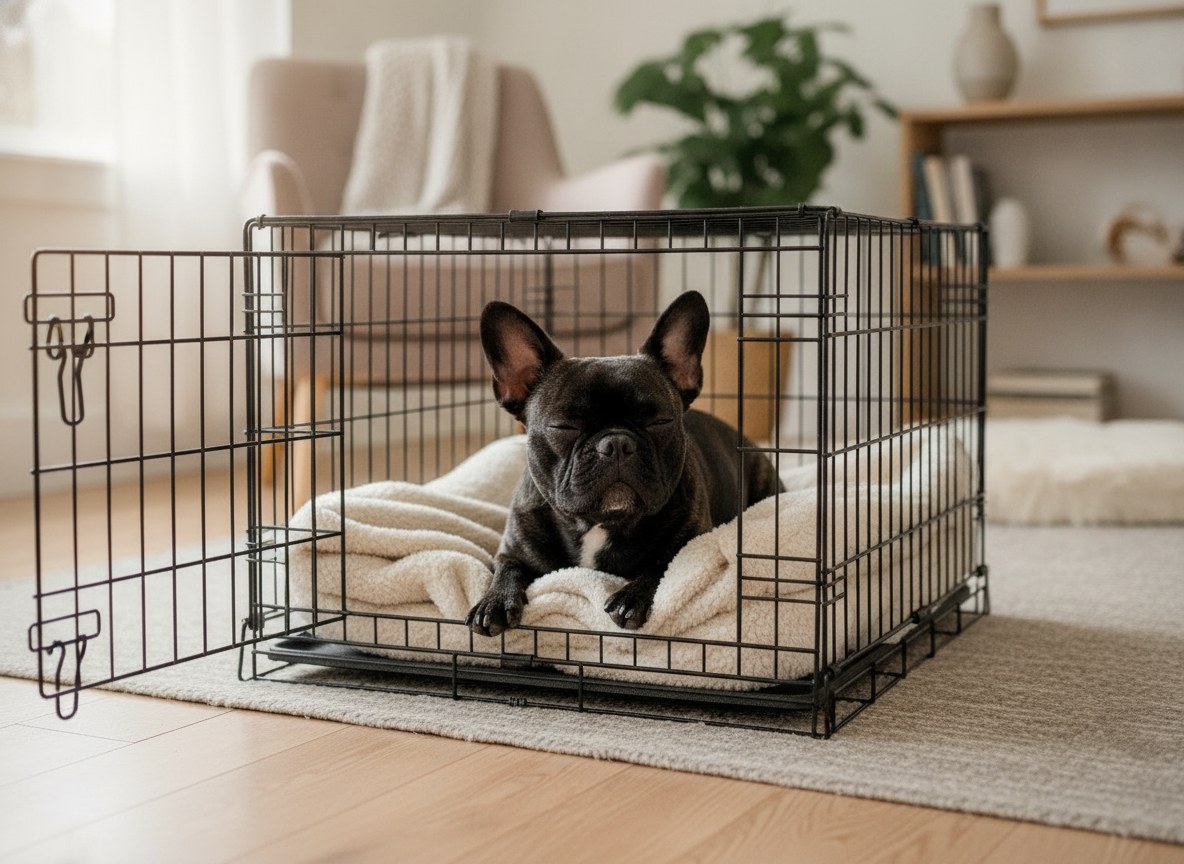

I was skeptical about crate training, it felt a little like putting Nina in jail. Then I watched her, fully trained, trot into her crate on her own to nap with the door wide open, and I got it. Done right, a crate isn’t a cage; it’s a den, a safe space your Frenchie chooses. The trick is going slow and never making it a punishment. Here’s the method that works.
Key takeaways:
- Build a positive association first, treats, meals, and comfort in the crate, before ever closing the door.
- Increase crate time in small steps; a young puppy shouldn’t be crated more than about an hour at first, and never more than 3 to 4 hours during the day.
- Never use the crate as punishment, and pair crate training with potty training, the two work hand in hand.
Step by step: how to crate train a Frenchie
- Pick the right crate and spot. A correctly sized crate (with a divider for a puppy) in a room where the family hangs out, so your dog doesn’t feel isolated.
- Make it inviting. Soft bedding, a favorite toy, and treats tossed inside. Let them wander in and out freely, no door yet.
- Feed meals in the crate. For a week or two, serve dinner inside so the crate becomes the good-things place.
- Close the door briefly. Once they’re relaxed eating inside, shut the door for a minute or two, then open it before they fuss. Build up in five-minute increments.
- Add duration and distance. Gradually leave the room, then the house, for short stretches, always returning calmly so departures and arrivals are no big deal.
- Use a cue. A cheerful “crate” or “bed” with a treat teaches them to go in on command.
How long can a Frenchie stay in a crate?
Keep it short, especially early on. A young puppy shouldn’t be crated more than about an hour at a stretch during the day (their bladders can’t hold longer), working up gradually. As a rule, no adult dog should be crated for more than 3 to 4 hours at a time during the day, the crate is a resting spot, not a place to park a dog all day. Overnight is different, since they’re sleeping, but a young puppy will still need a middle-of-the-night potty trip.
Common mistakes to avoid
- Using it as punishment. This poisons the den; the crate must always be positive.
- Going too fast. Rushing to a closed door and long absences creates anxiety, build up slowly.
- A crate that’s too big. Too much room lets a puppy potty in one corner; use a divider.
- Ignoring their nature. Frenchies hate being alone, so crate training works best alongside teaching them to settle, not as a substitute for company.
Crate work is part of the same gentle, consistent approach behind the rest of good Frenchie care. For more general training structure, the American Kennel Club’s training advice is a useful reference. This is one Frenchie parent’s experience, not professional training advice.
FAQ: crate training a French Bulldog
Are French Bulldogs easy to crate train?
Reasonably, with patience. They’re smart but stubborn and dislike being alone, so the positive, gradual approach matters. Most settle within days to a couple of weeks if the crate stays a rewarding, comfortable space rather than a place of isolation.
How long should a French Bulldog stay in a crate?
No more than about 3 to 4 hours at a time during the day for an adult, and much less for a young puppy (around an hour early on). The crate is for resting and safety, not for housing a dog all day, which they don’t cope with well.
Where should I put my Frenchie’s crate?
In a room where the family spends time, so your dog feels included rather than banished. A quiet corner of the living room or bedroom works well. Avoid isolating spots, since this breed is prone to separation anxiety.
Should I crate my Frenchie at night?
It can help, especially for house training and giving them a secure sleeping den. Young puppies will need a middle-of-the-night potty break. Many adult Frenchies happily sleep in an open crate once they see it as their own space.
What are common crate-training mistakes?
Using the crate as punishment, moving too fast to closed doors and long absences, choosing a crate that’s too big without a divider, and leaving the dog crated too long. Each undermines the calm, positive association the crate depends on.
My Frenchie cries in the crate, what should I do?
Make sure they’ve been toileted and aren’t in distress, then avoid rewarding the crying by letting them out mid-fuss. Back up a step, shorter sessions, more treats, and build duration slowly. Persistent panic may signal separation anxiety worth a trainer’s help.