
Key takeaways
- Plain, cooked, boneless chicken is safe for most French Bulldogs and makes a great high-value treat or meal topper.
- Never feed cooked chicken bones, and skip raw chicken unless your vet has specifically signed off.
- Chicken allergies are real in this breed. Itchy paws, ears, and skin after chicken meals are worth investigating, not ignoring.
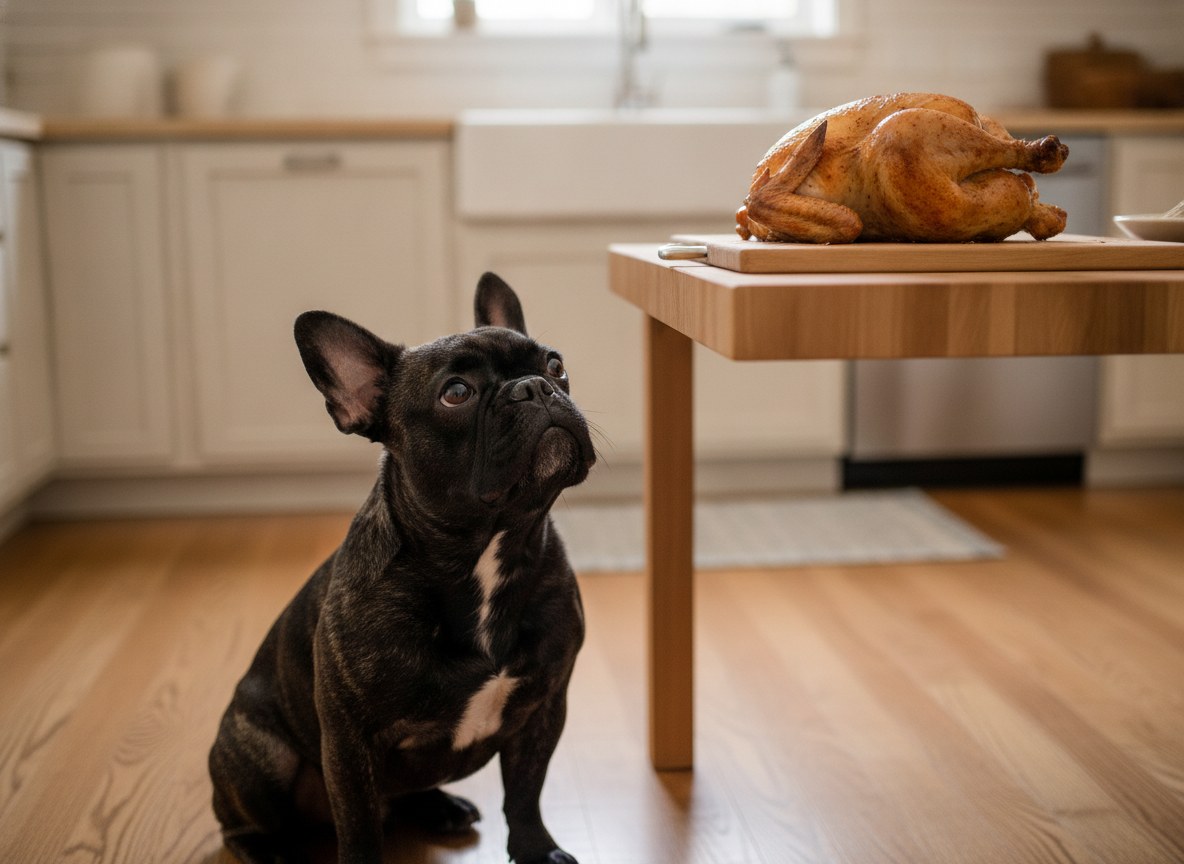
The closest Nina has ever come to crime was the afternoon a rotisserie chicken sat cooling on our counter. I caught her mid-plan, front paws on a kitchen chair she’d pushed into position like a tiny heist movie.
Which raises the question people ask me constantly, usually with a worried face: is chicken even safe for Frenchies? Short answer, yes. Longer answer, yes with three rules attached.
Can French Bulldogs eat chicken?
Yes. Plain cooked chicken, boiled, baked, or grilled with no seasoning, no skin, and no bones, is safe for most Frenchies and is genuinely good lean protein. It’s Nina’s number-one training currency and the reason she performs her entire trick repertoire unprompted near the stove.
Keep portions honest: chicken should be a treat or a topper on a complete diet, not the meal itself. A few small pieces for a 25-pound dog is plenty, and it counts toward the ten percent treat budget like everything else.
The three rules
- No bones, ever. Cooked chicken bones splinter into sharp fragments that can choke a dog or pierce the gut. That sidewalk chicken wing is the single best argument for teaching “leave it.”
- Plain means plain. No garlic or onion powder, both toxic. No salt rubs, no fried coating. Rotisserie seasoning and fatty skin are how a treat becomes a pancreatitis vet visit.
- Watch the skin, literally. If ears, paws, or belly get itchy and red in the weeks after chicken becomes a regular, take it seriously.
How we actually serve it
Our routine is unglamorous and works: boil a couple of skinless breasts on Sunday, shred them once cool, and portion the shreds into a container that lives in the fridge for training week. A batch also freezes well in ice cube trays if you want to prep ahead.
Portion-wise, think garnish, not entree. For a Frenchie-sized dog, a tablespoon or two of shredded chicken as a topper, or a few pea-sized bits across a training session, is plenty. The day Nina had “a little extra” from three different family members, none of whom compared notes, ended in a 2 a.m. carpet incident, so we now run a one-human-feeds-chicken policy.
One more practical note: introduce chicken the way you’d introduce any new food, small amounts first, then watch stools and skin for a few days before making it a regular. Boring, yes. Cheaper than the alternative, also yes.
What about raw chicken?
I’d pass, and our vet agrees. Raw chicken carries salmonella and campylobacter risks for the dog and for the humans handling the bowl, and casually assembled raw diets are how nutrition gaps happen. When I asked our vet about it directly, her take was that the theoretical upsides don’t outweigh the food-safety math in a family kitchen. If you’re committed to raw feeding, build it with a vet or veterinary nutritionist, not a video rabbit hole.
When chicken is actually the problem
Here’s the Frenchie-specific part. Chicken sits near the top of confirmed canine food allergens: in Mueller’s 2016 review of food allergy studies, beef led the list at about a third of confirmed cases, with dairy and then chicken close behind at roughly 15 percent of allergic dogs. In an allergy-prone breed like ours, that’s not trivia.
A chicken allergy usually shows up on the outside before the inside: paw licking, recurring ear infections, red belly skin, an itch that ignores flea treatment. I went down this exact road with Nina, and the pattern is consistent: chicken allergy in Frenchies shows up in the ears, paws, and belly long before it shows up in the stool.
This is one Frenchie parent’s experience, not veterinary advice. Loop in your vet for anything beyond plain-chicken treats.
FAQ: Frenchies and chicken
Can my Frenchie eat cooked chicken?
Yes. Plain, boneless, skinless cooked chicken is safe for most Frenchies as a treat or food topper. Skip the seasoning entirely and keep portions small.
Can French Bulldogs eat chicken bones?
No. Cooked bones splinter and can cause choking, blockages, or internal injuries. If your Frenchie swallows one, call your vet rather than waiting to see what happens.
Can French Bulldogs eat chicken and rice?
Yes. Plain boiled chicken with plain white rice is the classic short-term bland diet for upset stomachs. It’s fine for a few days but isn’t nutritionally complete, so don’t run it long-term without vet guidance.
Can French Bulldogs eat raw chicken?
It’s not recommended. Raw chicken carries salmonella and campylobacter risks, and bones remain a hazard raw or cooked. If raw feeding matters to you, build the diet with a professional.
How do I know if my Frenchie is allergic to chicken?
The tell is skin, not stomach: persistent paw licking, ear infections, and itchy red skin. The only reliable test is a vet-guided elimination diet, and if chicken is the culprit, a chicken-free food built for allergic Frenchies makes life much easier.
How much chicken can I give my French Bulldog?
About one to two tablespoons of plain shredded chicken a day for a typical adult Frenchie, counted inside the ten percent treat budget. More than that starts unbalancing an otherwise complete diet.
Can Frenchie puppies eat chicken?
Yes, in small plain cooked pieces once they’re fully on solid food. Keep it occasional so the balanced puppy food stays the actual diet.