If you’re weighing up a Frenchie as the family dog, the answer depends on the dog and the household. Some are affectionate, playful companions for children, but a breed label cannot promise patience or safety. “Good with kids” still comes with rules on both ends of the leash. Here’s the honest take.
Key takeaways
- French Bulldogs can fit family life, but temperament and needs vary.
- An adult must actively supervise young children and dogs together.
- Protect eating, sleeping and retreat spaces. Sturdy does not mean safe to hug, climb on or handle roughly.
Are French Bulldogs good with kids?
They can be, with an appropriate match and thoughtful management. Consider the individual dog’s history, comfort around children, health and need for rest. Our French Bulldog temperament guide covers the broader traits without treating every Frenchie as identical.
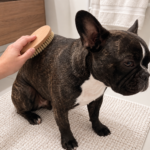
Nina’s affectionate side is part of why I love living with her. That does not establish how another dog will respond to a toddler, and affection is never a substitute for supervision.
The things to watch
- Excitable play. A worked-up Frenchie can accidentally knock over or scratch a small child during zoomies, supervise active play.
- Rough handling. Kids must learn not to pull ears, ride, or disturb a sleeping dog; also leave eating dogs alone and let the dog move away.
- Their backs. Don’t let children pick the dog up and risk dropping them, an awkward lift or fall can hurt them.
- Heat and overexertion. Kids don’t always notice when a flat-faced dog is overheating, so adults need to manage play and exercise in warm weather.
Setting kids and Frenchies up to succeed
Active supervision means paying attention and being close enough to intervene, not just being somewhere in the room. If you cannot do that, separate the dog and child with an appropriate barrier. Give the dog a quiet retreat children cannot enter.
Teach children to invite interaction and let the dog decline. Avoid face-to-face hugs, climbing on the dog or taking food and toys away. If the dog turns away, freezes, hides or growls, create space. Do not punish a warning or make the child continue the interaction.
Dogs Trust’s family guidance gives practical ways to support safe, kind interactions. Reward calm behavior and build comfortable introductions gradually. Plan for the breed’s health needs as well as family routines.
FAQs about French Bulldogs and kids
Are French Bulldogs safe around children?
No breed is automatically safe in every interaction. Assess the individual dog and actively supervise young children. Separate them when supervision is not possible.
Is a French Bulldog a good family dog?
A suitable individual can be a good companion, provided the family can meet their health, training, exercise and rest needs. Consider the actual dog rather than a promise attached to the breed.
Are French Bulldogs good with toddlers?
Some live comfortably with toddlers, but adults must manage every interaction. Toddlers cannot reliably read dog signals or control their movements, so barriers and a protected resting space matter.
Can French Bulldogs be left alone with kids?
Do not leave a dog unsupervised with young children. A familiar, affectionate dog still needs space and protection from rough or frightening interactions.
Do French Bulldogs get jealous of a new baby?
A new baby changes sounds, smells and routines. A dog may become unsettled or seek attention, but do not assume every reaction is jealousy. Prepare routines and barriers beforehand and seek qualified help if the dog shows distress or threatening behavior.
What’s the best age of child for a French Bulldog?
There is no universal best age. Older children may follow instructions more reliably, but maturity, supervision and the individual dog matter more than a birthday. Adults remain responsible for safe interactions.