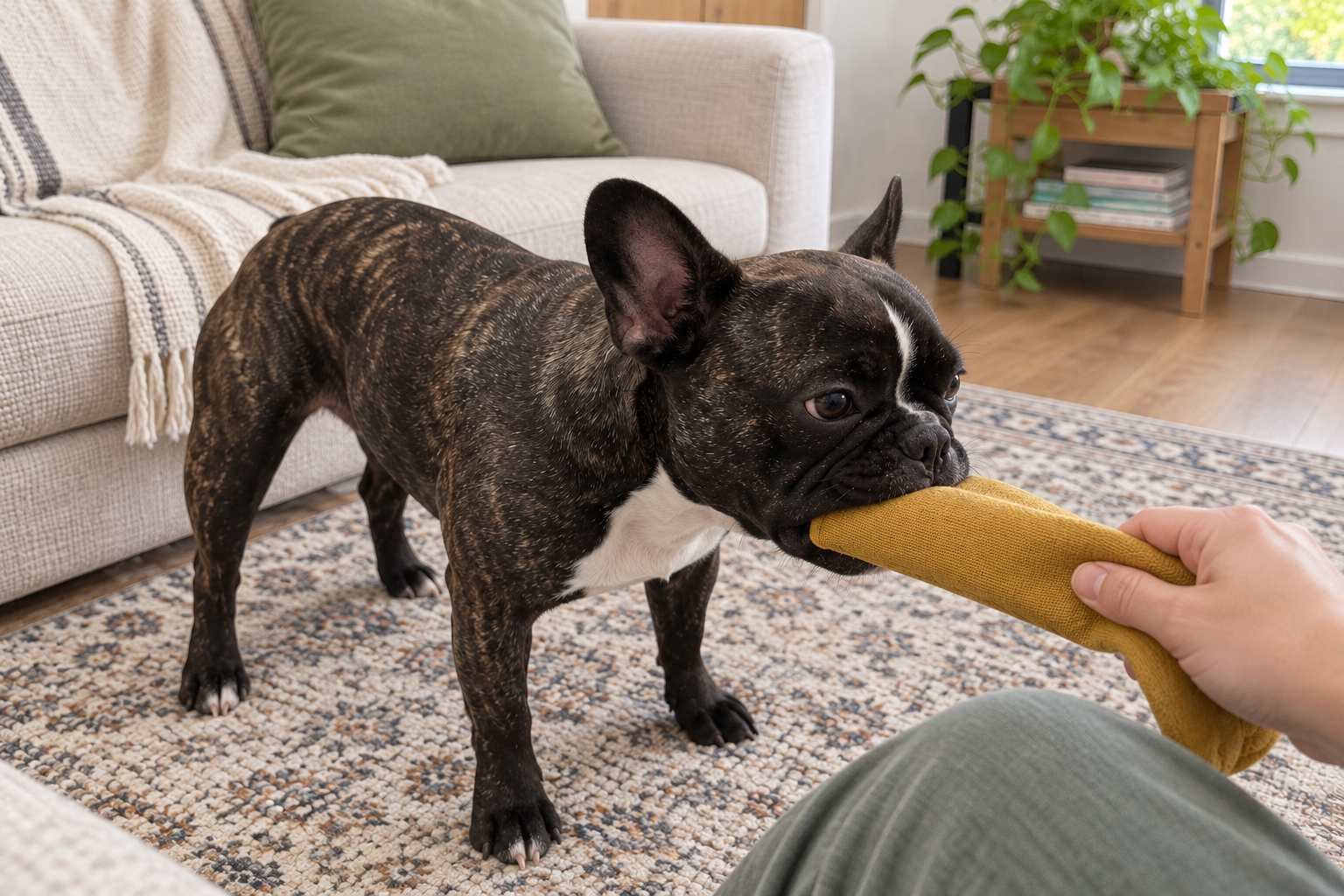

If I had to describe Nina’s personality in one line, it’s “needy comedian who thinks she’s in charge.” That is Nina: affectionate, entertaining and absolutely convinced she belongs on my lap. It is not a personality guarantee for every Frenchie. They’re one of the most lovable breeds you can own, but they come with quirks worth knowing before you fall for the bat ears. Here’s the honest personality profile.
The everyday relationship is part of the appeal, but it helps to understand how Frenchies learn before labeling a dog stubborn. Comfort, clear cues and rewards make a difference.
Key takeaways
- Frenchies often enjoy company and play, but personality varies between individuals.
- Attachment is not the same as separation anxiety; teach comfortable absences gradually.
- Read behavior in context. Fear, pain and unmet needs can look like stubbornness, and persistent distress or aggression needs qualified help.
The classic French Bulldog personality
The AKC describes Frenchies as playful, alert and adaptable. Those are breed tendencies, not a promise that a puppy will fit every household or happily greet every dog.
Nina has comic timing and a strong interest in being where I am. Another Frenchie may be more reserved. Barking varies too: the barking guide looks at individual triggers rather than promising a silent apartment dog.
The quirks, and what may be behind them
- Apparent stubbornness. Check whether the cue is understood, the reward is worthwhile and the dog is comfortable. Short, rewarding practice helps; repeating a cue more loudly is not the same as teaching it.
- Wanting company. Affection does not diagnose separation anxiety. Build short, comfortable absences and arrange suitable care.
- Seeking attention. Offer enrichment, rest and clear ways to ask for interaction rather than assuming the dog is being deliberately difficult.
- Play followed by rest. Nina enjoys both. Match activity to the individual, and do not call breathing difficulty low energy.
If absences bring persistent pacing, vocalizing, destruction or other distress, speak with your vet and a qualified behavior professional. Dogs Trust explains separation-related signs and support. Punishment does not address the underlying distress.
Are French Bulldogs aggressive?
A breed’s affectionate reputation does not rule out growling, guarding, snapping or biting. Pain, fear, previous learning and the situation can all matter. Positive socialization helps, but does not guarantee a dog will be comfortable with every interaction.
Give a tense dog space and do not punish warning signals or force greetings. A sudden behavior change warrants a vet check; repeated aggression needs a qualified professional’s plan. Use supervision and boundaries with children and other animals, even when the dog is usually sociable.
Who a Frenchie suits
A Frenchie may suit someone who enjoys a close companion and can provide company, training, appropriate activity and veterinary care. Apartment size alone is not the deciding factor. Consider toilet access, noise, time away and the breed’s health needs.
I love Nina’s company, but affection does not make the practical work disappear. Read the Frenchie care guide and meet the individual before committing. A dog that needs help settling or coping alone deserves support, not a prediction that the breed will grow out of it.
FAQs about French Bulldog temperament
Are French Bulldogs friendly or aggressive?
Many are affectionate companions, but individuals can show fear, guarding or aggression. Assess the situation and health, give space when needed and seek qualified help for persistent problems.
What are the pros and cons of French Bulldogs?
Many owners enjoy their companionship and playfulness. The commitments include time, training, care costs and attention to flat-faced health needs. Quietness, easy alone time and compatibility with children are not guaranteed.
Do French Bulldogs have behavior problems?
They can, like other dogs. Needs, learning, environment and health all influence behavior. A sudden change needs a health check, and persistent distress deserves a structured support plan.
Are French Bulldogs good for first-time owners?
Some are a suitable match for prepared first-time owners. Plan for health care, company, training and support rather than assuming an affectionate breed will be easy.
Are female or male French Bulldogs calmer?
Sex alone is not a dependable way to choose a calm dog. Meet the individual and consider age, health, learning and routine rather than relying on male-versus-female stereotypes.
Do French Bulldogs get attached to one person?
Some have a preferred person and others spread their attention around. Close attachment alone is not separation anxiety; look at how the dog actually copes during absences.
Do French Bulldogs struggle with separation anxiety?
Some do. Persistent distress during absences warrants discussion with your vet and a qualified behavior professional. Gradual comfortable practice and suitable care arrangements are more useful than testing how long the dog will endure it.