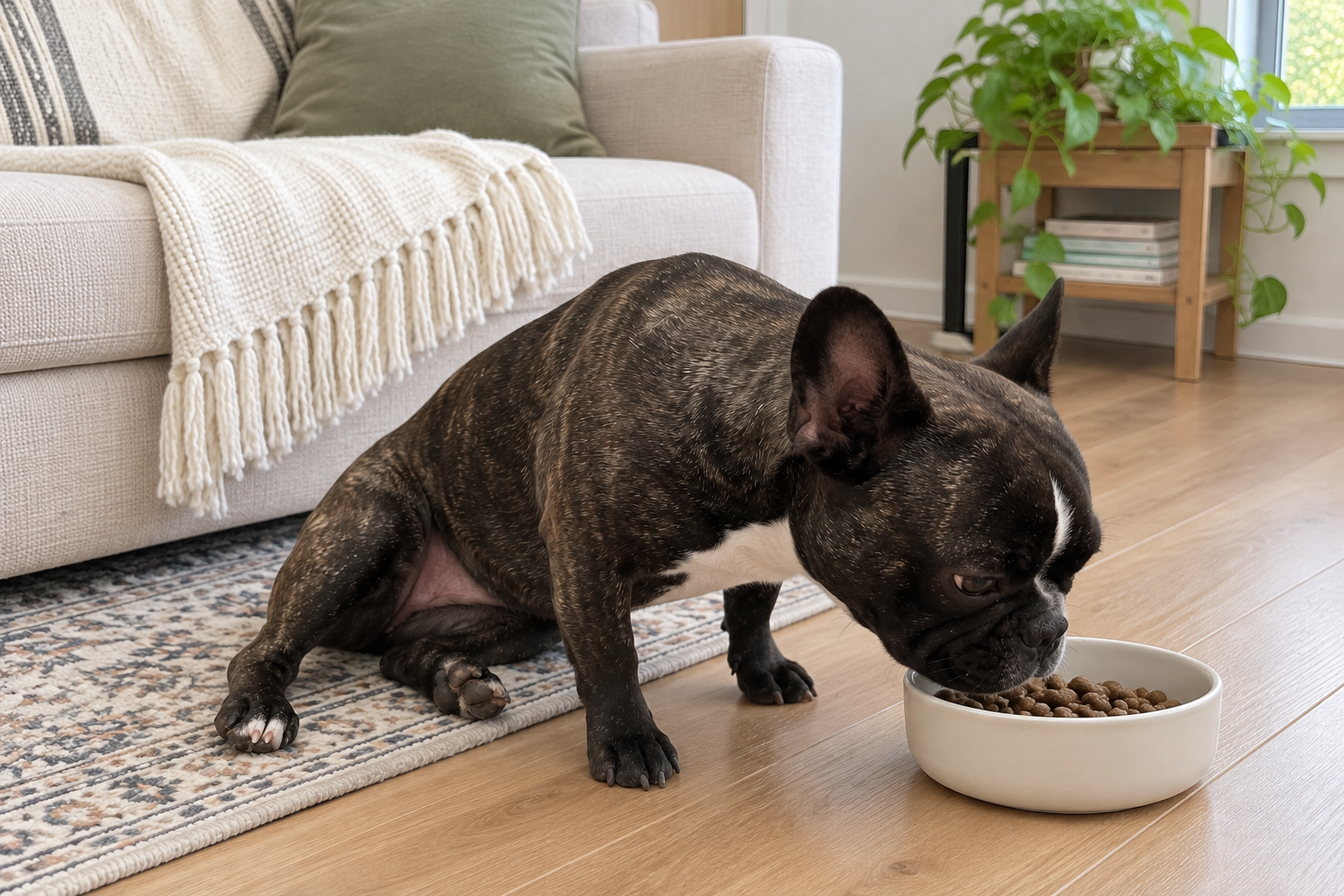

Watching Nina eat from a normal bowl used to be equal parts comedy and concern. She’d chase kibble around the rim like she was bobbing for apples, snort, come up for air, then headbutt the bowl across the kitchen in protest.
Changing the bowl helped with Nina’s mess and snorting, and I noticed less gas around the same time. We also changed what she ate, so I cannot give the bowl all the credit. If that is your main concern too, the guide to feeding a gassy Frenchie looks at more than the dish.
Key takeaways
- Enhanced Pet Bowl leads for its broad stainless-steel feeding area and raised ridge.
- Choose a bowl your Frenchie can reach comfortably; elevation is optional.
- Check stability, washability and the exact size before buying.
The physics of a flat face in a deep bowl
Bowl depth, rim shape and food placement can make eating awkward for a short muzzle. Watch your own dog: can they reach the last pieces without repeatedly pushing the bowl away or rubbing their face on the rim? A wider or shallower surface is worth comparing. Difficult breathing or repeated coughing at meals needs a veterinary assessment, rather than assuming new cookware will solve it.
There is a cleaning question too. After wet food, check for residue around the chin and folds and clean and dry them gently. A bowl change does not diagnose a sore or irritated chin.
How I chose
Access comes first. Look at the feeding surface, rim and room for your dog’s muzzle. Then compare stability and cleaning: a non-slip base, removable parts and clear washing instructions. Check the actual dimensions rather than assuming “small dog” or “French Bulldog” on the listing guarantees a fit.
Quick scan: the short version
- Best made-for-Frenchies: Enhanced Pet Bowl
- Best elevated trough: Fluff Trough
- Best mess control: Neater Feeder Deluxe
- Best tilted on a budget: Neater Pets Angled Wooden Feeder
Dog bowls for French Bulldogs: four designs to compare
Enhanced Pet Bowl for French Bulldogs
Enhanced Pet Bowl has a stainless-steel feeding area, a ridge at the back and a rubber ring underneath. The maker recommends the Medium bowl with stand for French Bulldogs; its Medium holds 1–2.5 cups, but capacity is not a serving recommendation. Check whether the selected option includes the stand. The useful distinction here is the accessible shape, not a promise to treat gas or breathing trouble.
Best for: comparing a broad feeding area with a conventional deep bowl. Choose the size and stand option that suit your dog’s reach.
Fluff Trough
The Silicone Insert Set includes the raised base, a removable silicone insert and four non-slip feet. The open-front shape gives a different approach to reaching food than a round bowl. Leg extensions are optional; more height is not automatically better. This is the regular feeding insert, not the separate Binge Blocker slow-feeder model.
Best for: a dog who finds an open-front feeding surface easier to use. Measure the base and feeding height before making space for it.
Neater Feeder Deluxe
The Deluxe station catches spilled food above a lower reservoir for water, with stainless-steel bowls included. Sizes differ substantially: the maker lists Small for dogs up to 18 pounds and Medium for 19–40 pounds, alongside shoulder-height guidance. The standard bowl-rim heights are 3 and 5 inches respectively, before optional extensions. Check reach as well as weight; a station can contain spills while its bowls are still too deep for a particular dog.
Best for: containing the splash zone when the selected bowls and height fit your dog. Allow room to lift out and wash both parts of the base.
Neater Pets Angled Wooden Feeder
This angled wooden stand offers a choice of bowl material. A tilt changes where food gathers, which may make the remaining pieces easier to reach. Check the selected ceramic or stainless-steel version and its dimensions. Keep the wooden base clean and dry rather than treating the whole stand like a dishwasher-safe bowl.
Best for: an owner comparing a simple tilted bowl with a larger feeding station. The bowl material and stand care are part of that choice.
Bowl sense for flat faces
Wash food and water bowls regularly and follow the maker’s cleaning instructions. Replace damaged surfaces; persistent chin irritation needs assessment rather than being blamed on a dirty bowl. Choose height by comfortable access, not as a treatment. If eating speed is the main issue, compare a slow feeder with room for a flat face; its ridges still need to let your dog reach the food.
FAQs about dog bowls for French Bulldogs
Should French Bulldogs have elevated bowls?
Some dogs find a raised bowl easier to reach, but it is not a requirement for every French Bulldog or a proven way to prevent bloat. The American College of Veterinary Surgeons discusses elevated feeding among suggested GDV risk factors. Ask your vet about height if your dog has a medical reason for a particular feeding position.
Are tilted bowls good for French Bulldogs?
An angled bowl can move food toward a more accessible part of the dish. Try it only if your dog eats comfortably from it; the angle is not a guarantee of less swallowed air or better digestion. A stable shallow bowl may also work.
What bowl material is best for a Frenchie?
Stainless steel is a practical easy-clean option. Check the product’s washing instructions and replace damaged bowls. Ceramic can also work if its glaze is intact and suitable for food use. Whatever the material, clean the rim and underside as well as the inside.
Do French Bulldogs need slow feeder bowls?
A slow feeder may help pace a dog who gulps meals, provided the pattern is accessible to their muzzle. It is not needed simply because your dog is a Frenchie. Coughing, regurgitation or difficulty eating warrants veterinary advice.