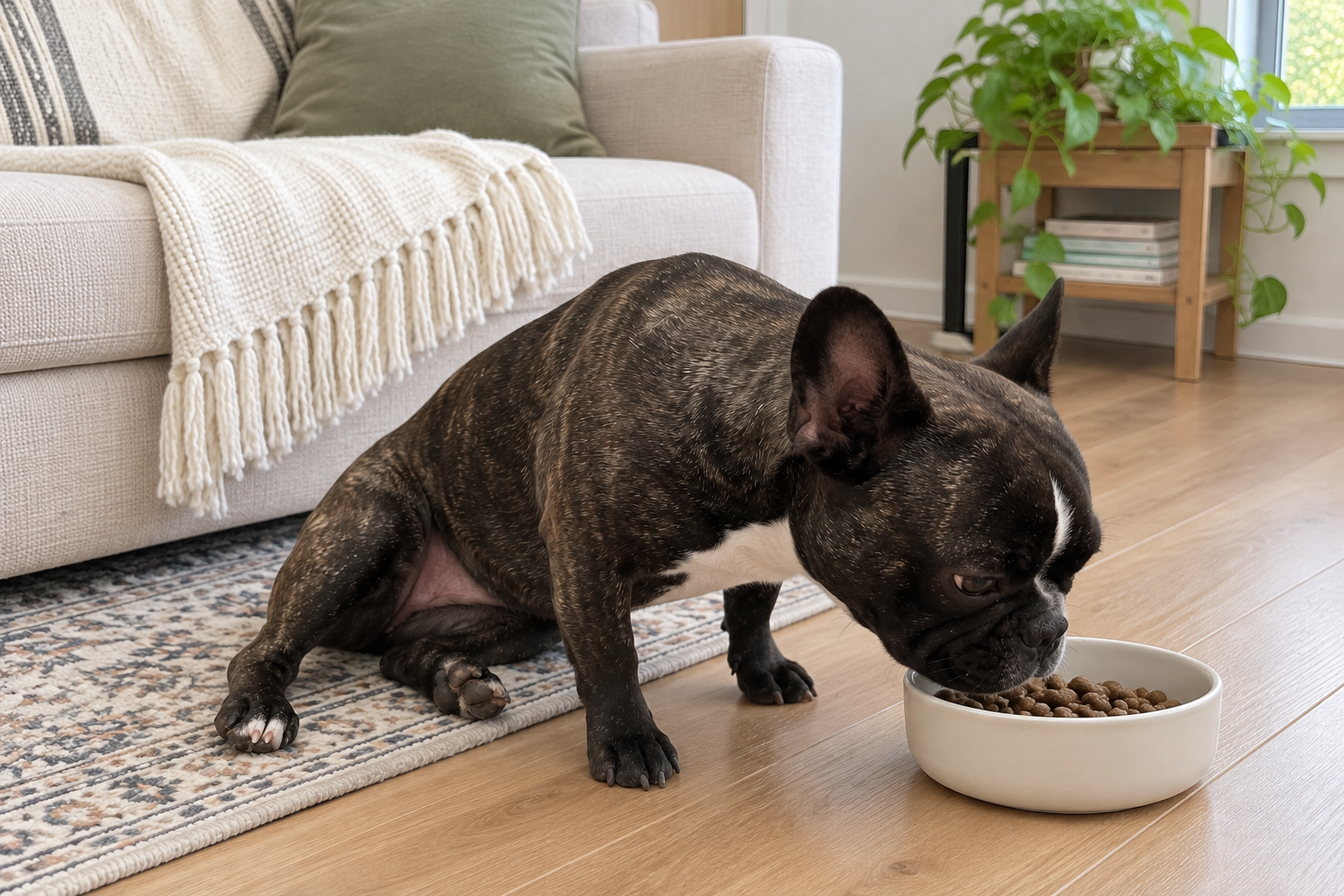

I came to probiotics the way most Frenchie owners do: reluctantly, after a bad week. Nina had been on antibiotics for an ear thing, her stomach went sideways, and my vet said the words “try a probiotic” the way she says most things, like it was obvious and I was a little slow. She wasn’t wrong. A good probiotic has since become one of the few supplements I actually keep restocked.
Nina’s experience made me pay closer attention to what goes into a probiotic. It also belongs alongside her diet, so I look at the sensitive-stomach food choices and the symptoms before adding another supplement.
Key takeaways
- FortiFlora leads this comparison for its named SF68 strain and single-serving packets.
- Choose a probiotic for a specific need, not the biggest CFU number.
- Ongoing diarrhea, gas or itchy skin needs assessment. A probiotic is not a universal fix.
When a Frenchie actually needs a probiotic
A healthy dog with settled digestion may not need a daily probiotic. A vet may recommend a specific product during an episode of diarrhea or another digestive problem. The strain, dose and condition matter; benefit from one product does not establish that all powders or chews work the same way. Itchy skin and ear problems need their own assessment.
How I chose
Strains that are actually named, with a guaranteed live count (CFUs) on the label, not vague “probiotic blend” language. A form your dog will take, because the best probiotic is the one that gets eaten. Powders you sprinkle on food tend to win with picky Frenchies over chews they spit out. Clean ingredients, no pile of sugar and fillers. Vet credibility, and real US availability so reordering is easy.
Quick scan: the short version
- First comparison pick: Purina Pro Plan FortiFlora
- Powder with prebiotics: Native Pet Probiotic
- Best chew: Zesty Paws Probiotic Bites
- Another chew option: PetHonesty Digestive Probiotics
The picks, and who each suits
Purina Pro Plan FortiFlora
FortiFlora comes in single-serving packets sprinkled over food. Purina’s current US label names Enterococcus lactis SF68, with 100 million CFU per one-gram sachet, for managing occasional diarrhea. Older literature uses the name E. faecium SF68. Follow the label or your vet’s directions and seek advice if symptoms worsen or do not improve. A named strain and a convenient packet are useful details; neither promises a rapid cure.
Best for: a dog whose vet recommends this specific probiotic. Compare price per packet across the same product and pack size. For example, a $28 box of 30 packets works out to about $0.93 per packet, before tax or delivery.
Native Pet Probiotic
Native Pet’s powder combines a probiotic blend with pumpkin seed and inulin. The listed ingredients also include beef broth, so the flavoring matters for a dog following a restricted diet. I like a powder that mixes into food cleanly; powders are also useful for Frenchies who treat pills as a personal insult. More bacterial species do not by themselves prove a better result.
Best for: owners seeking a powder format when its ingredients and intended use fit the vet’s plan. Usually $30 to $40 per pouch depending on size.
Zesty Paws Probiotic Bites
If your dog actually likes chews, these make dosing effortless, no measuring, just a treat. They pair probiotics with prebiotics and pumpkin, and they’re easy to find and affordable. The catch is that chews carry some calories and fillers, which matters for a breed that gains weight quickly.
Best for: dogs who happily eat chews and owners who want zero fuss. Often $15 to $25 a jar.
Single-strain probiotics and synbiotics: what is the difference?
A synbiotic combines probiotics with ingredients intended to support their activity, such as prebiotics. Native Pet’s powder already combines these types of ingredients, so this is a formulation distinction rather than another separate product recommendation. Do not assume that extra strains or added yeast make a product a better choice for chronic digestive problems.
PetHonesty Digestive Probiotics
PetHonesty offers another chew format to compare. Look at the exact recipe’s organisms, serving size, flavorings and calories. Routine maintenance claims are not a reason to add it to an already settled dog’s diet, and it should not replace assessment of recurring symptoms.
Best for: an owner who prefers a chew, if the formulation suits the dog’s needs. Typically $20 to $30.
Getting the most out of it
Use the product according to the label and the plan agreed with your vet, including how long to give it and when to reassess. Keep the diet consistent enough to understand what is changing. The guide to a gassy Frenchie’s food options covers meals separately; repeated symptoms should not trigger an endless cycle of new foods and supplements.
And the honest caveat: a probiotic is support, not a cure. Persistent diarrhea, vomiting, weight loss, or a dog who seems unwell needs a vet, not another supplement. Always check with yours before starting anything new, especially if your Frenchie is already on medication. It helps to picture what these actually are, live beneficial bacteria that keep the gut’s microbe balance in check, rather than a cure for any single symptom.
FAQs about probiotics for French Bulldogs
What is the best probiotic for a French Bulldog?
FortiFlora is the first option compared here because its SF68 strain and packet serving are clearly identified. The appropriate choice still depends on why your dog needs it. Ask your vet about the specific product rather than treating a breed-based list as a prescription.
Do French Bulldogs need probiotics?
Not automatically. A dog with comfortable, consistent digestion may not need one. Your vet can advise whether a particular probiotic is useful for the problem being treated and how long to use it.
Can probiotics help my Frenchie’s gas?
It may help in some circumstances, but gas can have several causes. The response depends on the product and the dog. Discuss persistent gas, especially with diarrhea, vomiting or weight loss, rather than relying on a probiotic alone.
How long do probiotics take to work?
There is no reliable single timeline for every product or symptom. Agree a follow-up plan with your vet. If the dog becomes unwell, symptoms worsen or they do not improve, seek advice rather than waiting out an arbitrary number of weeks.
Will a probiotic fix my Frenchie’s itchy skin?
A probiotic is not a substitute for diagnosing itchy skin, ear disease or a food allergy. Some products are marketed around skin and gut health, but those claims do not establish that they will treat your dog’s particular condition.
Can I use human probiotics for my dog?
No, it’s not recommended. Dog-specific probiotics use strains studied for the canine gut and are dosed for dogs. Stick to a product made for dogs, and ask your vet if you’re unsure.
How can I improve my French Bulldog’s gut health?
Start with a complete diet suited to the dog and keep portions, treats and any food changes consistent. Track recurring symptoms and discuss them with your vet. Add a probiotic only for a reason; pumpkin and other extras are not an automatic part of every plan.
What’s the best probiotic for a Frenchie with allergies or diarrhea?
For occasional diarrhea, a vet may recommend a specific probiotic such as FortiFlora. Allergy symptoms need a separate diagnostic plan. Neither a multi-strain label nor a short ingredient list proves that a supplement treats allergies.