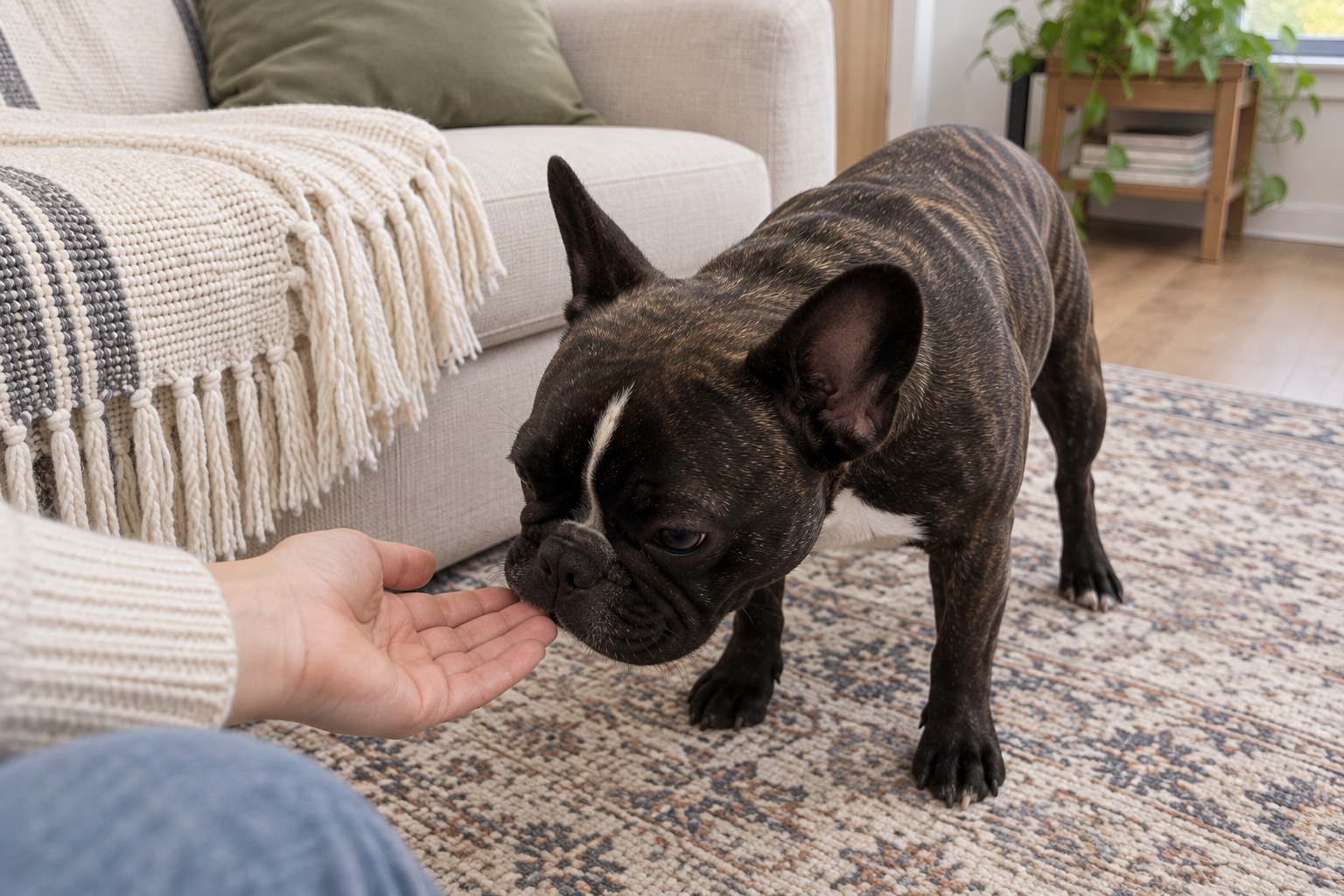

Nina would sign over her life savings, three tennis balls and my left shoe for a crumb of liver the size of my pinky nail. For training purposes, this is not a character flaw. It’s the entire engine.
The catch is that rewards add up quickly for a food-motivated 20-pound dog. I want something Nina cares about, in pieces she can comfortably chew, without turning a short practice session into another meal. The French Bulldog training guide covers timing and short sessions; here, I am looking at what goes in the treat pouch.
Key takeaways
- Zuke’s Mini Naturals Chicken leads for small, soft everyday rewards at 2 calories each.
- Keep all treats within 10% of your dog’s individual daily calories.
- Use comfortable bite sizes and count chews and snacks too.
The 10 percent math for a 20-pound dog
A 20-pound dog does not have one fixed calorie allowance: age, activity, body condition and health affect it. Use an individual daily target, then allow no more than about 10% for treats, following the WSAVA nutrition guidance. For example, if the target is 600 calories, 60 calories would be the treat ceiling: thirty 2-calorie rewards if there are no other treats that day. That is an example, not Nina’s prescription for every Frenchie.
Short-muzzle logistics matter too. A large biscuit can slow the session while your dog works through it. Break rewards into manageable pieces, supervise eating and let your dog finish before the next cue. Fast training should not mean encouraging a dog to swallow food without chewing.
How I chose
Small pieces, useful texture and a clear calorie count. I compare how the treats fit a session, whether they break into smaller portions, their full ingredients and how they hold up in a pouch. Short ingredient lists are helpful for tracking what your dog eats, but do not guarantee good digestion. Reward value is personal: what Nina wants may not interest another dog.
Quick scan: the short version
- Best overall: Zuke’s Mini Naturals
- Best low-calorie crunch: Charlee Bear Original Crunch
- Best high-value reward: Stewart Pro-Treat Beef Liver
- Best pre-sized freeze-dried: Pupford Beef Liver
- Best single ingredient: PureBites Chicken Breast
- Best budget bag: Buddy Biscuits Training Bites
The treats, and the job each one does
Zuke’s Mini Naturals
The Chicken Recipe is listed at 2 calories per piece, with a soft texture and chicken as its first ingredient. Nina likes these for recall sessions, and I still count the portion before we start. Reseal the pouch after use so the pieces do not dry out. A low number per piece helps with planning; it is not a free pass for unlimited rewards.
Best for: everyday sessions where a small, soft chicken-based reward suits your dog.
Charlee Bear Original Crunch
Original Crunch treats are listed at 3 calories each. The dry, crunchy texture is useful when you prefer something less moist in a pocket, although any treat can break if crushed. Choose the specific recipe before checking ingredients. Give your dog time to chew; whether these are exciting enough outdoors depends on the dog.
Best for: short indoor practice when your dog enjoys a crunchy reward.
Stewart Pro-Treat Freeze-Dried Beef Liver
The beef-liver option in Stewart’s single-ingredient range can be broken into smaller rewards. The pieces are not a uniform measuring unit, so use the label and portion weight rather than assuming every cube has the same calories. Liver gets Nina’s attention, but no treat guarantees a recall or makes a frightening situation comfortable on its own.
Best for: a higher-interest reward for a dog who likes beef liver, served in small measured portions.
Pupford Freeze-Dried Beef Liver Training Treats
Pupford lists these at less than 1 calorie per treat. The recipe contains beef liver, beef heart and mixed tocopherols, so it is not a single-ingredient liver treat. Small ready-sized pieces make portion planning convenient. Introduce them gradually and check that their texture and ingredients suit your dog.
Best for: short training sessions where ready-sized, low-calorie rewards are useful. Frequent rewards still count toward the daily total.
PureBites Freeze-Dried Chicken Breast
This freeze-dried version contains chicken breast and averages 3 calories per treat. Pieces vary, so break larger ones down as needed. A single ingredient makes chicken exposure easy to identify; it does not make the product suitable for every sensitive stomach. It is not appropriate if your dog’s feeding plan excludes chicken.
Best for: a dog who tolerates chicken when you want one clearly identified ingredient. Freeze-dried treats can crumble in a pocket.
Buddy Biscuits Training Bites
The Chicken Buddy Trainers are listed at 1.5 calories each, with 500 treats per bag. Despite the chicken name, pork liver is the first ingredient, and the recipe also includes egg and other ingredients. That matters if your dog has dietary restrictions. Compare the actual bag price and serving count before calling it the cheapest option.
Best for: owners looking for a larger count of small, soft training rewards whose ingredients suit their dog.
How to plan rewards without overfeeding
Try part of the measured kibble ration for easy indoor practice and save a more appealing treat for harder work. Keep the total extras within the treat allowance; replacing a large part of dinner with treats would also replace balanced nutrition. Chews and everyday Frenchie snacks count in that same allowance. If your dog is on a food-allergy trial, use only rewards approved for that plan. Mark the behavior promptly and keep sessions short, as explained in the training guide above.
FAQs about training treats for French Bulldogs
What dog treats are good for French Bulldogs?
Choose manageable pieces with a calorie count and ingredients that suit your dog. Zuke’s Chicken, Charlee Bear Original Crunch and the freeze-dried options here offer different textures. None is automatically suitable for every Frenchie, and the daily total matters more than the breed label.
What do professional dog trainers use for treats?
Trainers choose rewards the individual dog wants and can eat comfortably. Small commercial training treats, portions of the dog’s normal food and other suitable rewards can all have a place. A treat that works in a quiet room may be less useful around distractions.
What training treats do vets recommend?
Ask your vet for advice based on your dog’s weight and health needs. Part of the normal food ration may work for training, especially when the diet is restricted. There is no single training treat recommended for all French Bulldogs.
How many treats a day can a 20-pound Frenchie have?
Calculate from the dog’s individual daily calorie target and the treat label. At a hypothetical 600 calories per day, a 10% ceiling is 60 treat calories, including chews and snacks. At 2 calories each that allows up to thirty pieces if there are no other extras; a different target changes the answer.