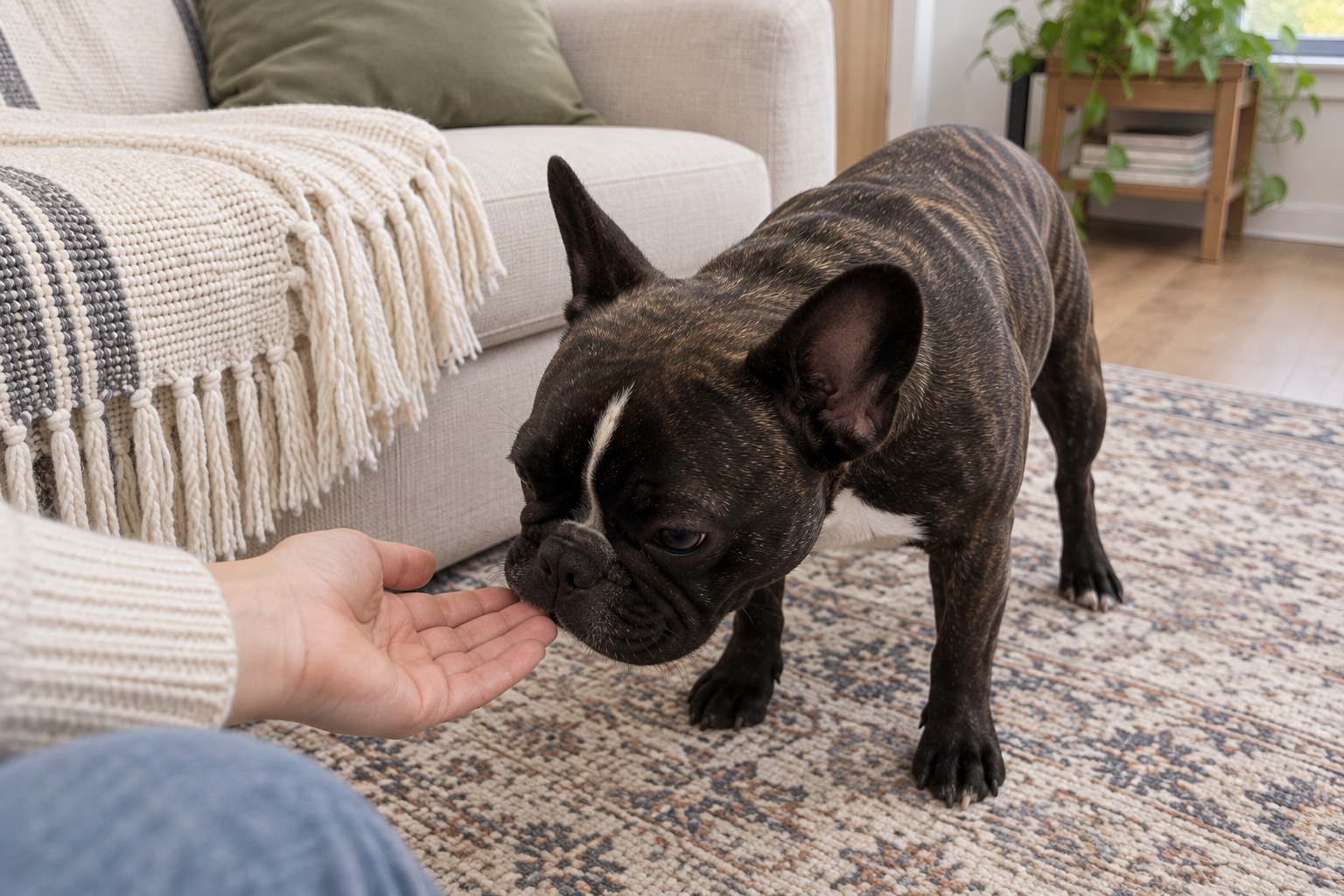

The first month with Nina, I bought all the wrong things. A cute collar she nearly choked herself on. A flat little bed she sank straight through. A shampoo that turned her belly pink and itchy for a week. None of it was Frenchie gear — it was generic dog gear that happened to be in reach, and this breed does not tolerate “happens to be in reach.”
So this is my short, honest list of French Bulldog must-haves: what actually earns its spot in our house. Not the 40-item puppy checklists you see everywhere — the handful of things I’d buy again without thinking, because a French Bulldog’s flat face, deep folds, broad chest, and terrible tolerance for heat turn ordinary dog stuff into stuff that either helps or actively hurts. Some of it is from my own shop. Some of it isn’t, and I’ll tell you exactly which is which.
Key takeaways
- Nina’s Reflective Harness is my first walking pick, with fit checked carefully.
- Start with food, water, ID, a comfortable sleeping space and veterinary care.
- Add grooming tools for your dog’s needs; cooling accessories never make a hot outing safe.
How I picked what made the list
Everything here clears three bars. It has to suit a brachycephalic, short-legged, deep-folded body — no generic “small dog” logic. It has to survive real Frenchie use, which means chewing, wriggling, shedding, and the occasional dramatic flop. And it has to earn the money; I’d rather own six things that work than a drawer of impulse buys. A product being sold for Frenchies is not enough; its measurements and directions still need to suit the dog.
I’ve split the list into what they need to walk safely, what keeps their skin and coat right, and what keeps them cool and comfortable at home. If you only buy from one section, make it the walking gear — that’s the one where the wrong choice can genuinely hurt.
Walking and safety gear
Reflective Harness
Best for: an adjustable everyday walking harness. This is the one I reach for daily, particularly for our early-morning and dusk walks. Reflective details are useful when light falls on them, although I still choose well-lit routes. Check the exact size chart and how the harness sits while your dog moves; it should not rub behind the legs or press on the throat. I covered the fit checks in my Frenchie harness guide. A harness cannot correct an underlying breathing problem.
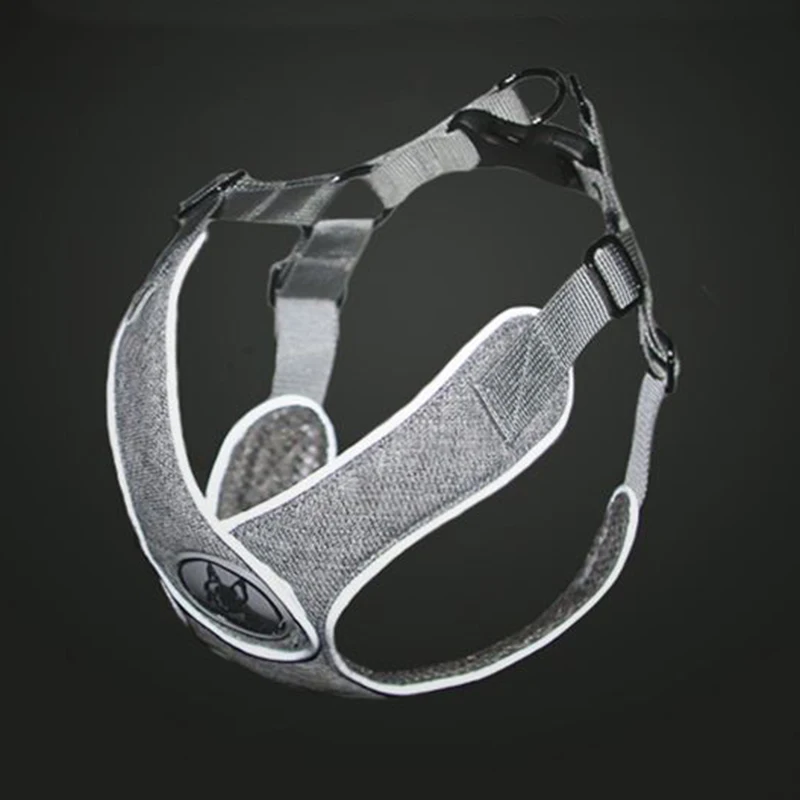
Best for everyday walks
- Adjustable straps
- Reflective details
- Check chest and neck fit
Adjustable Printed Collar
Best for: holding ID tags. A collar still has a job: keeping identification attached. I clip the walking leash to a well-fitting harness. Check the collar’s actual adjustment range, leave comfortable room and recheck a growing puppy often. Avoid grabbing or pulling a dog by the collar when it puts pressure on the throat.
Skin, coat, and grooming
If you live with a Frenchie you already know the skin is where the money goes. The breed is famously prone to fold dermatitis and itchy, reactive skin, so I pay attention to what Nina tolerates and ask the vet about persistent irritation.
Sensitive Skin 2-in-1 Shampoo
Best for: comparing a combined shampoo and conditioner. Nina’s post-bath flare-ups were something I raised with our vet. “Hypoallergenic” on a bottle is not a promise that every sensitive dog will tolerate it, and a shampoo is not a treatment for unexplained itching. Follow its directions, rinse thoroughly and keep it out of the eyes. My usual four-to-six-week bathing interval is Nina’s routine, not a rule for every dog; the bathing-frequency guide explains what can change that.
Waterless Dry Shampoo
Best for: suitable coat spot-cleaning between baths. Nina has supplied more than one “why does she smell like a corn chip” evening. Waterless foam can be convenient for a small dirty patch, but I would not assume a coat product is suitable inside facial folds, a tail pocket or near the eyes. Follow the label’s application and removal directions; persistent odor or sore skin needs more than freshening up.
Deshedding Brush
Best for: considering a deshedding tool when it suits the coat. People assume a smooth-coated breed barely sheds. People are wrong: the sofa tells the story. A deshedding edge can be too much for some short coats, so use light pressure and stop if the skin becomes red or the dog is uncomfortable. For a gentler starting point, compare the rubber and bristle options in my Frenchie brush roundup.
Petpost Bulldog Wrinkle Wipes
Best for: a fold-cleaning product to compare. This one is not from my shop, and I have kept it on the grooming shelf. Petpost lists coconut oil and aloe in its wipes; that does not mean they will never sting or irritate. Inspect folds regularly, clean when needed and follow the exact product’s directions. Use separate material for face and tail. The wrinkle-wipe comparison explains why ordinary cleaning wipes and medicated pads are not interchangeable.
Dremel PawControl Nail Grinder
Best for: gradual nail trimming when your dog tolerates a grinder. The cordless Dremel is quiet enough that Nina tolerates it, and I do a little every couple of weeks rather than one big dreaded session. A grinder still needs careful handling: it can reach the quick and build up heat. Introduce the sound gradually, use brief contact as the instructions direct, and ask a groomer or vet for help if nail trims are painful or frightening. Clippers can also work with the right technique.
Home comfort and staying cool
Here’s the part new owners underestimate: a French Bulldog can’t cool itself efficiently. Those narrow nostrils and short airways make panting a poor radiator, which is why heat is the thing that genuinely scares me with this breed. The home setup is half comfort, half safety.
Frisco Cooling Orthopedic Crate Mat
Best for: a washable-cover resting mat in an already comfortable room. The linked Frisco model uses cooling fabric over orthopedic foam; it is not the pressure-activated gel mat the name might suggest. A mat lives in Nina’s favourite corner from May onward, but I still manage the room temperature and watch her comfort. No mat is chew-proof or a replacement for air conditioning, shade and supervision.
Orthopedic Dog Bed
Best for: the joints, and getting them off the floor. Frenchies are dense little tanks and hard on their hips and spine, so a flat pancake bed does them no favours. A memory-foam orthopedic bed supports the joints and, just as importantly, lifts them off a floor that’s freezing in winter and roasting in summer. Nina sleeps harder on hers than anywhere else in the house. I broke down shapes and firmness in my Frenchie bed guide.
Frisco Silicone Lick Mat
Best for: supervised licking enrichment. Spread a small portion of food your dog already tolerates across the texture, then include it in the day’s calories. Some dogs settle into the task; it is not a treatment for anxiety or gas. The linked Frisco mat has a textured silicone surface and is top-rack dishwasher safe. Supervise and put it away if your dog starts chewing it. Do not assume this model will suction securely to a tub wall.
MidWest Life Stages Dog Crate
Best for: a safe den and house-training. A crate isn’t a cage if you set it up right — it’s the one spot that’s entirely theirs, and it’s how most of us get through potty training with our sanity intact. The Life Stages comes with a divider so you can shrink it for a puppy and open it up as they grow, which saves buying twice. Measure your dog standing, turning and lying comfortably; a 30-inch crate is a candidate, not a universal fit. I covered sizing and setup in my crate guide.
What I’d buy first if the budget were tight
Start with the basics you will use on day one: the food your dog already eats, food and water bowls, ID, a fitted harness and leash, a comfortable bed and a safe resting area. Plan veterinary care and a toilet routine too. Add grooming supplies that suit the dog rather than buying every “sensitive skin” product at once. My mistake with Nina was buying a drawer full of things before knowing what she actually needed.
FAQs about French Bulldog essentials
What does a French Bulldog need?
Food appropriate to their life stage, fresh water, suitable bowls, identification, fitted walking gear, a comfortable indoor sleeping area, enrichment and veterinary care. Grooming and temperature management matter, but not every Frenchie needs every accessory on this list.
What should I buy for a French Bulldog puppy?
Start with a size-adjustable harness, a crate with a divider so it grows with them, a tearless puppy-safe shampoo, fold wipes, a soft supportive bed, and plenty of chew toys for teething. Skip the expensive outfits early on — puppies grow fast and the practical gear is what actually gets used every day.
Do French Bulldogs need a special harness?
A well-fitting harness can keep walking pressure off the collar, but the fit matters more than a breed label. Check the chest, neck opening and leg clearance, and watch for rubbing or restricted movement. Choose with your vet’s help if your dog has breathing or mobility problems.
What do French Bulldogs need to stay cool?
A comfortable indoor environment, fresh water and outings planned around the actual conditions. Humidity, activity and individual health matter as well as temperature; 80°F is not a line below which every walk is safe. Cooling accessories do not justify a hot outing. Never leave a dog in a hot car or yard.
Do French Bulldogs need special grooming?
Regular skin and fold checks, gentle brushing, appropriate nail care and bathing suited to the individual. Cleaning frequency depends on the skin and the product, not a fixed schedule for the whole breed. Persistent redness, odor or itching needs veterinary advice.
Is a collar or harness better for a French Bulldog?
I use a fitted harness for the walking leash and a lightweight collar for identification. Check both for rubbing and comfortable fit. A poorly positioned harness can still press where it should not, so “harness” alone is not a safety guarantee.
Where should a French Bulldog puppy sleep the first night?
Set up a comfortable, secure indoor sleeping area near enough that you can notice distress and toilet needs. Introduce a crate gradually if you use one; it should not be a place to leave a frightened puppy to cope alone. Keep the setup simple and check that bedding is suitable for the puppy’s chewing habits.