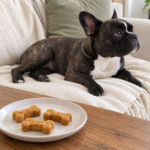
Do not offer candy corn to dogs. If your dog has already eaten some, check the packaging and call your veterinarian or an animal poison service for advice. Do not wait for symptoms if xylitol may be involved.
Ordinary sugary candy corn and a product containing xylitol are not the same exposure. The ingredient list, amount, your dog’s size and any swallowed packaging all matter. A picture of the candy is not enough to identify the risk.
What to do now
- Put the remaining candy out of reach and check whether another pet may also have eaten it.
- Keep the bag. Look for xylitol, which may also be called birch sugar or wood sugar, and note any chocolate or other added ingredients.
- Estimate the amount missing and when it happened. Tell the veterinary team your dog’s weight and whether wrappers or part of the bag are missing.
- Call your veterinarian. In the US, Pet Poison Helpline is available at 855-764-7661. Do not induce vomiting or give home remedies without professional direction.
Pet Poison Helpline’s candy-corn guidance recommends calling after an exposure rather than trying to clear it by counting pieces yourself.
Quick takeaways
- Candy corn is not an appropriate dog treat, even when it is ordinary sugary candy.
- Xylitol-containing products require urgent veterinary attention.
- Keep the label and report missing packaging. Do not try a home treatment while waiting for symptoms.
Is candy corn poisonous to dogs?
The answer depends on the ingredients. Regular candy corn can cause stomach upset, and a large candy binge can create more serious problems. That does not mean every exposure has the same risk or needs the same treatment.
Xylitol changes the situation. The FDA warns that this sweetener is toxic to dogs and advises immediate veterinary contact after suspected ingestion. Do not assume a sugar-free product is safer, and do not assume every candy corn product contains xylitol. Read the actual label.
If the candy came from a mixed bowl and you cannot identify it, say that when you call. Do not guess the ingredients or assume your dog ate only the pieces you can still see.
What about symptoms?
Report vomiting, diarrhea, poor appetite or unusual tiredness to the veterinary team. Weakness, stumbling, tremors, seizures or collapse are urgent warning signs. A dog who is having a seizure, struggling to breathe or collapsing needs emergency veterinary care immediately.
Symptoms can be delayed. The ASPCA’s poisoning advice recommends calling even when the pet appears normal rather than waiting for illness to develop.
Who can assess the exposure?
Your regular veterinarian or a local emergency veterinary hospital can help. In the United States, ASPCA Animal Poison Control is also available at 888-426-4435. Both US animal poison services charge a fee and operate around the clock, as listed by the FDA’s pet emergency contact guidance. Outside the US, use your local emergency vet or animal poison service.
Have the packaging beside you during the call. Ask whether your dog needs to be seen, what to watch for and whom to contact if signs develop after your usual clinic closes.
Keep the seasonal snack separate
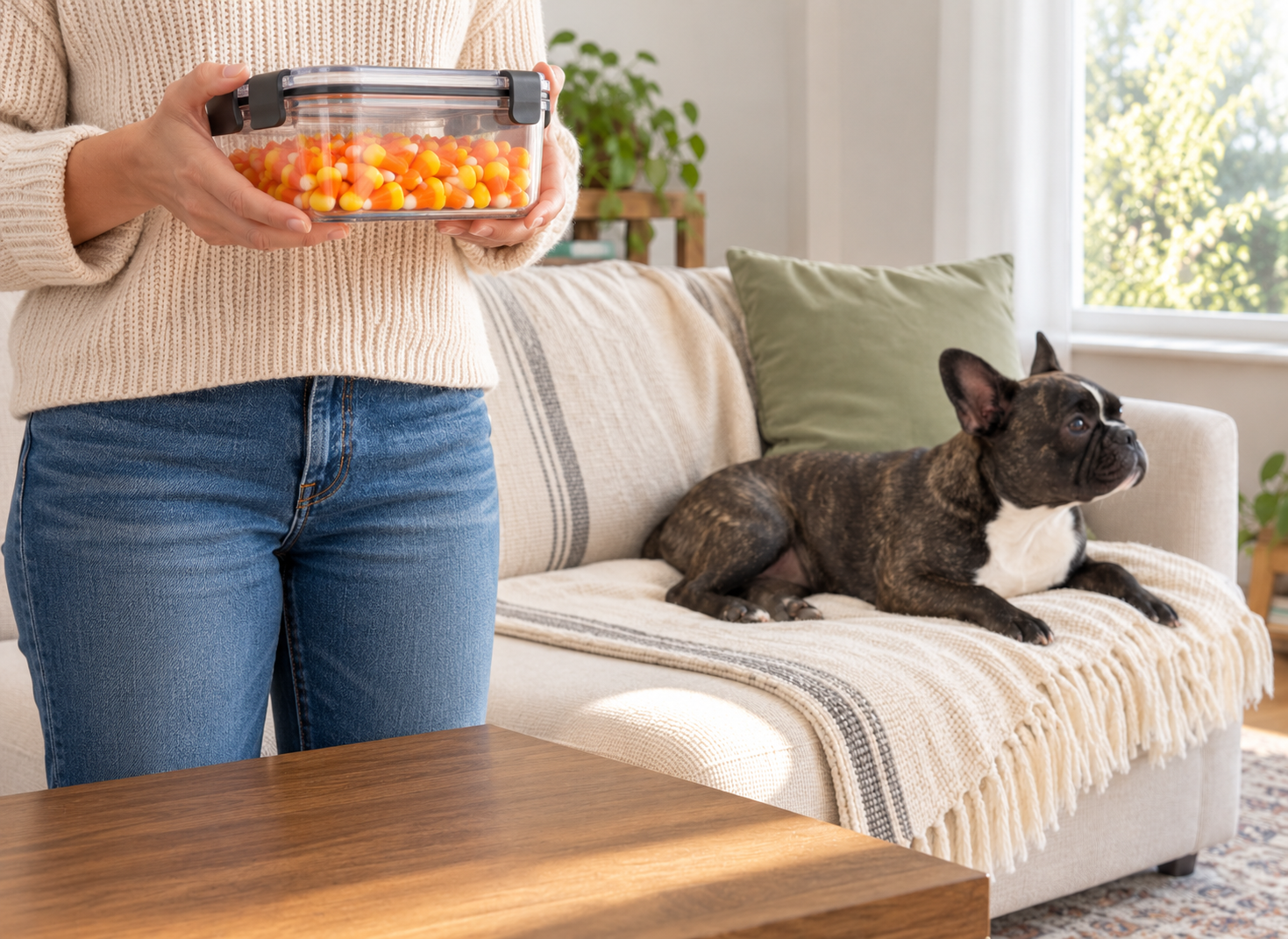
Store candy in a closed cupboard rather than a low bowl, and keep children’s treat bags and rubbish out of reach. For a healthy dog on a diet that permits them, our pumpkin dog treats are a separate snack idea for another time, not a remedy after a candy exposure.
FAQs about dogs and candy corn
My dog ate one piece. Is that automatically an emergency?
The product and your dog’s circumstances determine the response. Call with the label and amount rather than assuming one piece is either harmless or necessarily a severe poisoning. Suspected xylitol exposure needs urgent attention.
Does all candy corn contain xylitol?
No. Do not generalize from the candy’s name or color. Check the specific ingredients, especially in sugar-free products.
Should I make my dog vomit?
Not on your own. Ask a veterinary professional, who can decide what is appropriate for this exposure and this dog.