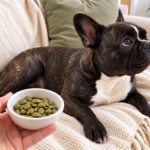
Halloween dog treats do not need icing, candy eyes or a new shopping list. Pick a snack that already suits your dog, set aside a small portion and keep it separate from the human candy. A familiar treat in an ordinary bowl can be all the celebration they need.
If you would like to bake, our three-ingredient pumpkin dog treats recipe is a seasonal starting point. Read the ingredient checks before choosing it, particularly if your dog needs to avoid wheat or peanuts.
Quick takeaways
- Choose one familiar snack or suitable recipe, not a buffet of new foods.
- Count Halloween snacks within the day’s total treat allowance.
- Skip candy decorations, keep human sweets separate and ask before offering food to someone else’s dog.
Choose a treat for the dog, then add the Halloween touch
1. Pumpkin biscuits for a baking afternoon
The pumpkin recipe uses plain puree, flour and peanut butter without xylitol. A pumpkin-shaped cutter can supply the theme without adding another ingredient. Keep shapes small and even, follow the cooking instructions and let everything cool fully.
There is no need to add chocolate eyes, a candy-corn nose or a sugary glaze. The shape is for the humans; the dog does not need a decorated dessert.
2. Waffle pieces for a different homemade option
Our dog-friendly waffles offer another recipe to consider if its ingredients suit your dog. Follow that recipe rather than using a sweetened human waffle mix or adding syrup. Cut the finished waffle into manageable serving pieces.
This is an alternative to the pumpkin biscuits, not a second course. If your dog already has a snack they tolerate, there is no reason to change it for one night.
3. A portion of the usual food
For the lowest-effort option, set aside part of your dog’s normal food allowance for rewards. Serve it in their usual bowl or a familiar food toy that you already use safely. This avoids introducing a new ingredient just as the doorbell starts ringing.
It also makes portions easier to track. Keep the reserved amount separate so it is not accidentally added on top of the full meal later.
4. An existing packaged dog treat
A treat your dog already eats is a reasonable choice. Read its feeding directions, break it into suitable pieces when appropriate and keep the packet so the ingredients remain available. A Halloween label does not establish better nutrition or a better fit for your dog.
Make a small serving, not an open snack bar
UC Davis’ treat guidance recommends keeping treats and other extras within 10% of daily calories. That includes the morning training rewards, chews and toppers as well as the evening biscuit.
Measure the intended portion before guests arrive. Ask one person to handle the dog’s snacks, or put the day’s portion in a clearly marked container so several people do not each hand over “just one.” For a dog with a prescribed diet, check with the treating veterinarian before adding any homemade food.
What to leave off the treat plate
Do not decorate dog snacks with chocolate, raisins, human candy or sugar-free sweets. The ASPCA’s Halloween advice warns particularly about chocolate and xylitol-containing candy. Check peanut butter labels for xylitol, which can also be called birch sugar.
Keep toothpicks, ribbon, little plastic spiders and decorative picks away from food the dog can reach. Put the festive presentation on a shelf or serving area for people, then transfer only the actual dog food to the dog’s bowl.
If you are deciding whether pumpkin itself belongs in the recipe, read pumpkin for dogs for the difference between plain puree and pie filling. A seasonal ingredient is not automatically a treatment for digestive problems.
Sharing treats with visiting dogs
Ask the owner first, name the ingredients and accept “no” without trying to persuade them. A dog may have a food restriction that is not visible. Give the portion to the owner rather than reaching into a crowd of excited dogs with a biscuit.
For take-home treats, provide the ingredient list and the recipe’s storage instructions. Keep the dog treats clearly separate from human candy bags. Do not describe a homemade batch as allergy-safe or suitable for every dog.
FAQs about Halloween dog treats
Do Halloween dog treats need to contain pumpkin?
No. An ordinary treat your dog tolerates is enough. Choose the food for the dog and use a festive bowl or a safe serving area for the theme.
Can I give a little human candy instead?
Do not use Halloween candy as a dog treat. Ingredients vary, and some are dangerous. If your dog eats candy accidentally, keep the packaging and contact a veterinarian for advice.
What if my dog has a sensitive stomach?
Keep to the feeding routine recommended for that dog rather than testing a new recipe during a busy evening. Ask your vet before making changes when there are ongoing symptoms or dietary restrictions.