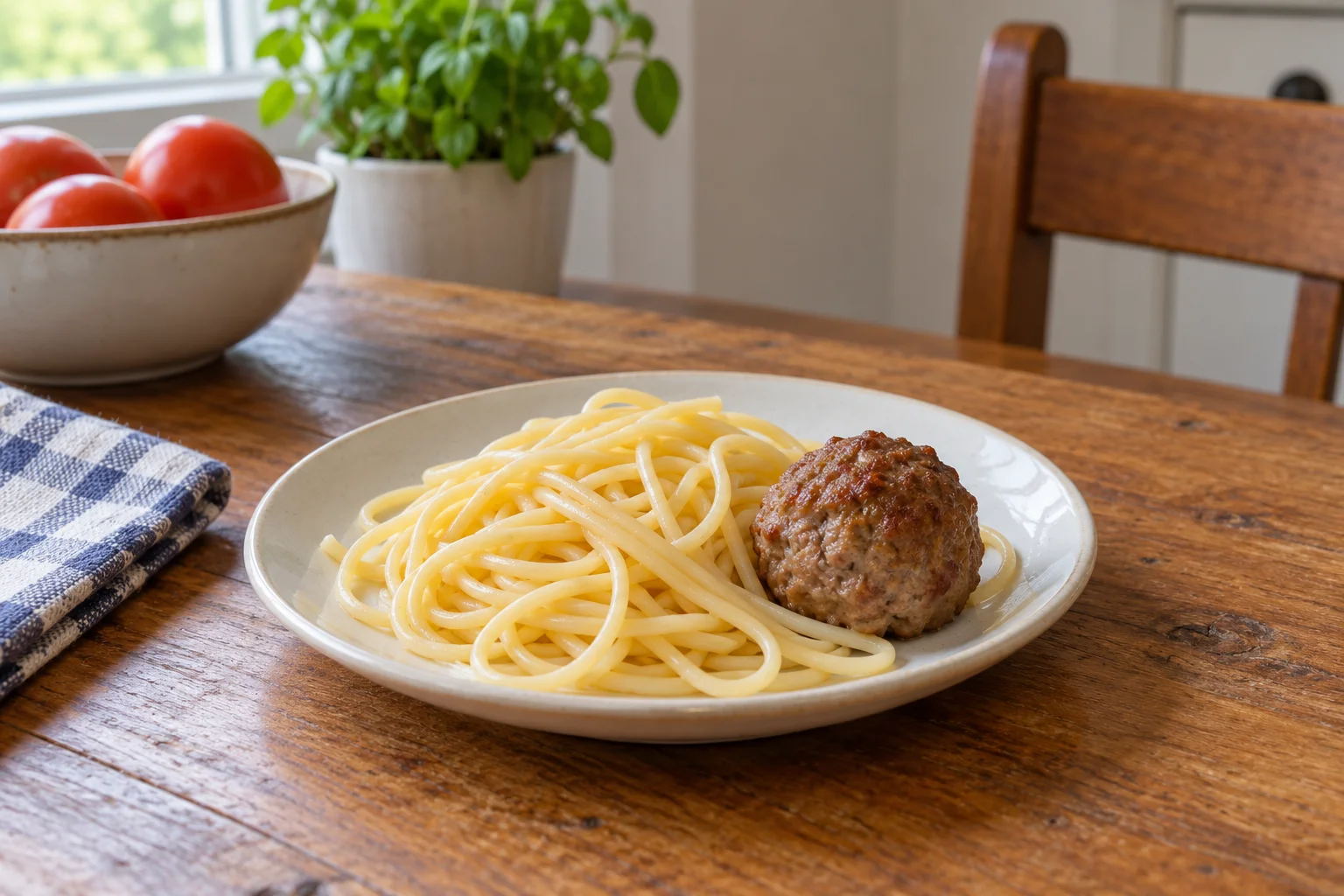

Dogs should not be offered ordinary spaghetti and meatballs without checking the full recipe. Sauce, meatballs and even seasoned breadcrumbs can contain onion or garlic. A little plain cooked pasta with unseasoned cooked meat may suit a healthy dog who tolerates those ingredients, but a dinner-sized bowl is another matter.
If you are looking for everyday homemade dog food, pasta and meat alone do not meet that need. The small batch below is an occasional treat to portion alongside a complete diet.
Key takeaways
- Check the sauce, meatballs and seasoning separately before sharing anything.
- Call your vet after a suspected onion or garlic exposure; do not wait for symptoms.
- A plain homemade version is only an occasional extra. Cook the meat thoroughly and cut pasta into short pieces.
If your dog already ate spaghetti and meatballs
Put the remaining food away and find the ingredient list. Check the jar, meatball package, breadcrumbs, stock and any additions made during cooking. Tell your vet what was eaten, approximately how much, when it happened and your dog’s weight.
Call promptly if the meal contained onion or garlic, if you cannot establish the ingredients, or if your dog ate a large amount or is unwell. Merck notes that onion and garlic can damage red blood cells and signs can take several days to appear. A dog seeming fine now does not settle the question.
Breathing difficulty, collapse, marked weakness, pale gums, repeated vomiting or a painful abdomen calls for urgent veterinary attention. Do not induce vomiting or give a home antidote unless a veterinary professional specifically tells you to.
Which part of the meal causes the problem?
The sauce
Many pasta sauces include onion, garlic, salt, butter, cream or cheese. Read the actual label rather than relying on words such as natural, traditional or homemade. Picking out chopped onion or rinsing coated pasta does not reliably turn the meal into an unseasoned one.
A tomato-free version is the simplest option for this recipe. There is no nutritional need to recreate a red restaurant sauce for a dog.
The meatballs
Check inside the meatball too. Onion powder, garlic powder, seasoned breadcrumbs and sauces may already be mixed through it. Chicken or turkey on the front of the packet tells you the meat, not the whole recipe.
Fat content also varies. Choose plain lean meat for a homemade treat and skip sausage meat, cheese fillings and frying in added fat. A rich meal can cause digestive trouble even when there is no toxic ingredient.
The pasta
Plain cooked pasta is not inherently toxic. VCA includes unseasoned pasta among possible training foods, while noting that extras add calories. Pasta made with wheat or egg is unsuitable if your dog needs to avoid those ingredients. Do not choose a flavored pasta or assume a gluten-free product fits every veterinary diet.
A plain spaghetti and turkey meatball treat
Use only ingredients your dog already tolerates. For a dog with a prescribed diet, food allergy, pancreatitis or another feeding restriction, ask your vet first.
Makes: a batch of about 12 small meatballs and a little pasta, to divide into individual treat portions. This is not 12 meals or a serving recommendation.
Ingredients
- ½ pound (225 g) plain lean ground turkey
- 1 egg
- ¼ cup plain rolled oats
- 1 ounce (28 g) dry plain spaghetti
- Water for cooking, with no salt or stock added
Method
- Heat the oven to 375°F (190°C) and line a baking tray with parchment.
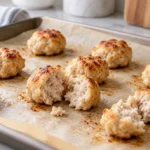
- Mix the turkey, egg and oats. Divide into about 12 evenly sized meatballs and place them apart on the tray.
- Bake, beginning temperature checks after about 15 minutes. Keep cooking until the center of the largest meatballs reaches 165°F (74°C). Check more than one with a food thermometer. The USDA temperature requirement applies to ground-poultry dishes.
- Cook the spaghetti in plain water according to the packet. Drain and cut it into short pieces.
- Let the small serving cool. Crumble a little cooked meatball over a few pasta pieces, sized for your dog’s treat allowance. Store the remaining batch promptly.
Do not hand over a whole meatball because it looks small to you. Break it into easy-to-manage pieces and supervise eating. No sauce, Parmesan, herbs or garnish is needed.
Deciding on a portion
Keep all treats and toppers together within WSAVA’s general limit of 10% of daily calories, unless your vet recommends less. The recipe does not have a single reliable calories-per-meatball figure because meat fat content and the size of your pieces vary.
Use the ingredient labels to estimate the batch calories, then divide by the number of equal pieces or by the cooked weight. Include the pasta separately when calculating what goes into the bowl. A tiny taste can be enough; there is no need to serve a miniature human dinner.
For a dog who needs tightly controlled portions, a measured amount of their normal food is simpler. Cornell explains why meat-and-starch home diets are not balanced for long-term feeding.
Storing the batch
Refrigerate in shallow covered containers within two hours, or one hour above 90°F (32°C). Keep at 40°F (4°C) or below and use within three to four days. Freeze spare meatballs promptly and thaw in the refrigerator. Follow USDA leftover guidance.
Keep the pasta separate so it is easy to measure. There is no need to cook a fresh bowl every time you use a meatball piece as a treat. If reheating either part, bring it to 165°F (74°C), then cool before serving.
FAQs about dogs eating spaghetti and meatballs
Can a dog eat one plain spaghetti noodle?
A small piece of fully cooked, unseasoned pasta is generally a low-concern extra for a dog who tolerates its ingredients. Cut long strands and keep the amount small. Dogs do not need pasta added to their diet.
What if the sauce has garlic powder rather than fresh garlic?
Powder still matters. It is a concentrated ingredient, and the amount eaten is hard to estimate from the appearance of the meal. Contact your vet with the label rather than deciding from how much garlic you can see.
Can I feed the plain version every day instead of dog food?
No. It has not been formulated as a complete diet. Regular home-cooked meals need an appropriate veterinary nutrition recipe, including the required supplements and precise instructions.
Can I use chicken instead of turkey?
Only if chicken suits your dog’s diet. Ground chicken also needs to reach 165°F (74°C). Our plain-chicken guide covers the preparation distinction; turkey is not a guaranteed allergy workaround.
Can puppies have spaghetti and meatballs?
A puppy’s growth diet should remain the priority. Ask your vet before adding a mixed homemade treat, and use a familiar puppy reward if you are unsure. Ordinary sauced spaghetti is not an appropriate shortcut.