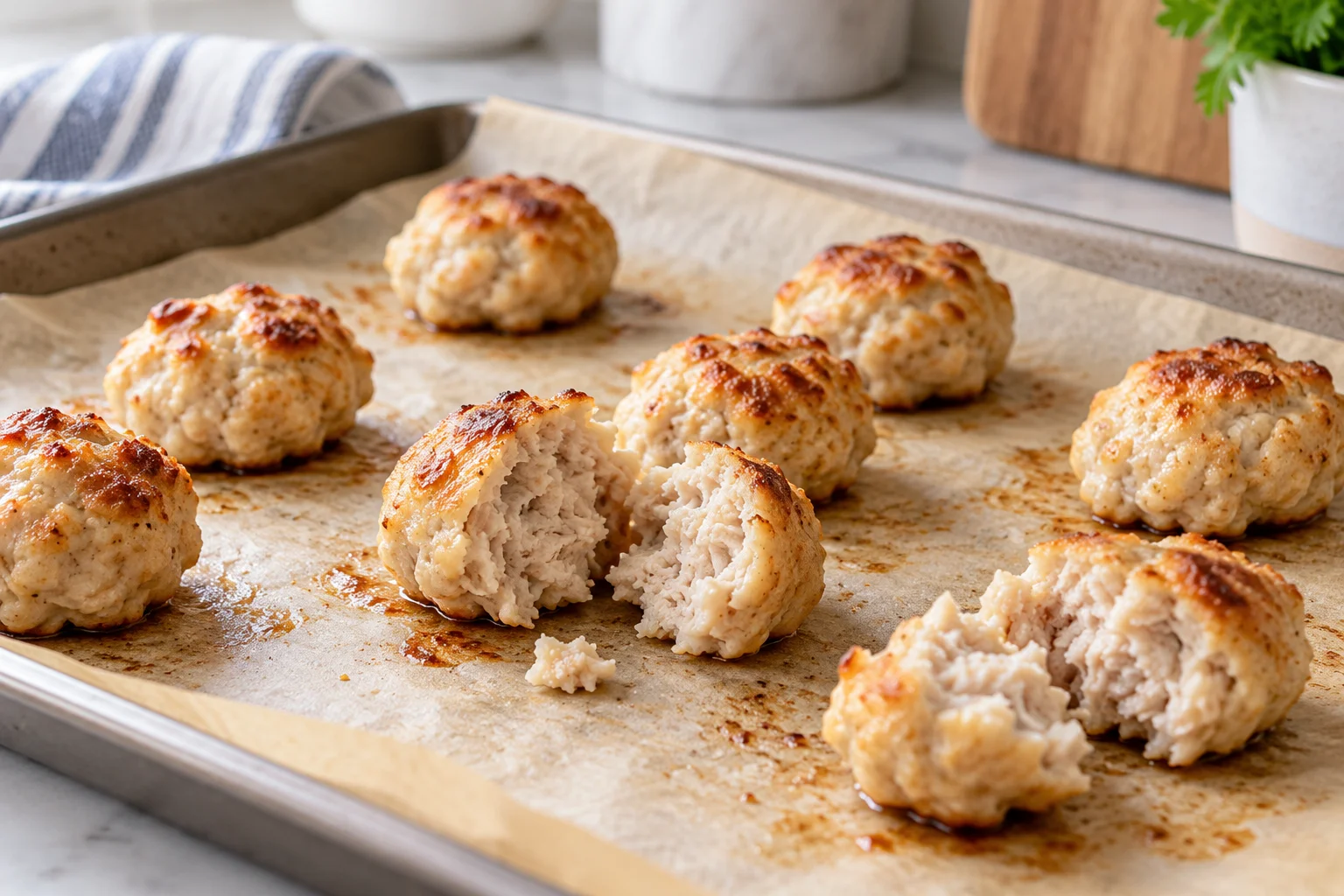

Homemade chicken meatballs can be useful training treats for dogs who tolerate chicken. Keep the ingredients plain, bake them thoroughly and break each cooked meatball into much smaller rewards. The useful part is having a batch ready in the freezer, rather than handing over a whole meatball for every sit.
Before making them, check the basics in our guide to feeding plain chicken. A chicken-based recipe is not suitable for a dog with a chicken allergy or a diet that excludes it.
Key takeaways
- Use unseasoned ground chicken and familiar ingredients, with no onion or garlic.
- Cook to 165°F (74°C), then cool and break into small rewards.
- Count all training treats together. Refrigerate the batch promptly and thaw frozen portions in the fridge.
What belongs in chicken meatballs for dogs?
This recipe uses chicken, egg, plain oats and a little grated carrot. The egg and oats help hold the mixture together; the carrot adds texture. You do not need salt, stock powder, cheese, parsley or a seasoning blend.
Choose plain ground chicken and check the fat information. Ground chicken can include different cuts and proportions of skin, so it is not automatically very lean. Avoid chicken sausage and ready-seasoned mince.
Onions and garlic can be toxic to dogs in cooked or powdered forms. Check anything sold as a meatball mix or a flavored binder before it comes near the bowl. Starting with separate plain ingredients makes that check easier.
Who should skip this recipe?
Skip it if chicken, egg or oats conflict with your dog’s known restrictions. A dog on an elimination trial should have only the foods and treats approved for that trial. VCA explains how unplanned extras interfere with food-allergy assessment.
For pancreatitis, kidney disease, a weight-management plan or another condition affecting diet, ask your vet what treats fit. Homemade does not mean low-fat, hypoallergenic or suitable for every sensitive stomach.
If you are unsure whether chicken is causing a problem, our chicken allergy guide covers the next steps. Trying several new proteins at home is not a substitute for diagnosis.
Plain chicken meatball recipe
Makes: roughly 24 small meatballs, each to break into smaller rewards. The exact yield depends on shaping. Equipment: a mixing bowl, lined baking tray and food thermometer.
Ingredients
- 1 pound (450 g) plain ground chicken
- 1 egg
- ½ cup plain rolled oats
- ¼ cup finely grated carrot
These are batch quantities. There is no fixed number of meatballs that every French Bulldog should eat in a day.
Method
- Heat the oven to 375°F (190°C). Line a rimmed baking tray with parchment.
- Combine the ingredients thoroughly. Shape about 24 evenly sized small meatballs and space them on the tray.
- Bake, starting to check after about 15 minutes. Insert a thin-probe food thermometer into the center of several of the largest meatballs. Continue cooking until they reach 165°F (74°C), the safe minimum temperature for ground chicken. Color and firmness alone do not establish doneness.
- Let the portion you will use cool before handling and serving. Break or cut each meatball into small, soft rewards appropriate for your dog’s mouth.
- Promptly refrigerate the remaining batch in shallow containers. Freeze the portions you will not use soon.
Use clean equipment for cooked treats. Wash hands and utensils after contact with raw chicken and egg, and wash the dog bowl after use. FDA gives the same hygiene priority to pet treats as other foods.
Using meatball pieces in a training session
Before you begin, put the day’s measured reward portion in a separate container. Leave the rest in the refrigerator. This makes it much easier to notice how much has been used than reaching repeatedly into a full batch.
Count the pieces with every other treat, chew and food topper that day. Keep extras within the general 10% daily-calorie allowance, or the lower limit your vet sets. Calculate from your actual ingredient labels and batch weight if you need a calorie estimate; this recipe does not have a validated calories-per-piece figure.
For frequent rewards, you can use part of the dog’s normal measured food allowance and reserve a few meatball crumbs for a harder exercise. Breaking treats smaller gives you more rewards from the same portion. It does not create extra calories to spend.
Watch how your dog eats. If a piece encourages gulping, reduce its size or choose a different reward. Never feed straight from a hot tray, and do not offer hard frozen meatballs.
Storage, freezing and taking treats outside
Refrigerate at 40°F (4°C) or below and use within three to four days. The government cold-storage chart gives that limit for cooked poultry. Freeze spare portions promptly in a labeled container; aim to use them within two months for quality.
Pack only what you need for an outing and keep it chilled. These are perishable meat treats, not dry biscuits for a pocket. Discard food left out longer than two hours, or one hour above 90°F (32°C), following FDA food-handling guidance.
Thaw a small portion in the refrigerator. If you reheat it, bring it to 165°F (74°C), then cool and check throughout before feeding. A brief microwave burst is not a reliable heating instruction.
FAQs about chicken meatballs for dogs
Do I need fennel in dog meatballs?
No. This recipe leaves it out. There is no need to add an herb for a promised digestive benefit, and these treats should not be used to treat persistent gas. Ask your vet about ongoing digestive symptoms rather than relying on a seasoned snack.
Are homemade chicken meatballs better than bought treats?
They offer ingredient control and can be broken into small pieces. Bought treats may be easier to transport and label by calories. The better choice is the one that fits your dog’s diet and the training session, not whichever looks more homemade.
Can I replace the oats with oat flour if my dog cannot eat oats?
No. Oat flour is still oats. A genuine ingredient restriction needs a different recipe, not a change in texture. Similarly, removing the egg or adding a wet purée changes how this mixture binds.
Can a puppy have these?
Check with your vet, especially for a very young puppy or one on a specific diet. Use very small, soft rewards and keep the complete growth diet as the foundation. A whole meatball is not an appropriate default puppy portion.
Can these replace my dog’s meals?
No. They have not been formulated as complete and balanced food. Our homemade diet guide explains why everyday meals need a veterinary nutrition plan.