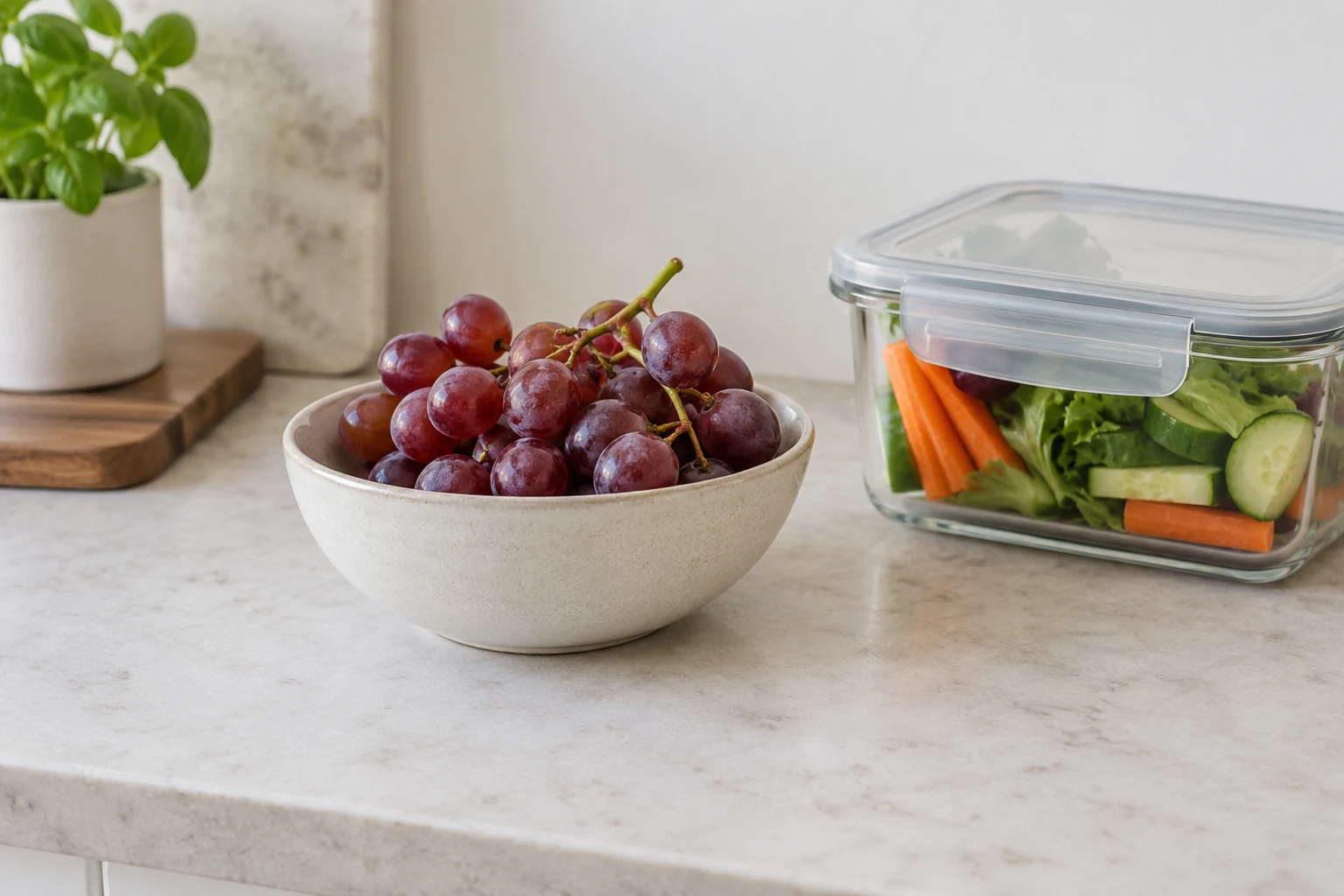

No. French Bulldogs should never be offered grapes or raisins. These fruits can cause acute kidney injury, and you can’t judge the risk safely from the number eaten or how well your dog seems.
If your Frenchie has eaten a grape, raisin, sultana, or Zante currant, or you suspect they have, contact your vet or an emergency veterinary hospital immediately. Don’t wait for symptoms. Don’t try to make your dog vomit or give a home remedy.
In the US, you can also call ASPCA Poison Control at 888-426-4435 or Pet Poison Helpline at 855-764-7661. Consultation fees apply. Outside the US, contact your local emergency vet or animal poison service.
Key takeaways
- Grapes and raisins can damage a dog’s kidneys; there is no reliable safe serving.
- Call a vet immediately after suspected ingestion, including one grape and a dog that seems well.
- Don’t induce vomiting or give remedies at home. Save the food packaging and follow professional instructions.
For future snack choices, our guide to fruit for French Bulldogs covers alternatives. If an exposure has happened, make the call before planning another treat.
What to do while contacting the vet
- Prevent another bite. Move the remaining fruit, packet, or baked food out of reach.
- Gather the useful details. Note what was eaten, the estimated quantity, when it happened, and your dog’s weight. Keep the packaging or recipe, especially for trail mix or baked goods.
- Say what you don’t know. If several grapes are missing or you aren’t sure your dog swallowed one, explain that. Don’t delay the call while trying to reconstruct an exact count.
- Follow the clinic’s plan. Ask where to go and what to do while traveling. Mention any vomiting, weakness, appetite change, or other symptoms.
The official ASPCA Poison Control and Pet Poison Helpline services can help assess an exposure. If your dog is collapsing or having difficulty breathing, seek emergency veterinary care immediately.
ASPCA warns that home vomiting attempts can be dangerous. Don’t use salt, oil, fingers in the throat, peroxide, charcoal, or another improvised treatment. A veterinary professional must decide whether decontamination is appropriate and how to do it safely.
Why one grape still deserves a call
The risk isn’t identical from one dog or one batch of fruit to another. Cornell’s veterinary guidance identifies tartaric acid and its salt as the most likely explanation, while noting that fruit concentrations and individual sensitivity vary.
That uncertainty is why a home grape-count calculation can’t clear an exposure. A dog who previously ate a grape without an obvious problem hasn’t been shown to be protected next time. Early professional assessment gives the vet the best chance to act before kidney injury develops.
Which foods count?
Red, green, seeded, seedless, fresh, dried, homegrown, and organic grapes all belong in the avoid category. Removing the skin or seeds doesn’t make a grape an appropriate treat.
Raisins and sultanas are dried grapes. Zante currants are also dried grapes, despite the name. Check foods such as raisin bread, cookies, trail mix, cereal, granola bars, and fruitcake. If your dog ate a mixed food, report the whole ingredient list because other ingredients may matter too.
VCA’s veterinary toxicology guidance distinguishes Zante currants from true currants in the Ribes genus, which haven’t been associated with the same kidney injury. If you’re unsure what a product contains, keep the label and ask rather than guessing from the word “currant.”
Symptoms can be delayed
Vomiting, diarrhea, reduced appetite, tiredness, and abdominal discomfort may occur first. Kidney injury can develop over the following days, with changes in drinking or urination and worsening illness. Some dogs have no obvious early signs.
Don’t use a symptom checklist as permission to wait. Even initial bloodwork can be normal early on, so your vet may recommend repeat testing. If your dog has already vomited, still call: that doesn’t prove all the fruit is gone or that no toxin was absorbed.
What treatment may involve
There is no home antidote. Depending on the exposure and assessment, the veterinary team may remove remaining stomach contents, provide intravenous fluids, and monitor kidney function and urine output. Hospitalization may be recommended.
The Merck Veterinary Manual describes early decontamination and supportive treatment, while noting that activated charcoal’s effectiveness is unknown. Don’t buy charcoal or attempt to reproduce a clinic protocol at home.
Prompt care can improve the outlook, but recovery cannot be promised. The amount eaten, timing, existing health, and whether kidney injury has developed all influence the plan and prognosis.
FAQs about grapes and French Bulldogs
My Frenchie ate one grape. Will they be okay?
An article can’t predict that. Call your vet or poison control now, even if your dog seems normal. One grape isn’t a reason to skip professional advice.
Is grape juice or jelly the same risk?
Not necessarily. Cornell and VCA distinguish processed juice or jelly from whole grapes; these products have not been associated with the same pattern of grape toxicosis. That doesn’t make every product safe: some jams contain fruit pieces, and recipes may include other harmful ingredients. After an ingestion, ask your vet about the exact product.
Is it too late if the grapes were eaten yesterday?
No. Contact a vet now and give the timing. Delayed symptoms and kidney changes make assessment important even when the initial opportunity for removing the fruit has passed.
How can I prevent another exposure?
Keep fruit and raisin-containing snacks in closed storage, clear dropped food promptly, and secure bins and compost. Let visitors know not to share grapes, and keep the dog away while young children eat foods that may fall on the floor.