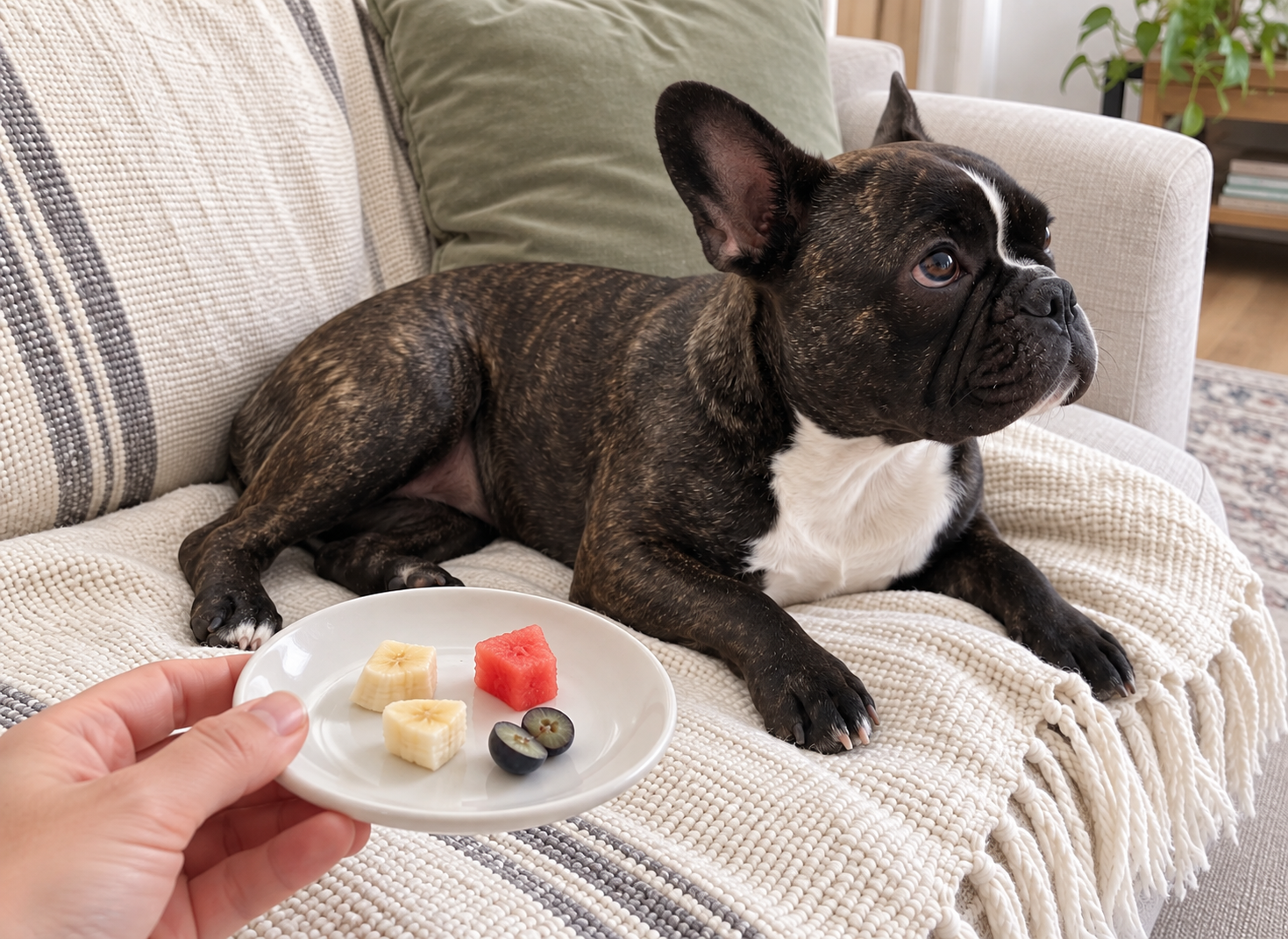

French Bulldogs can eat small amounts of apple, banana, blueberries, strawberries, watermelon and several other fruits. The safe choice depends on the fruit, the part you serve and your dog’s health. Grapes and raisins belong on the avoid list, even when your dog seems perfectly well after eating them.
Fruit is an optional treat alongside a complete diet. For the rest of the kitchen, our guide to what French Bulldogs can eat covers the broader food-safety questions.
Key takeaways
- Offer a little plain, prepared fruit alongside a complete diet, rather than replacing meals.
- Remove hazardous pits, cores and tough rinds; keep grapes and raisins out of reach.
- Count fruit with all other treats, introduce one new food at a time, and follow any veterinary diet restrictions.
What fruits can French Bulldogs eat?
The list below keeps the preparation beside the fruit, because “yes” on its own leaves out the useful part. Offer only a small taste of a new fruit. The table is a selection of familiar options, not permission to work through the whole bowl in one afternoon.
| Fruit | Part to offer | Preparation and limits |
|---|---|---|
| Apple | Fresh flesh | Remove the core, seeds and stem. Cut thin slices into small pieces. |
| Banana | Peeled flesh | A little mash or small pieces. Sweet and easy to over-portion. |
| Blackberries | Ripe berries | Wash; halve or mash large berries. Keep the serving small. |
| Blueberries | Ripe berries | Wash; squash them if your dog tends to swallow round foods whole. |
| Cantaloupe | Soft flesh | Discard the rind and seeds, then cut into small pieces. |
| Mango | Ripe flesh | Remove the skin and entire pit before cutting. |
| Orange | A little flesh | Remove peel and seeds. Skip it if it causes stomach upset. |
| Peach | Fresh flesh only | Remove and secure the pit. Never offer a whole peach to chew. |
| Pear | Fresh flesh | Remove the core, seeds and stem; cut small. |
| Pineapple | Soft flesh | Remove the prickly skin, crown and tough core. |
| Raspberries | Ripe berries | Wash and offer only a few small pieces, not a bowlful. |
| Strawberries | Ripe flesh | Wash, remove leafy tops and cut rather than serving a large whole berry. |
| Watermelon | Seedless soft flesh | Remove the entire rind and any seeds before serving. |
These preparations follow the AKC fruit guide and MedVet’s fruit-safety advice. The serving still needs to suit your individual dog. For more detail on two popular choices, see banana portions and peel safety and preparing watermelon for a Frenchie.
Which fruit is the best choice?
There isn’t one best fruit for every French Bulldog. I’d choose by the job: a little mashed banana when you want a soft texture, a small apple piece for crunch, or properly prepared watermelon when you’d like a moist snack. If your dog doesn’t like fruit, there’s no nutritional reason to persuade them.
Blueberries are easy to portion individually, but their small, round shape doesn’t mean every dog should swallow them whole. Cut or squash food to suit your dog’s eating habits, and supervise. A snack that is convenient for the person still has to be manageable for the dog.
Fruit contains useful nutrients, but a few treat-sized bites don’t correct an unbalanced diet. PDSA advises that dogs do not need extra fruit or vegetables when their main diet meets their needs. If you are worried about meals, start with choosing what to feed a French Bulldog rather than adding a growing collection of toppers.
How much fruit can a French Bulldog have?
There is no reliable breed-wide allowance in handfuls. Hand sizes, fruit sizes and Frenchies vary too much. AAHA recommends keeping all treats within 10% of daily calories. That is a ceiling for the combined extras, not a target to fill with fruit.
For example, if your vet sets a total daily intake of 600 calories, no more than 60 would come from treats. A chew, training rewards and fruit all share those 60 calories. This is an arithmetic example, not a recommended calorie intake for every Frenchie.
Begin with a tiny piece of one prepared fruit. If it agrees with your dog, a few small bites can be an occasional snack. There is no need to increase the portion every time or to offer fruit daily. Our French Bulldog feeding-amount guide explains how meals and extras fit together.
Fruits to avoid, and why
Grapes, raisins, sultanas and Zante currants
Do not feed these, including in baked goods and dried-fruit mixes. They can cause acute kidney injury, and there is no dependable safe number to use at home. Cornell advises calling a vet or pet poison service immediately after any ingestion, without waiting for symptoms.
If it happens, note what was eaten, the approximate amount and when. In the US, ASPCA Poison Control is available at 888-426-4435; a consultation fee may apply. Don’t attempt to make your dog vomit unless a veterinary professional specifically tells you to.
Tamarind also belongs off the treat list: Merck Veterinary Manual reports kidney injury after ingestion. “Currants” can mean different fruits; Zante currants are dried grapes. If you cannot identify an ingredient, keep it away from your dog and ask for advice after an exposure.
Cherries and stone-fruit pits
Cherry flesh is different from the pit, stem and leaves. The pit is a choking or obstruction hazard, and some stone-fruit kernels contain compounds that can release cyanide when chewed. Cherries are fiddly enough that I’d choose another fruit. A pitted peach can be prepared safely; a whole peach is a different proposition.
Avocado
Avocado isn’t interchangeable with grape poisoning. Pet Poison Helpline identifies the swallowed avocado seed as an obstruction risk for dogs. Its fatty flesh also makes avocado an unnecessary treat choice. Keep the pit, skin and guacamole away; a swallowed pit warrants prompt veterinary advice.
Unidentified berries and fruit products
Don’t let your dog sample unfamiliar berries on a walk. At home, check every ingredient in fruit snacks, pastries and desserts. Sugar-free products may contain xylitol, which is dangerous to dogs. The FDA advises immediate veterinary contact after suspected xylitol ingestion.
How to prepare fruit for a Frenchie
- Wash it and check the fruit itself. Use sound produce rather than moldy scraps or anything from the compost.
- Remove the unsafe parts before serving. Put pits, cores, peels and tough rinds into a secure bin, not a tempting pile at the edge of the board.
- Cut for the dog in front of you. Small, soft pieces or a little mash are easier to portion than wedges. Don’t use a fork or skewer to feed a dog that grabs.
- Keep the first serving simple. One fruit by itself makes a reaction easier to track than a fruit-and-yogurt mixture.
- Stop if it disagrees with them. Record the food and amount rather than repeatedly trying a bigger or smaller serving while symptoms continue.
VCA’s preparation guidance explains why removing thick skins, pits and cores matters and why new foods should be introduced separately. “Remove seeds” means the hazardous seeds and pits specified for that fruit. You do not need to pick the tiny embedded seeds out of a strawberry or raspberry.
Allergies, sensitive stomachs and veterinary diets
Nina has a chicken allergy. That doesn’t tell us whether she, or another Frenchie, will tolerate a particular fruit. A food being safe for dogs in general is only the first check; an individual diet plan still matters.
If your Frenchie is on an elimination diet, don’t add fruit without the vet’s approval. Unplanned extras can compromise the trial. Our French Bulldog allergy guide covers that distinction, and VCA explains why the whole treat list belongs in a diet trial.
Ask your vet about suitable treats if your dog has diabetes, a weight-loss plan or another condition needing a prescribed diet. Avoid introducing new fruit during vomiting or diarrhea. Repeated vomiting, pain, lethargy, blood in stool or suspected obstruction need prompt care; persistent loose stool also deserves veterinary advice rather than another food experiment. Cornell’s diarrhea guidance explains the warning signs.
FAQs about fruits French Bulldogs can eat
Can Frenchies eat fruit every day?
A small tolerated portion may fit some dogs’ diets, but fruit doesn’t need to be a daily habit. Count it with the other extras and follow any diet restrictions. Daily frequency doesn’t make a larger serving safe.
Can French Bulldog puppies eat fruit?
Keep complete puppy food at the center of the diet. Ask your vet before introducing extras, especially during settling-in or stomach trouble. If approved, start with a tiny, soft, safely prepared taste rather than an adult-sized portion.
Can French Bulldogs eat frozen fruit?
Plain fruit that is safe fresh can sometimes be offered chilled or partly thawed in small portions. Check mixed bags for unsafe ingredients. Avoid large, hard frozen chunks, particularly for a dog that gulps; cold food doesn’t prevent heatstroke.
Can French Bulldogs eat dried fruit?
Raisins, sultanas and dried grape “currants” are unsafe. Other dried fruit isn’t automatically poisonous, but it is easy to overfeed and may be sweetened or mixed with unsafe ingredients. Fresh prepared fruit is the simpler choice.
Are raspberries and blackberries unsafe because they contain xylitol?
Small servings of these berries are generally considered suitable treats. Naturally occurring traces are different from concentrated xylitol added to sweets or spreads. The AKC explains this distinction for blackberries. Keep portions modest and never treat a sugar-free product as safe because fruit is safe.
What if my Frenchie gets diarrhea after fruit?
Stop the new food and contact your vet if symptoms persist or your dog seems unwell. Portion size might be involved, but diarrhea doesn’t prove that fruit was the only cause or that your dog has an allergy.