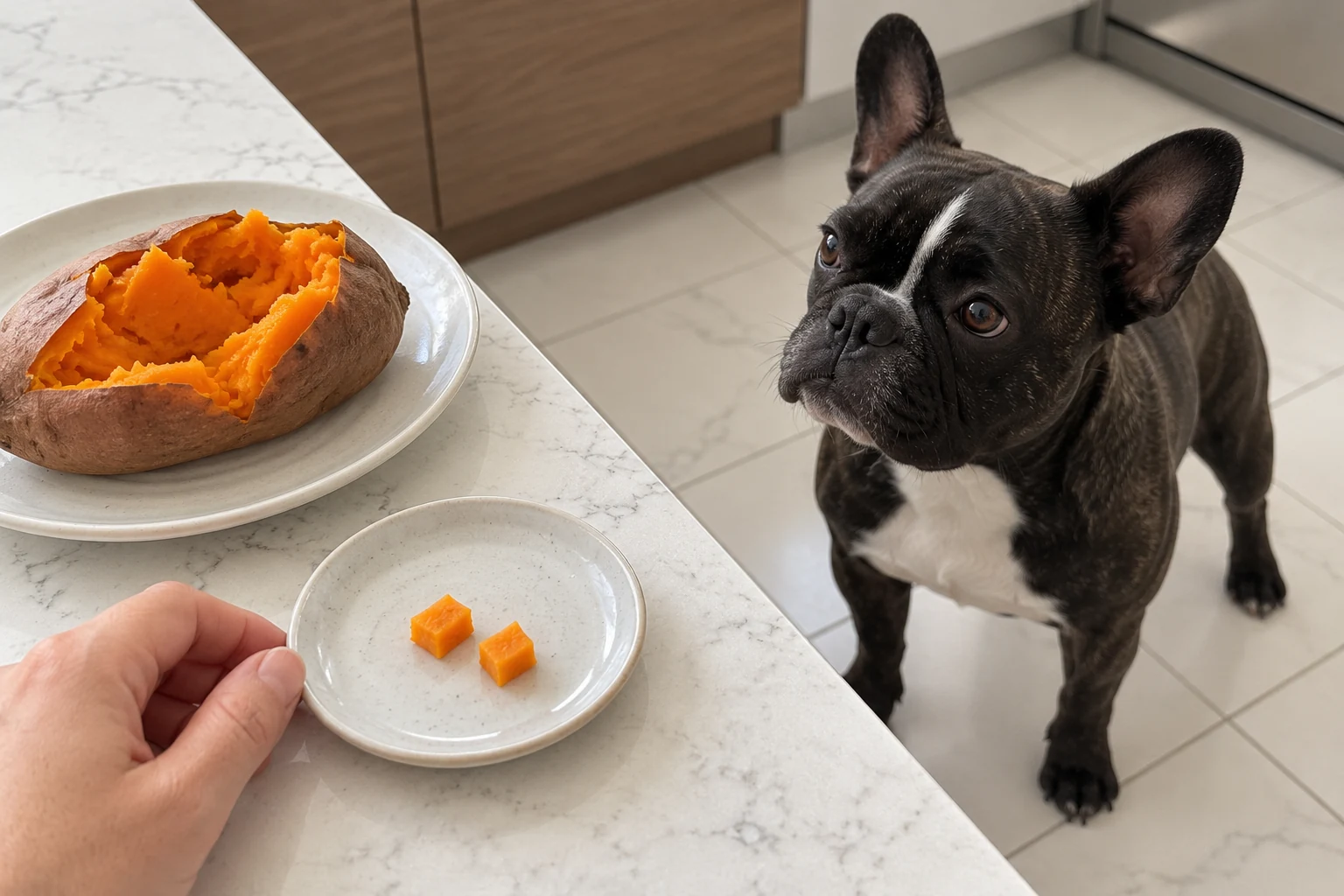

A little sweet potato set aside before dinner gets seasoned can make an easy treat. French Bulldogs can eat it when it is cooked until soft, served plain, and offered in a small amount that fits their usual diet. A buttery casserole or a tough raw chunk needs a different answer.
Sweet potato can be a snack or topping, but it cannot make an improvised meal nutritionally complete. If you are considering a bigger change to the bowl, start with our guide to homemade food for French Bulldogs and get a properly formulated plan from your vet.
Key takeaways
- Plain, soft, cooked sweet potato can be an occasional Frenchie treat.
- Peel it and avoid raw chunks, rich toppings, and pieces your dog might swallow whole.
- Keep portions within the overall treat allowance; ask your vet about diabetes, digestive problems, or a prescribed diet.
What sweet potato adds to your dog’s diet
Sweet potato provides fiber and nutrients including beta-carotene, a source of vitamin A. VCA’s seasonal food guidance includes it among foods dogs can enjoy. That makes it a possible extra for a healthy dog, rather than something every Frenchie needs.
A complete and balanced food already supplies the nutrients your dog requires. Adding vegetables does not automatically improve that balance, and a generous topping can crowd out the main meal.
How to prepare sweet potato for a Frenchie
- Wash it and remove the skin.
- Boil, steam, or bake it without salt, butter, oil, sugar, or seasoning.
- Cook until the flesh is easy to squash with a fork.
- Let it cool, then mash it or cut it into small, soft pieces suited to your dog’s chewing habits.
- Offer a tiny taste first, separately from other new foods, and watch for digestive upset.
PDSA recommends cooked, peeled sweet potato because some dogs find the skin difficult to digest. Peeling is a simple precaution, rather than evidence that every scrap of cooked skin is poisonous.
Set your dog’s portion aside before making mash or a family casserole. Sweet potato fries, heavily seasoned leftovers, and dishes with marshmallows or syrup are poor choices. Check any packaged puree for added ingredients; the name on the front does not tell you everything inside.
How much sweet potato can they have?
There is no tablespoon allowance that fits every French Bulldog. Body size, body condition, age, activity, health, and the rest of the day’s food all matter. Begin with a small taste rather than treating a spoonful as a required serving.
UC Davis advises keeping treats and extras to no more than 10% of daily calories. That allowance includes every biscuit, training reward, chew, and topping combined. It is a ceiling, not a goal, and your vet may set a lower one.
If sweet potato becomes a regular extra, measure it consistently and ask how it fits your dog’s calorie plan. An ice-cube tray can help organize stored portions, but cube sizes vary, so one cube is not automatically the right amount.
Raw sweet potato and chewy treats
Avoid deliberately feeding raw sweet potato. It is hard to chew, and large swallowed pieces can become a choking or digestive-obstruction hazard. The AKC’s preparation guidance recommends cooking it until soft and removing the skin.
Dried sweet potato chews deserve their own check. A tough strip behaves differently from soft mash. Choose a product appropriate for your dog’s size, follow its instructions, supervise chewing, and stop offering it if your dog tears off and swallows large pieces. “Single ingredient” does not mean every texture is suitable for every dog.
If your Frenchie swallows a large raw chunk or develops repeated vomiting, belly pain, loss of appetite, or marked tiredness, contact a vet promptly. Do not try to make the piece pass by adding more food.
FAQs about French Bulldogs and sweet potatoes
Can French Bulldogs eat sweet potato every day?
A small, tolerated amount may fit some dogs’ feeding plans, but daily feeding is unnecessary. Check the overall calorie allowance and avoid replacing a substantial part of complete food with mash.
Is sweet potato good for diarrhea?
Do not use it as an automatic treatment. Diarrhea has many causes, and another new food can complicate the picture. Cornell’s diarrhea guidance recommends veterinary care when vomiting, poor appetite, lethargy, blood, or persistent diarrhea accompanies the problem.
Can puppies have cooked sweet potato?
Ask your vet before adding extras, especially during weaning or a food transition. Growing puppies need an appropriate complete puppy diet. If approved, offer only a tiny amount of soft, plain mash.
Can diabetic French Bulldogs eat it?
Only within the feeding plan agreed with their vet. Sweet potato adds carbohydrate and calories. Do not change meals or insulin because a food is described as natural or low glycemic.
Is pumpkin better than sweet potato?
Neither is a universal digestive remedy. The useful choice is the food your dog tolerates in an appropriate amount, if your vet recommends an extra at all.