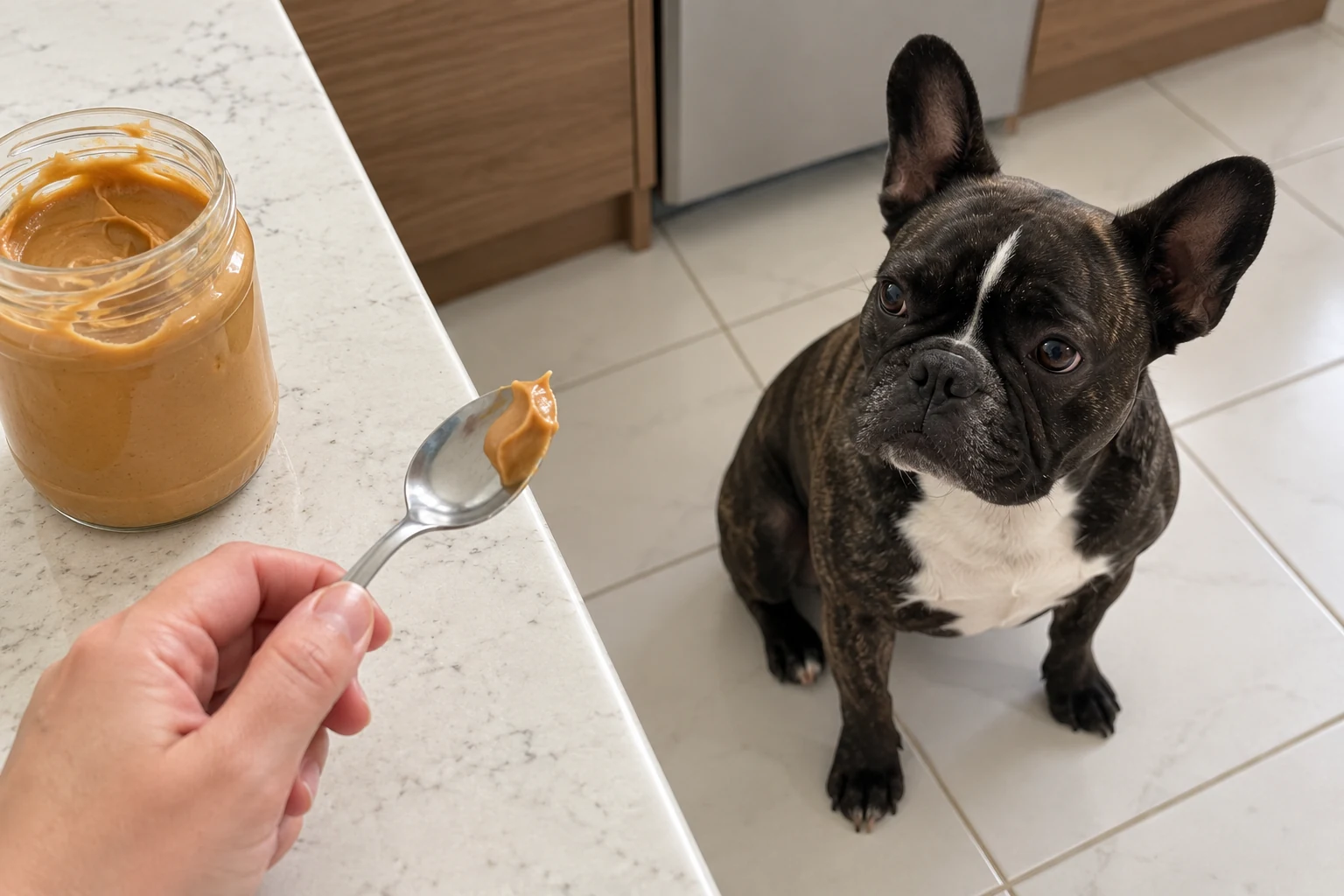

Peanut butter is handy when you want a little food to stay put on a toy or lick mat. Most healthy French Bulldogs can have a small amount of plain peanut butter, provided it contains no xylitol and fits their diet. The important check happens before the lid comes off.
If your dog is already on a restricted diet, including an elimination trial for suspected French Bulldog allergies, follow your vet’s instructions before adding a new treat. A jar that is suitable for one dog may be unsuitable for another.
Key takeaways
- Plain, xylitol-free peanut butter can be a small treat for many Frenchies.
- Check every jar for xylitol, also called birch sugar or wood sugar.
- Use a thin smear, count its calories, and get veterinary help immediately after a possible xylitol exposure.
Read the ingredients every time
The simplest choice is an unsweetened peanut butter with a short ingredient list, ideally peanuts alone. Check the actual jar rather than relying on a brand recommendation: different products from the same company can have different recipes.
The FDA specifically warns that some peanut and nut butters contain xylitol. In dogs, this sweetener can trigger a dangerous drop in blood sugar. Birch sugar and wood sugar are alternative names to watch for. A “natural” label does not replace the ingredient check.
Avoid chocolate-flavored spreads, mixed dessert spreads, and products whose ingredients you cannot confirm. If someone hands you a spoonful from an unidentified jar, it is easier to skip the treat than guess.
If your Frenchie may have eaten xylitol
Call your vet, an emergency veterinary clinic, or an animal poison-control service immediately. Do not wait for symptoms. Keep the packaging and tell the professional your dog’s weight, what was eaten, approximately how much, and when.
Signs can include vomiting, unusual weakness, staggering, collapse, or seizures. NC State veterinary nutrition guidance notes that signs may begin quickly or be delayed. A dog acting normal just after exposure still needs prompt professional advice. Do not induce vomiting or try home treatment unless the treating professional directs it.
How much peanut butter is reasonable?
Think of peanut butter as a concentrated extra. It can add substantial calories even when the spoonful looks modest. There is no reliable “one teaspoon for every Frenchie” rule because dogs’ calorie needs and medical restrictions differ.
AAHA’s weight-management guidance limits treats to no more than 10% of total daily calories, including table food. Peanut butter shares that allowance with training treats, dental chews, and every other extra. Some dogs need a smaller budget.
Use the nutrition label to work out the calories in the amount you measure. For example, if a hypothetical jar lists 180 calories per two tablespoons, one teaspoon contains 30 calories. That is arithmetic for that label, not a recommended serving. Spreading a measured amount thinly across a toy avoids the uncertainty of filling it by eye.
Peanut butter is not needed to supply protein or vitamins to a dog already eating a complete diet. Its useful role is a small reward your dog enjoys.
Toys, lick mats, and medication
A thin smear can make a suitable food toy more interesting. Use equipment sized for your dog and supervise, particularly if your Frenchie tends to chew the toy or mat itself. AAHA’s enrichment guidance includes stuffed food toys and freezing them to prolong engagement.
There is no promised number of quiet minutes, and licking is not a treatment for severe anxiety. If your dog is distressed during grooming, reduce the difficulty and get help with a gradual handling plan rather than using food to push through.
For pills, ask whether the medicine can be given with food and whether peanut butter suits the prescribed diet. Cornell lists peanut butter among possible medication-hiding foods. Use only enough to conceal the tablet, check it was swallowed, and never crush or alter medication without instructions.
When to choose another treat
Check with your vet first if your dog has a history of pancreatitis, needs a low-fat diet, is managing excess weight, or is undergoing allergy testing. High-fat extras can conflict with these plans. AAHA’s pancreatitis guidance explains why rich meals deserve caution, particularly in susceptible dogs.
Introducing several new treats together makes reactions harder to trace. If peanut butter is new to your dog, start with a tiny taste on an otherwise familiar food day. Stop offering it if vomiting, diarrhea, or other concerning signs follow, and ask your vet what to do.
FAQs about French Bulldogs and peanut butter
Which peanut butter brands are safe for dogs?
Choose by the current ingredient label, not a permanent brand list. Look for plain peanut butter without xylitol or unsafe additions. “Dog peanut butter” still deserves the same check.
Is smooth peanut butter better than crunchy?
Smooth peanut butter is easier to spread thinly and portion consistently. Crunchy varieties are not automatically toxic, but ingredients, quantity, and your dog’s ability to handle the texture still matter.
Can French Bulldog puppies have peanut butter?
Ask your vet whether an occasional tiny taste fits your puppy’s feeding plan. Puppies need appropriate complete puppy food, and xylitol is dangerous at every age.
Can I give peanut butter every day?
Only if it fits the dog’s individual plan. Daily medication may call for a small food reward, but regular use makes measuring calories especially important. Their usual food may be a simpler alternative.
Are peanuts the same as peanut butter?
No. Whole nuts and shells introduce different chewing and swallowing concerns, and mixed nuts can contain unsafe ingredients. Do not assume advice about a thin smear of peanut butter approves a handful of peanuts.