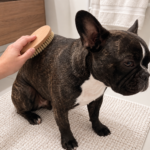
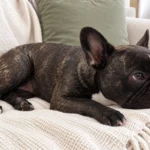
A smooth pink or red lump in the inner corner of your French Bulldog’s eye may be cherry eye: the tear gland of the third eyelid has slipped out of position. Call your vet promptly rather than waiting for it to disappear. If your dog is squinting, rubbing the eye or struggling to see, seek urgent veterinary care.
Eye changes belong on the short list of French Bulldog health warning signs. A photo can help explain what changed, but it cannot confirm the diagnosis.
Key takeaways
- Cherry eye is a displaced tear gland, usually seen as a pink lump at the inner corner.
- Call your vet promptly; squinting, rubbing or sudden vision changes need urgent attention.
- Treatment usually repositions the gland surgically to protect tear production; removal is generally avoided.
What cherry eye is, and what it looks like
Dogs have a third eyelid at the inner corner of each eye. A gland associated with it makes tears. When that gland prolapses, it becomes visible as a rounded pink or red swelling. It can affect one eye or both, and a gland that briefly slips back can appear again. The American College of Veterinary Ophthalmologists explains this anatomy and recurring appearance.
A red lump is a reason for an examination, not a diagnosis to make from a picture. Other third-eyelid problems can resemble cherry eye. Your vet can examine the tissue and, where appropriate, measure tear production with a Schirmer tear test. Cornell’s veterinary overview also describes abnormal third-eyelid cartilage that can occur alongside or resemble a prolapsed gland.
Why French Bulldogs get it
French Bulldogs are among the breeds predisposed to cherry eye. It is seen especially in young dogs, often before two years old. The exact cause is not fully understood; inherited weakness in the supporting tissues is suspected. Being predisposed does not mean every Frenchie will develop it, and the appearance of a lump does not prove anything about an individual dog’s breeding. Cornell lists both the age pattern and affected breeds.
How quickly should you see a vet?
Contact the clinic as soon as you notice the lump and let them set the appointment’s urgency. Do not use “my dog is still eating” as reassurance that the eye is comfortable. ACVO’s signs of eye discomfort include squinting, excess tearing, redness and rubbing; dogs can continue normal activities despite eye pain.
Call for urgent assessment if the eye is held shut, becomes cloudy, looks injured or your dog seems unable to see normally. Describe every symptom, including when it started and whether one or both eyes are affected. Do not push, massage or try to tuck the gland back yourself.
Treatment: preserve the gland
The usual lasting treatment is surgery to reposition the gland while retaining its tear-producing function. Removing it increases the risk of chronic dry eye, so removal is generally avoided. ACVO recommends early assessment and gland preservation; leaving exposed tissue irritated for longer can complicate repair.
Your vet may prescribe medication to control inflammation or keep the eye comfortable while planning treatment. Selected mild cases may be monitored under veterinary direction, but drops are not a reliable way to correct a persistent displaced gland. PDSA describes the distinction between temporary medical management and surgery. Do not start leftover or human eye drops.
A surgeon may use a pocket technique, an anchoring technique or a combination. The choice depends on the eye and the surgeon’s assessment. Ask which approach is proposed, why, and whether a veterinary ophthalmologist should be involved. The Royal Veterinary College’s surgery guide explains these options.
What surgery costs: compare the whole estimate
There is no single dependable price for every French Bulldog. Ask for a written local estimate instead of treating a search-result average as your quote. Confirm the currency, whether it covers one eye or both, and what happens if the gland prolapses again.
- Consultation and any eye tests
- Pre-anaesthetic assessment, anaesthesia and monitoring
- The repair and any additional eyelid procedure
- Medicines, protective collar and rechecks
- Possible referral or repeat-procedure costs
Tell the clinic about financial limits early so you can discuss appropriate options. PDSA recommends an open conversation about costs. A low headline price and a specialist estimate may include different services; compare the itemized details before deciding.
Recovery and the possibility of recurrence
Follow the surgeon’s instructions for prescribed medicines, activity and rechecks. A protective collar prevents rubbing and should stay on until the clinic says it can come off. The RVC notes that redness and swelling can persist during the first 10–14 days, but worsening pain or an unexpected change still warrants a call rather than an assumption that everything is normal.
Repair is often successful, but the gland can prolapse again and may need another operation. The other eye may also develop cherry eye. Ask what changes to report and how the surgeon handles recurrence; neither outcome can be predicted from a general success percentage.
FAQs about cherry eye in French Bulldogs
Can cherry eye go away on its own?
The lump can temporarily disappear and return. That does not establish that the underlying problem is resolved. Keep the veterinary appointment even if the eye looks better when you arrive.
Is cherry eye painful?
It can cause irritation and discomfort. Rubbing, increased blinking and squinting are reasons to seek care urgently, even when your dog is otherwise behaving normally.
Can I fix cherry eye at home?
No home manipulation is recommended here. Leave repositioning to your veterinarian, and use only the eye medication they prescribe or specifically approve for this episode.
Will my Frenchie need surgery on both eyes?
Not automatically. Both eyes should be examined, and any proposed treatment for an unaffected eye needs an individual explanation of benefits and risks.
Can untreated cherry eye cause dry eye?
Persistent prolapse can interfere with healthy tear production and increases the risk of ongoing inflammation and dry eye. It does not mean every untreated dog will inevitably lose vision, but it is a reason to act promptly.
This article provides general information. Your veterinarian needs to examine the eye to diagnose the problem and recommend treatment.