
Key takeaways
- Keep ordinary dumplings away from dogs when the filling or sauce contains onion, garlic or unknown seasonings.
- Use familiar ingredients and cook a turkey filling to 165°F/74°C, checked with a thermometer.
- Cool, cut into small pieces and offer only a little within the day’s treat allowance.
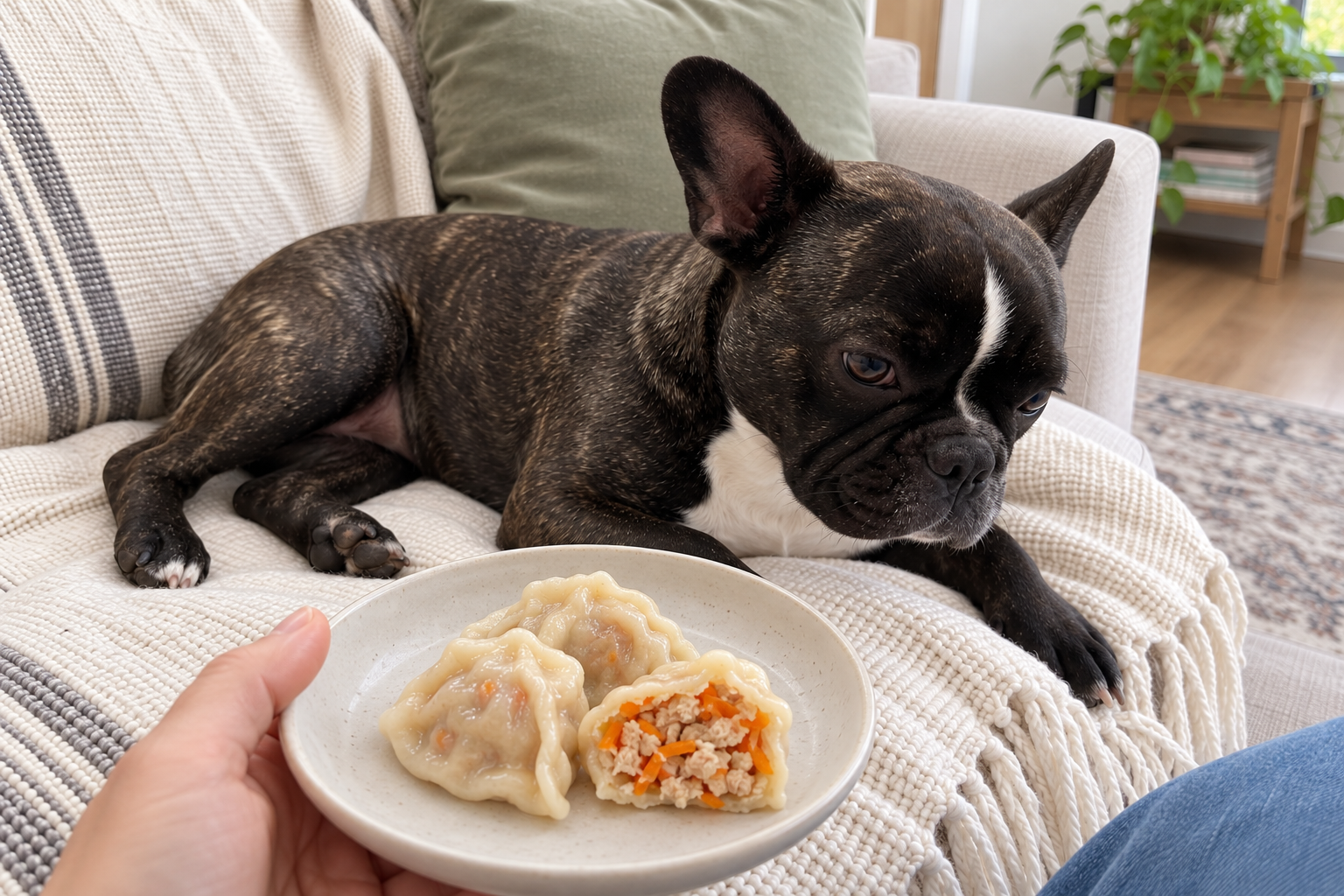
Dog-friendly dumplings need a separate, unseasoned filling, a suitable plain wrapper and thorough cooking. A small cooled piece can be an occasional treat for a healthy dog who tolerates the ingredients. Regular gyoza, wontons and takeout dumplings aren’t safe to share without knowing everything in the filling, wrapper and sauce.
I’d make a separate little batch before seasoning the food for people. That gives you control over what goes into it. For a simpler reward without the folding, our French Bulldog treat guide covers ready-made alternatives.
Can dogs eat regular dumplings?
The name doesn’t tell you enough. A steamed vegetable dumpling can contain garlic or chives; a pork dumpling can contain green onion; a plain-looking wonton may already be seasoned inside. Skipping the dipping sauce or picking out visible onion doesn’t settle the question.
VCA’s Allium poisoning guidance identifies onion, garlic, chive and leek as hazards in raw, cooked, powdered and liquid forms. They can damage red blood cells. Cooking the dumpling does not remove that risk.
Other issues include a fatty filling, salty sauces, bones in poorly prepared meat, ingredients your dog is allergic to, and a large chewy parcel that can be gulped. “Steamed” describes the cooking method, not the suitability of the whole dish.
If your dog has already eaten a dumpling
If it contained onion, garlic or another potentially toxic ingredient, or you can’t establish what was in it, contact your vet or an animal poison service promptly. Have the package or recipe, amount eaten, time and your dog’s weight ready. Don’t use a stranger’s reassuring story about one dumpling to decide that your dog needs no advice.
Do not induce vomiting or give bread, milk or another home remedy unless a veterinary professional tells you to. Pet Poison Helpline’s emergency guidance explains what to do after a suspected poisoning. Breathing difficulty, collapse or marked weakness warrants emergency care.
Choose the filling and wrapper separately
A familiar, plain protein
Use lean meat with no added broth, seasoning or marinade. Small amounts of plain cooked turkey, chicken, beef or pork can be suitable snacks for many dogs, according to the ASPCA’s food-sharing advice. That doesn’t make every meat suitable for every dog.
Nina has a chicken allergy, so I wouldn’t use chicken in a treat intended for her. I also wouldn’t assume that turkey is automatically an appropriate substitute. If allergies affect your choices, our guide to chicken allergy in French Bulldogs explains why a veterinary diet plan comes first.
A little plain vegetable
Carrot is a straightforward choice: finely grate it so you don’t leave firm chunks inside a small parcel. Plain cooked pumpkin or a little mashed, peeled sweet potato are other options if already tolerated. Avoid seasoned vegetable mixtures.
There is no need for a handful of parsley or a selection of herbs. A short ingredient list is easier to check and easier to work back through if a dog doesn’t tolerate the treat.
A fully cooked wrapper
Check the entire wrapper label, including wheat, egg or other ingredients your dog must avoid. Choose a plain product intended for steaming or boiling and follow its cooking directions. “Gluten-free” doesn’t tell you whether its other ingredients suit your dog.
Keep raw wrappers, loose flour and scraps out of reach. The FDA explains that flour is a raw food and can carry harmful bacteria. Yeast-containing dough brings additional expansion and alcohol-production hazards; don’t use it for these treats.
Plain turkey and carrot dumplings
This is an occasional treat for dogs who already tolerate turkey, carrot and the wrapper ingredients. It isn’t a complete meal. If your dog has pancreatitis, follows a prescribed or elimination diet, or has trouble swallowing, ask your veterinary team before making it.
Ingredients
- 4 ounces/115 g plain lean ground turkey, without seasoning or added broth
- 2 tablespoons finely grated carrot
- Plain dumpling wrappers, with ingredients checked against your dog’s dietary needs
- Water for sealing and cooking
You’ll also need a steamer or saucepan and a thin-tip food thermometer. Wrapper sizes differ, so work with a small spoonful of filling at a time rather than trying to make a fixed number of parcels.
Method
- Set up a separate preparation area. Wash your hands, utensils and work surface. Keep the dog’s plain ingredients away from the human filling, sauces and raw-food scraps.
- Mix the filling. Combine the turkey and finely grated carrot. Add no salt, stock, garlic, onion, oil or sauce. Keep unused raw filling refrigerated while you work.
- Fill lightly. Put about a teaspoon of filling in the center of each wrapper, or less if needed to close it without stretching. Dampen the edge as the wrapper package directs, fold and seal. Don’t make thick, tightly packed parcels.
- Steam or boil. Use plain water and the wrapper manufacturer’s method. Keep the dumplings separated where practical so they cook evenly.
- Check the center. Insert a clean thin-tip thermometer from the side into the filling of several dumplings, including the largest. Ground turkey must reach at least 165°F/74°C. Continue cooking if needed. A soft wrapper, floating dumpling or change of meat color isn’t a temperature check.
- Cool and portion. Open a dumpling to release trapped heat and check the center before serving. Cut it into small, manageable pieces rather than offering the whole parcel.
The temperature follows the federal cooking-temperature guidance for ground poultry. There isn’t one reliable four-minute cooking time for every wrapper, filling thickness and steamer. Cook any remaining raw filling thoroughly or refrigerate it promptly for later cooking; don’t offer raw scraps.
How much can a dog have?
Start with a small piece, not a whole dumpling. There is no dependable “one to three dumplings per Frenchie” allowance because wrapper size, meat fat content and each dog’s daily needs vary.
Count the wrapper and filling along with every other treat that day. WSAVA recommends keeping treats below 10% of daily calories; some dogs need a smaller allowance. Don’t replace a normal meal with a plate of dumplings or assume a smaller dinner makes the recipe nutritionally complete.
For a first taste, choose a quiet day when your dog is well. Stop offering the new food if it causes vomiting, diarrhea or another concerning change, and ask your vet for advice. A dog with recurring digestive symptoms needs an assessment rather than a more elaborate homemade snack.
Storage, freezing and reheating
Refrigerate cooked dumplings promptly in a shallow, covered container at 40°F/4°C or colder. Use within three to four days, or freeze portions for later. Discard pieces your dog has mouthed.
Follow the government’s leftover precautions: don’t leave perishable food out longer than two hours, or one hour above 90°F/32°C. Thaw frozen portions in the refrigerator. If reheating, bring the center to 165°F/74°C, then cool before offering any to your dog.
I prefer freezing the cooked batch for this project. It avoids having to judge how much longer an uncooked frozen parcel needs in the steamer. Whatever the starting temperature, the thermometer is the check that matters.
FAQs about dog-friendly dumplings
Can dogs eat gyoza, wontons or potstickers?
Don’t share a restaurant or frozen product without checking its complete ingredients. Garlic, onion and chives can be inside even when the outside looks plain. Fried versions and dipping sauces add further considerations. A purpose-made plain batch gives you more control.
Are dumpling wrappers safe by themselves?
A little fully cooked plain wrapper may suit a dog who tolerates its ingredients. Raw wrappers aren’t a treat, and a wrapper taken off a seasoned dumpling can carry filling or sauce. Prepare a separate plain one rather than trying to clean a takeout wrapper.
Can I make pork or beef dumplings instead?
Possibly, if your dog tolerates the meat and it is lean, plain and thoroughly cooked. Ground beef and ground pork need at least 160°F/71°C under USDA guidance. Don’t substitute sausage meat, bacon or seasoned mince. A protein swap is not an allergy test.
Can I make the wrappers from rice flour and water?
Use a reliable wrapper recipe with complete preparation and cooking instructions if you want to make them yourself. Rice flour doesn’t behave exactly like wheat flour, so an untested cup-for-cup swap can leave you with wrappers that split or stay thick. A suitable packaged wrapper is the simpler choice here.
Do steamed dumplings need any oil or dipping sauce?
No. Steam or boil in plain water and serve without sauce. The dog’s portion doesn’t need the soy sauce, chili oil or seasoned broth used for people.
What if my dog swallows treats whole?
Skip the whole dumpling. Cut a cooled piece into a size and texture your dog can manage, and supervise. If your dog coughs, gags, regurgitates or has a known swallowing problem, ask your vet about suitable treats instead of relying on smaller pieces alone.