
Key takeaways
- Make dog waffles with familiar ingredients, and cook the batter thoroughly before cooling and cutting.
- Check every topping and label for xylitol, chocolate, raisins and other unsuitable additions.
- A waffle is an occasional treat, with the amount guided by your dog’s needs rather than the waffle-maker size.
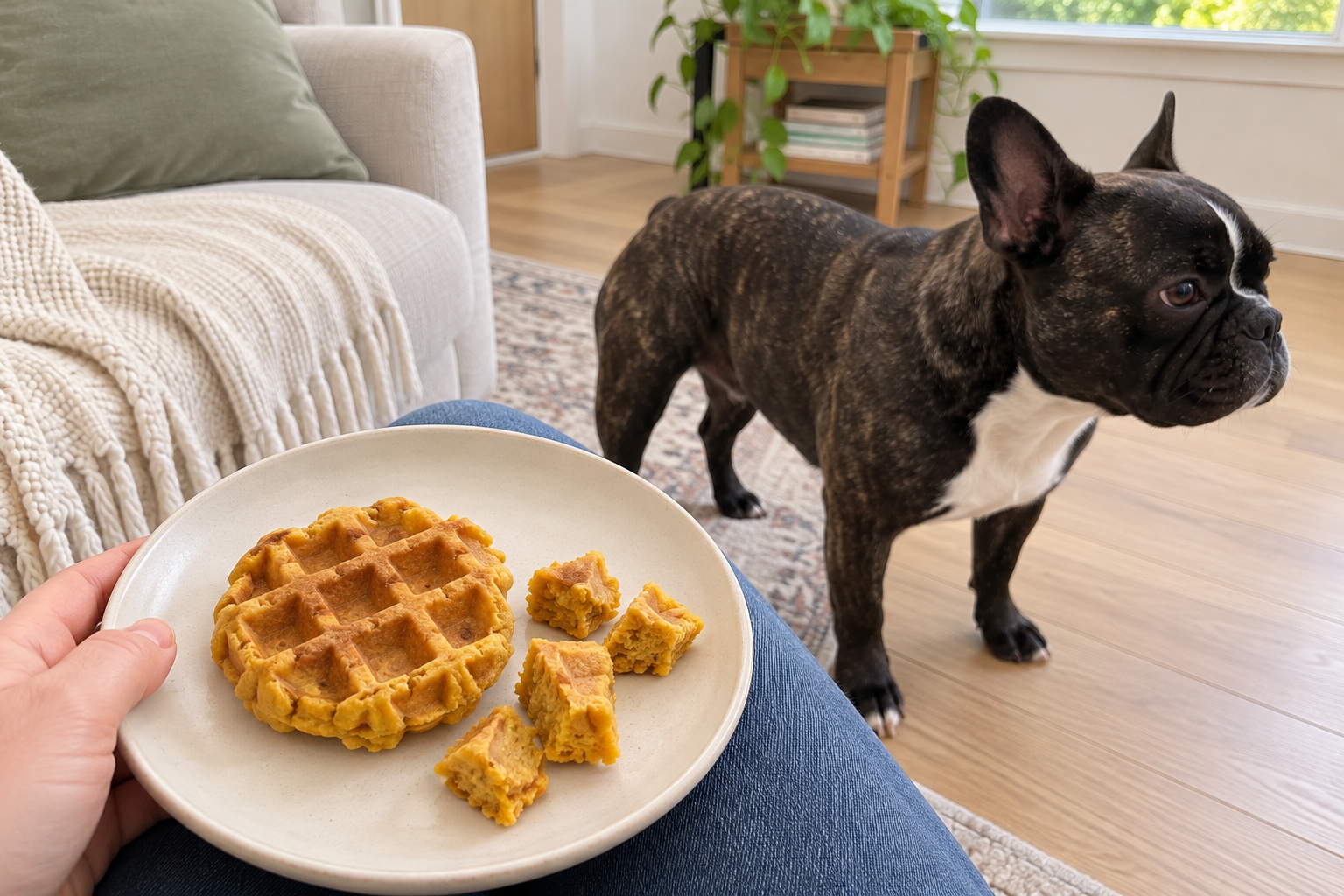
Dog-friendly waffles can be an occasional treat when they’re made with suitable ingredients, cooked through and served in small pieces. Plain pumpkin, banana, oat flour and egg are one simple combination for dogs who tolerate them. Keep xylitol, chocolate, raisins and rich breakfast toppings out of the recipe.
The waffle iron is for the shape; your dog doesn’t need a whole waffle for breakfast. If banana is new to your Frenchie, start with our banana portion and preparation guide before putting several unfamiliar ingredients into one batch.
Can dogs eat human waffles?
A small piece of a fully cooked, plain waffle may be tolerated by a healthy dog, but the recipe and toppings need checking. Frozen waffles, box mixes, restaurant waffles and homemade batches can have very different ingredients. “Sugar-free” is a reason to read the label closely.
The FDA warns that xylitol is dangerous to dogs. It may also be labeled birch sugar or wood sugar and can appear in baked goods or some nut butters. Chocolate, cocoa, raisins and macadamia nuts are other ingredients to keep away from dogs.
Butter, whipped cream and sugary syrup create a different problem: a rich, calorie-heavy treat. Removing the syrup doesn’t tell you whether the waffle itself is suitable. Check the full ingredient list rather than assuming one change makes a human breakfast dog-friendly.
Before you heat the waffle iron
Use ingredients your dog already tolerates. Skip this project during an elimination diet, and ask your vet first for a dog with pancreatitis, diabetes, recurring digestive problems or a prescribed diet.
Nina’s chicken allergy is a reminder that the ingredient list matters even when a recipe sounds plain. I wouldn’t assume an egg-containing treat suits her just because it has no chicken meat. Individual restrictions need their own answer; our French Bulldog chicken-allergy guide covers that distinction.
- Oat flour: Use plain oat flour, without flavorings or sweeteners. If you grind oats yourself, measure the flour after grinding; a cup of whole oats and a cup of flour aren’t automatically equivalent.
- Pumpkin: Choose plain cooked pumpkin or a can listing pumpkin as its ingredient. Don’t use pumpkin pie filling.
- Banana: Peel it and mash the flesh. Leave the peel out of reach.
- Egg: Use a fresh egg and cook it fully in the batter. Don’t let your dog lick the mixing bowl.
- Water: Add only what is needed to loosen the mixture. There is no need for a sweetened drink or flavored milk.
Oat flour isn’t automatically the best flour for every dog, and wheat flour isn’t automatically harmful. For example, Battersea’s veterinary team uses plain or wholemeal flour in its banana pancake recipe. Choose according to your dog’s tolerance rather than a “grain-free” or “superfood” label.
Pumpkin and banana dog waffles
This batch is intended to be divided into small treats. The number of waffles will depend on your appliance; a mini waffle and a quarter of a large waffle aren’t reliable serving sizes.
Ingredients
- 1 cup plain oat flour, measured after grinding if making your own
- ½ cup plain pumpkin puree
- 1 peeled ripe banana, thoroughly mashed
- 1 egg
- Water, added a tablespoon at a time only if needed
- A minimal amount of plain cooking oil for the plates, only if the waffle-maker instructions require it
Leave peanut butter out of the batter so you have fewer ingredients to check. It can be an optional tiny topping for a dog who tolerates it, after checking the label for xylitol.
Method
- Prepare the appliance. Preheat the waffle iron according to its instructions. Keep your dog away from the hot plates, cable and counter.
- Mix the wet ingredients. Combine the mashed banana, pumpkin and egg until evenly mixed.
- Add the flour. Stir in the oat flour. If needed, add water a tablespoon at a time until the batter can be spooned and spread; don’t turn it into a thin liquid.
- Cook a modest amount. Follow your appliance’s filling guidance and avoid overfilling. Close the iron and cook until the waffle is set throughout. Check the first waffle by opening it through the center; there should be no wet, uncooked batter.
- Check doneness. Use a clean thin-tip thermometer in the center to confirm at least 160°F/71°C for this egg-containing mixture, and continue cooking if the interior is still underdone. The indicator light or a browned outside alone is not enough.
- Cool, then cut. Let the waffles cool before offering a small piece. Divide the rest for storage rather than setting the whole batch in front of your dog.
The FDA’s egg-safety guidance gives 160°F as the minimum for dishes containing eggs. Exact cooking time varies with the iron and batter thickness. If the outside browns before the center cooks, follow your appliance’s guidance for a lower setting and smaller amount of batter.
Keep raw batter and flour away from pets and children, and clean the bowls, utensils and surfaces afterward. Flour can carry harmful bacteria, even when there is no raw egg in a recipe. A taste of uncooked batter isn’t part of the treat.
Toppings and variations without overdoing it
Plain is the simplest way to serve these. If you add a topping, choose one familiar option and keep it small:
- A little mashed banana
- A thin smear of plain pumpkin
- A crushed blueberry, prepared as in our blueberry feeding guide
- A tiny smear of xylitol-free peanut butter, if suitable for your dog
- A little plain, cooked, peeled sweet potato mashed smooth
PDSA’s diet advice treats fruit and vegetables as optional extras, served plain and in small amounts. They don’t need a drizzle of syrup to make them worth offering.
Keep variations on top rather than casually replacing ingredients in the batter. Coconut flour, rice flour and oat flour absorb liquid differently. Removing the egg or swapping banana for pumpkin can also change how the mixture holds together. If an ingredient is unsuitable, choose a different recipe built around your dog’s permitted foods instead of improvising an allergy workaround.
Portions: think small pieces, not mini waffles
There is no universal waffle allowance for a French Bulldog. The size of the waffle, the quantity of topping, your dog’s daily calorie needs and any dietary restrictions all matter.
Keep the combined calories from treats below 10% of the day unless your vet gives a different plan, following WSAVA’s treat guidance. That’s a ceiling for all extras together, not a target to fill with waffles. Start with a small piece and keep the regular diet as the main food.
If you’re managing weight carefully, use a treat with known calories or ask your veterinary team to help estimate this batch from the exact ingredients and cooked yield. Banana size, flour measurement and toppings make a casual “calories per waffle” figure unreliable.
How to store dog waffles
Refrigerate the cooked waffles promptly in a clean, covered container at 40°F/4°C or colder. As a conservative approach for this moist homemade treat, use refrigerated portions within two days, or freeze small portions you won’t use in that time. Don’t leave a batch on the counter as though it were a dry dog biscuit.
The government’s food-handling guidance recommends refrigerating perishable food within two hours, or one hour above 90°F/32°C. Thaw frozen portions in the refrigerator. Serve once soft, or reheat thoroughly and allow them to cool before feeding. Discard pieces your dog has mouthed.
FAQs about dog-friendly waffles
Can dogs eat frozen waffles or waffles from a box mix?
Check the complete ingredient list and any toppings. A plain cooked waffle isn’t automatically toxic, but products containing xylitol, chocolate or raisins should not be given. If you can’t confirm the ingredients, choose a familiar dog treat instead.
Are pumpkin waffles good for a dog’s upset stomach?
Don’t use this recipe to treat digestive illness. It contains several ingredients and adds extra food to the diet. Persistent vomiting, diarrhea or appetite changes need veterinary advice rather than a trial of pumpkin waffles.
Can I make these without peanut butter?
Yes. The batter above contains no peanut butter. It’s only an optional topping, and plain waffles are fine without it. Peanut butter also adds fat and calories, so more isn’t better.
Can I use a pancake pan instead?
If you don’t have a waffle iron, I’d use a published pancake recipe with its own ingredient ratios and cooking method. Battersea’s banana pancakes are one option for dogs without special dietary requirements. Don’t assume every thick waffle mixture cooks the same way in a pan.
How often can my dog have waffles?
There isn’t a scientifically fixed once-a-week rule. Offer them occasionally in small pieces, considering your dog’s tolerance and the overall treat allowance. A calendar doesn’t make a large serving appropriate.
What if my dog ate a waffle with xylitol or chocolate?
Contact your vet or an animal poison service promptly. Keep the packaging, note the amount and time, and don’t wait for symptoms after suspected xylitol exposure. Don’t induce vomiting or try a home remedy without professional instructions.