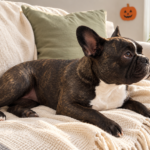
A fluffy French bulldog is a Frenchie with a long-haired coat, not a separate breed with its own guaranteed temperament or health profile. “Long-haired French bulldog” usually describes the same coat trait. The important question is not just how that coat happened, but what you can actually verify about the dog behind the photo.
If you already have one and need coat-care help, start with our guide to fluffy French bulldog shedding. Here, I’m focusing on the label, the genetics and the questions worth asking before you commit.
The short version
- Fluffy describes coat length. It does not establish ancestry, personality or health.
- Long hair can be inherited through recessive variants of the FGF5 gene.
- The AKC French bulldog standard describes a short, smooth coat. Being outside that description is not, by itself, a medical diagnosis.
- A coat-color or coat-length DNA report is not a substitute for health screening and an individual veterinary examination.
What makes a French bulldog fluffy?
The UC Davis Veterinary Genetics Laboratory identifies recessive variants of the FGF5 gene associated with long hair in dogs, including a variant found in French bulldogs. Its test explanation distinguishes short-coated carriers from dogs expected to have long hair after inheriting two long-hair variants.
That helps explain why a short-coated parent can carry a long-hair variant. It does not mean you can work out a particular dog’s ancestry or complete genetic profile from a photograph. Ask what was tested and read the actual laboratory report rather than treating “DNA clear” as a complete answer.
Is a fluffy Frenchie a real French bulldog?
Coat length alone cannot settle that question for an individual dog. A pedigree concerns recorded ancestry; a coat test concerns the variants covered by that test. Neither should be confused with a promise that a dog will stay healthy.
The AKC breed standard calls for a short, smooth coat. A fluffy coat therefore differs from the standard’s description. That distinction matters if a seller suggests that “registered,” “show quality” and “health tested” all mean the same thing. Ask them to explain each claim separately, with documents attached to the correct dog.
Is a teddy bear Frenchie the same as a fluffy Frenchie?
Do not assume so from the nickname alone. “Teddy bear” is not a separate variety defined in the French Bulldog standard. Sellers may use it differently: one seller’s listings distinguish a “Teddy Bear Coat (Floodle)” label from “Fluffy Frenchie.” That is evidence of advertising terminology, not independent proof of ancestry or a particular gene.
Ask whether the claim concerns coat length, texture, a named cross or simply a teddy-like appearance. Then ask for the records that support that specific claim. The UC Davis coat-length test addresses specified FGF5 variants; it does not certify every feature implied by a nickname.
Do not infer Poodle ancestry, a guaranteed non-shedding coat or allergy safety from “teddy bear” or “Floodle” alone. If a cross is claimed, request documented parentage separately. The questions about health, grooming and human allergies below still need their own answers.
Does the long coat change the health questions?
It does not remove the questions you would ask about any Frenchie. The French Bull Dog Club of America explains that the breed’s short face can make breathing less efficient and reduce tolerance of heat, exertion and stress. Those concerns deserve attention regardless of the coat.
Neither a fluffy photo nor a coat-length result tells you how comfortably a dog breathes, moves or manages everyday activity. Equally, it would be unfair to diagnose a particular fluffy dog as unhealthy from appearance alone. An independent veterinarian can assess the individual and explain which records or further assessments matter.
Our overview of French bulldog health issues is a starting point for that conversation, not a checklist that can clear a puppy over the internet.
What I would ask before choosing one

I would put the paperwork and the dog’s everyday comfort ahead of a “rare” label. A useful conversation with a breeder or rescue should answer these questions:
- What exactly does “fluffy” mean here? Ask whether there is a coat-length report, and whether the report identifies this dog or only a parent.
- Which health assessments have actually been completed? Ask for the original results, the dog identifiers and dates, not just a collage of badges. The breed club recommends requesting health-testing results and checking available records.
- What medical history comes with the dog? Ask about prior treatment, current medication and any breathing, movement or skin concerns. An absence of paperwork is not proof of an absence of problems.
- Can my own vet review the records? Leave yourself room to understand the evidence before making a commitment.
- What happens if the placement does not work out? Get the support and return arrangements in writing rather than relying on a sales conversation.
You do not need to prove that every person using the word “fluffy” is irresponsible. You do need enough information to make a decision without pressure. A seller who will discuss coat rarity but will not discuss health records has not answered the important questions.
Price is not a health certificate
I would not use an advertised price to judge quality, and I would not stretch the care budget to pay for a coat label. Compare what is documented and included, then keep room for veterinary care, insurance where suitable, food and ongoing care. A universal price range would be misleading without a defined location, date and comparable evidence.
FAQs about fluffy French bulldogs
Are fluffy and long-haired French bulldogs different?
They generally refer to the same long-coat trait. “Fuzzy,” “hairy” and “puffy” are also descriptions you may see in advertisements, not separate health certifications.
Are fluffy French bulldogs hypoallergenic?
No dog breed is reliably allergy-free. The American Academy of Allergy, Asthma & Immunology explains that there are no truly hypoallergenic dog breeds. A longer coat is not a reason to assume a dog will suit someone with pet allergies; discuss that decision with an allergist.
Can a short-haired Frenchie carry the fluffy trait?
Yes. A short-coated dog can carry a recessive long-hair variant. The laboratory result, not the length of a parent’s visible coat, is the useful evidence.
Should I choose a fluffy Frenchie?
Choose an individual whose needs you can meet, with records you can evaluate and support you can trust. The coat can be part of what you like about a dog; it should not be the reason to overlook unanswered welfare or health questions.