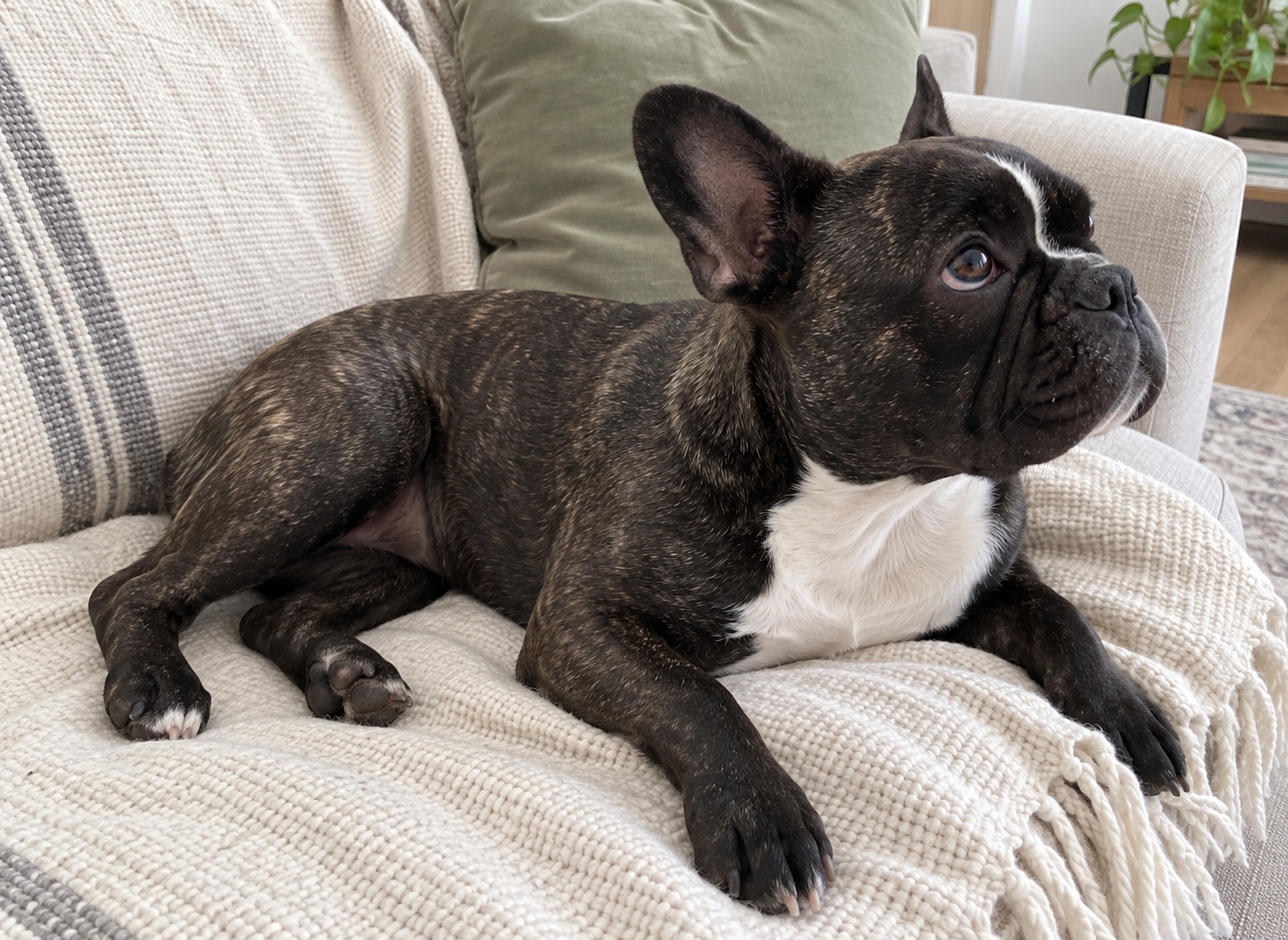

Nina’s yawn is one of my favorite sights: a huge pink gape framed by rows of tiny teeth pointing in several creative directions at once. It’s charming. It is also, as our vet gently put it while peering inside, “a lot of architecture in a very small building.”
That’s the whole story of French Bulldog teeth in one line. The usual adult complement is 42 teeth, with much less jaw space than a long-muzzled dog has. Here’s what that means day to day, from puppy teething through brushing battles to the cleaning bill.
Key takeaways
- French Bulldogs normally have 28 baby teeth and up to 42 adult teeth.
- Aim for daily gentle brushing with dog toothpaste.
- Book a vet check for pain, damaged teeth or a baby tooth remaining beside its adult replacement.
Why French Bulldog teeth need extra attention
A Frenchie’s short jaw can leave less room for teeth, making crowded or rotated teeth harder to clean. An underbite is part of the familiar face, but a tooth rubbing the lip or gum deserves a dental examination. Plaque and gum disease can cause pain and tooth loss even when a dog still eats. Dental care belongs alongside the other Frenchie health checks, rather than waiting for obvious discomfort.
The puppy teething timeline
Frenchie puppies broadly follow the canine teething schedule. These are approximate milestones, not a deadline for every individual. Your vet can check missing, crowded or persistent teeth.
| Age | What’s happening |
|---|---|
| Around 3 weeks | Baby teeth begin appearing |
| Around 6 weeks | The usual 28 baby teeth are present |
| Around 12 weeks onward | Baby teeth begin falling out as permanent teeth emerge |
| By roughly 6 to 7 months | The adult set is generally in; ask your vet about any missing or retained teeth |
Swipe or scroll sideways to see all columns.
The teething months are a gauntlet of chewed table legs and found slippers, so stock legitimate chew toys and keep anything precious at altitude. The breed-specific catch is retained baby teeth: in crowded little jaws, a baby tooth, often a canine, sometimes refuses to leave when its adult replacement arrives, and the two wedged together become a food trap. Our vet checks for doubled-up teeth at every puppy visit. If you see a baby tooth beside its adult replacement, arrange an assessment promptly rather than waiting for a future spay or neuter appointment. VCA explains why persistent baby teeth need attention.
Signs of dental trouble
Dogs hide mouth pain impressively well, so watch for the quiet clues: breath that’s gone from normal dog to genuinely foul, yellow-brown crust along the gumline, red or bleeding gums, chewing on one side, dropping kibble, pawing at the muzzle, new drooling, or going cold on chew toys they used to love. Any loose or discolored adult tooth is a vet appointment, not a wait-and-see. Do not wait for eating to become difficult before asking for an examination.
A brushing routine you’ll actually keep
Aim for daily brushing. If that feels ambitious at first, build a calm routine in small steps rather than turning it into a wrestling match. Use dog toothpaste only, human paste contains ingredients dogs shouldn’t swallow, and start with a finger brush and ten relaxed seconds on the front teeth, building up as your dog tolerates it. Nina accepted the poultry-flavored paste as a strange but acceptable snack within a week, and now presents her face for it. A flavor name is not an ingredient list, though: for a dog with suspected food allergies or on an elimination diet, ask the vet which toothpaste fits the plan.
Dental chews, additives and dental diets can support home care, but effectiveness is product-specific. Look for the exact item on the Veterinary Oral Health Council’s accepted-products list and ask your vet about suitability. None replaces treatment for an already painful tooth. Chews also count toward the same daily food budget as other Frenchie treats; choose an appropriate size and supervise.
Professional cleanings and the bill
A professional dental assessment and cleaning requires general anesthesia so the team can examine the mouth, take dental X-rays and clean below the gumline. An awake cosmetic scrape cannot do the same job. AAHA explains what professional dental care includes.
Ask for an itemized estimate covering the examination, pre-anesthetic assessment, monitoring, radiographs, cleaning and any possible extractions. Location, the dog’s health and the treatment needed can change the bill substantially; a single national price range is not a reliable quote.
For a Frenchie, ask specifically about airway management and supervised recovery. A vet needs to assess Nina’s individual risk just as they would any other patient’s; familiarity with the breed is useful, but no procedure comes with a guarantee.
FAQs about French Bulldog teeth
How many teeth do French Bulldogs have?
The usual set is 28 baby teeth and up to 42 permanent teeth. Some dogs have fewer, so your vet should assess missing teeth rather than assuming the count alone tells the whole story.
When do French Bulldog puppies lose their baby teeth?
Usually from around 12 weeks, with the adult set generally present by about 6 to 7 months. Tiny shed teeth may go unnoticed. A baby tooth still beside its adult replacement needs veterinary assessment.
Do French Bulldogs have dental problems?
They can have crowding, retained baby teeth and gum disease. A short jaw can make cleaning difficult. Home care and regular dental examinations help identify problems before obvious eating difficulties develop.
How much does a dog dental cleaning cost?
It depends on the clinic, location, anesthetic needs, X-rays and treatment. Request an itemized estimate and ask how the practice handles additional findings or extractions. Do not assume the advertised cleaning price includes everything.
Is anesthesia safe for French Bulldogs?
Risk is individual. Discuss your dog’s airway, health, monitoring and recovery plan with the vet. Anesthesia is necessary for a thorough dental procedure, but the plan should account for a Frenchie’s breathing needs.
How often should I brush my Frenchie’s teeth?
Aim for daily gentle brushing with a dog-safe toothpaste and a suitable soft brush. Build tolerance gradually. If the mouth seems painful or brushing causes distress or bleeding, ask the vet to assess it rather than forcing the routine.