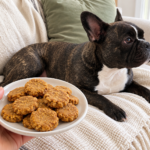
Dogs can eat plain pumpkin, but the can matters more than the autumn label. Choose unsweetened pumpkin puree without added salt or seasoning, and offer it as a small extra rather than a replacement for your dog’s usual food. Pumpkin pie filling is a different product.
If you are choosing ingredients for homemade snacks like dog-friendly waffles, start with that label check. If you are reaching for pumpkin because your dog has diarrhea or is straining to poop, speak to your vet before treating the problem at home.
Quick takeaways
- Choose plain pumpkin puree, not sweetened pie filling or a seasoned dessert.
- Count pumpkin alongside every other treat and topper in your dog’s daily food allowance.
- Pumpkin is not a reliable cure for diarrhea or constipation. Symptoms need their own assessment.
Which pumpkin can dogs eat?
A short ingredient list makes this easier: pumpkin, without added sweeteners, salt or spices. Canned puree is convenient because it is already soft and easy to portion. Read the actual ingredients even when the front says “natural” or “organic.” Those words do not tell you whether the product suits your dog.
- Plain canned pumpkin: the straightforward option for an occasional topper, provided your dog tolerates it.
- Pumpkin pie filling: leave it for human baking. It is not interchangeable with plain puree.
- Pumpkin desserts and drinks: do not share them just because pumpkin appears in the name. The other ingredients matter.
- A carved or deteriorating pumpkin: not a food source for your dog. Cornell’s Halloween safety guidance advises contacting a veterinarian immediately if a pet eats moldy pumpkin.
For homemade cooked pumpkin, keep a portion separate from the family dish before adding seasonings. Use the soft flesh, not a piece of stem or tough rind. Plain puree avoids having to judge whether a large chunk is manageable.
Is pumpkin actually good for dogs?
It can be a food your dog enjoys. That is different from being a supplement they need. A complete and balanced diet already provides the nutrition it is formulated to supply; adding pumpkin does not automatically improve it.
The claim that pumpkin reliably fixes digestion deserves particular caution. Veterinary nutritionist Lisa Freeman explains in Tufts’ discussion of pumpkin and fiber that the amount and type of fiber in a typical small serving may not achieve the intended effect. Pumpkin is not equivalent to a prescribed high-fiber diet. Adding large amounts to chase a fiber target can create new nutritional problems.
So the useful question is not “How much pumpkin will fix this?” It is “Does my dog need a dietary change, and if so, which one?” Your vet can help answer that for the symptoms and diet in front of them.
How much pumpkin should you give?
There is no one-size-fits-all spoonful for every dog. Body size matters, but so do daily calories, other treats, the existing diet and any medical restrictions. A French Bulldog does not need a separate breed-specific pumpkin dose.
UC Davis’ treat guidance limits treats and other extras to no more than 10% of daily calories, with the rest coming from complete and balanced food. That is a ceiling for all extras combined, not a target for pumpkin alone.
A practical way to plan an occasional serving:
- Check whether your dog’s diet permits extras. Ask your vet first if your dog has a medical condition, a prescribed diet or an elimination diet.
- Read the pumpkin label for ingredients and calories. Different products are not necessarily interchangeable.
- Include biscuits, chews and other toppers when considering the day’s treat allowance.
- Introduce only one new food at a time and keep the initial taste small. Stop offering it if it seems to upset your dog.
You do not have to add pumpkin every day. If your dog is doing well on their current food, keeping the routine simple is a perfectly reasonable choice.
When diarrhea or constipation needs a vet
Do not let a pantry remedy delay care. Cornell’s guidance on diarrhea flags vomiting, poor appetite, lethargy and bloody or black, tarry stool as reasons to seek veterinary attention. Diarrhea lasting more than a day or two also warrants a call. A dog who seems unwell should not wait for that time limit.
Straining is also a reason to ask for advice rather than repeatedly adding pumpkin. Tell the clinic when your dog last passed stool, what you are seeing, whether they are eating and whether they are vomiting. Those details are more useful than guessing how much fiber to add.
Keep fresh water available. Avoid trying human anti-diarrhea medicines unless your veterinarian specifically directs you to use them.
What about French Bulldogs?
Frenchies can eat plain pumpkin under the same conditions as other dogs: it must suit the individual dog, fit their diet and be offered in an appropriate amount. A breed label does not make a recipe suitable for a dog with a food intolerance or a medical feeding plan.
For Nina’s readers, the most useful habit is to keep the ingredient list boring and the decision clear. A little variety can be enjoyable; it does not need to become a daily digestive treatment.
FAQs about pumpkin for dogs
Can dogs eat canned pumpkin?
Yes, plain canned pumpkin can be an occasional extra for dogs who tolerate it. Check that it is puree rather than pie filling, with no added salt, sweeteners or seasoning.
Can I give my dog pumpkin every day?
Some dogs may tolerate it, but daily pumpkin is not a requirement. Discuss regular additions with your vet if you are trying to manage symptoms or your dog has dietary restrictions.
Does pumpkin stop diarrhea?
It is not a guaranteed treatment, and it does not explain the cause. Seek veterinary advice for ongoing diarrhea or any warning signs rather than increasing the amount of pumpkin.
Can Frenchies eat pumpkin treats?
They may be able to, depending on the whole recipe and their individual diet. Check every ingredient, keep portions within the overall treat allowance and remember that a pumpkin biscuit is still a treat.