Key takeaways
- Make dog-friendly sushi with plain cooked salmon, soft rice and finely chopped vegetables; remove every bone.
- Skip raw fish, sauces and large tightly packed pieces, and refrigerate leftovers promptly.
- Treat these bites as occasional extras within your dog’s individual calorie allowance.
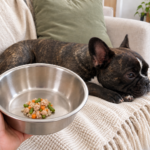
Dogs can have a little sushi-inspired treat made with plain cooked fish, rice and suitable vegetables. A restaurant roll is harder to judge: the filling, sauces and preparation all matter. For a homemade version, these small salmon-and-rice bites keep the ingredients visible and leave out raw fish and condiments.
Start with our guide to serving salmon to a French Bulldog if fish is new to your dog. Make this recipe only with ingredients your dog tolerates, and check with your vet first if they have a prescribed diet or a medical condition.
Cooked salmon sushi bites for dogs
This is a small-batch treat recipe for a healthy adult dog who already tolerates the ingredients. It isn’t a complete meal, an allergy diet or a treatment for an upset stomach. The sushi-inspired shape is optional: you can serve the same ingredients loosely mixed.
Batch: about 100 g, divided into 12 small pieces. That is the preparation yield, not a recommended serving. You don’t need a bamboo mat or seaweed wrapper.
Ingredients
- 60 g plain, fully cooked short-grain white rice, weighed after cooking
- 30 g plain, fully cooked salmon flesh, weighed after removing skin and all bones
- 10 g washed cucumber, very finely diced
Cook the rice in water without salt, stock, butter or vinegar seasoning. Use unseasoned salmon rather than smoked salmon, lox or a glazed fillet. Keeping the cucumber finely chopped makes it easier to distribute through a small batch; there’s no need for long, firm strips.
Preparation
- Cook the rice. Follow the packet’s water ratio and cooking instructions, using only rice and water. Measure out 60 g of the cooked rice. Spread it in a clean shallow container so it cools quickly. Refrigerate promptly if you aren’t assembling the bites immediately.
- Cook the salmon thoroughly. Bake on parchment or poach in plain water, without oil or seasoning. Check the thickest part with a food thermometer: the FDA’s seafood guidance specifies 145°F (63°C). Cooking time depends on the fillet’s thickness, so use temperature rather than a fixed timer.
- Flake and inspect. Once cool enough to handle, remove the skin and check the flesh carefully for pin bones, including fillets sold as boneless. Weigh 30 g of cooked flesh and break it into soft flakes. Wash your hands, board and utensils after handling raw fish and before touching the cooked ingredients.
- Make the rice bases. Mash the cooled rice lightly with a fork, then stir in the finely diced cucumber. Divide it into 12 similar amounts and shape loose little ovals with clean, damp fingers. Don’t squeeze them into hard balls. If the rice won’t hold together, serve the mixture loose instead of adding a binder.
- Add the salmon. Divide the flakes evenly over the rice bases and press lightly. Serve only the amount that fits your dog’s treat allowance. Break the pieces down further before offering them, especially if your dog tends to gulp food, and supervise eating.
How much can a Frenchie have?
There isn’t a reliable “two sushi pieces per Frenchie” rule. A piece can be mostly rice or mostly fish, and dogs of the same weight can have different needs.
This batch is estimated at about 140 calories in total, or roughly 12 calories per piece when divided evenly into 12. The calculation uses USDA reference values for cooked short-grain white rice, cooked farmed Atlantic salmon and raw cucumber. Salmon type, moisture and uneven pieces will change that estimate; it isn’t a laboratory analysis.
UC Davis’s treat guidance sets an upper limit of 10% of daily calories for all treats and extras combined. Your vet may recommend less or no extras. Use your dog’s established daily calorie plan, subtract the other treats already given, and fit any sushi into what’s left. The allowance is a ceiling, not a target.
For example, a dog with a vet-set 400-calorie daily plan would have a maximum of 40 calories from all extras. If other treats have already used 30, a whole estimated 12-calorie sushi bite would exceed the remaining budget. This is a calculation example, not a daily calorie recommendation for a French Bulldog.
What to leave out of dog sushi
- Raw or undercooked fish. Freezing doesn’t remove every foodborne hazard. A “sushi-grade” label isn’t a reason to serve fish raw to a dog.
- Soy sauce, teriyaki sauce and salty dressings. Leave dipping sauces off the plate; their salt and other ingredients add avoidable risks.
- Onion, garlic, chives and scallions. Check sauces, seasoning mixes and toppings. These alliums can damage dogs’ red blood cells.
- Spicy mayonnaise, wasabi, cream cheese and tempura coating. None is needed here. Spicy, fatty or dairy additions can cause digestive trouble, and recipes vary.
- Avocado and pickled garnishes. Keep the recipe simple. An avocado pit is an obstruction hazard; the flesh is fatty and may upset the stomach. A small bite of the flesh is not the same exposure as swallowing a pit.
The ASPCA’s food-safety guidance explains the concerns with alliums, excessive salt and dairy. For avocado specifically, Pet Poison Helpline distinguishes dogs from species especially sensitive to persin and highlights the risk from the seed.
Plain rice and a seasoned restaurant roll also deserve different answers. Rice vinegar or a little sugar doesn’t make every grain of rice a poison. But neither is necessary for this treat, and a restaurant roll may bring several ingredients together. Our rice-feeding guide covers plain rice and why it shouldn’t replace balanced meals.
Cooling and storing the bites
Rice needs prompt cooling even when it looks and smells fine. The Food Standards Agency advises cooling cooked rice quickly, ideally within one hour, refrigerating it and using it within 24 hours. Use a shallow covered container in a refrigerator at 40°F (4°C) or below.
Count that day from when the rice was cooked, not when you assembled the bites. Don’t turn yesterday’s rice into a fresh 24-hour batch. Discard anything left in the dog’s bowl, and don’t try to rescue food that’s been sitting out by reheating it.
For a small dog, halve the ingredient quantities or reserve plain ingredients for the household rather than making more treats than the dog can use. Freezing is possible, but making a fresh small batch avoids extra handling. If you freeze rice, cool it promptly, thaw in the refrigerator and follow the FSA’s reheating advice; let reheated food cool to a comfortable temperature before the dog eats it.
If your dog has already eaten sushi
Take away the remaining food and save the ingredient list or menu description. Note what the dog ate, approximately how much and when. Contact your veterinarian promptly if it contained raw fish, onion or garlic, a substantial amount of sauce, bones, an avocado pit or anything you can’t identify. Don’t induce vomiting unless a veterinary professional tells you to.
Raw salmon deserves particular attention. UC Davis explains that salmon poisoning disease is a potentially fatal bacterial infection carried by infected flukes in certain raw or undercooked fish. It is especially associated with the Pacific Northwest, but your location alone doesn’t establish where a purchased fish came from. Signs can be delayed, so don’t wait for illness before asking about a known exposure.
Repeated vomiting, marked weakness, a painful abdomen, breathing difficulty or collapse warrant urgent veterinary care. A dog who ate a little plain cooked rice and fish needs a different assessment from one who swallowed a raw, heavily sauced roll.
FAQs about sushi for dogs
Can dogs eat nori seaweed?
Plain food-grade nori can be an occasional small extra for some healthy dogs, but it’s optional here. Avoid seasoned seaweed snacks and seaweed collected from a beach. PetMD’s veterinarian-reviewed guidance flags the importance of ingredients and individual health, including thyroid or heart conditions. Ask your vet before adding seaweed if your dog has dietary restrictions; don’t use it as a mineral supplement.
Can I use canned salmon?
Choose plain, boneless salmon packed in water with no added salt, then drain and inspect it. Use the drained weight. Canned salmon has different moisture and calories from the cooked fillet used in the estimate above, so recalculate using the product label. Avoid smoked, flavored and sauce-packed versions.
What about cooked shrimp or imitation crab?
Plain cooked shrimp may suit a dog who tolerates it, with the shell, head and tail removed and the flesh chopped small. Our shrimp preparation guide explains the details. Imitation crab is a processed product with variable ingredients and seasoning; don’t assume it’s interchangeable with plain seafood.
Is this suitable for a dog with a chicken allergy?
The ingredients contain no chicken, which is relevant to dogs such as Nina, who has a chicken allergy. That doesn’t guarantee tolerance of salmon or the other ingredients. During a diagnostic diet trial, stick to the vet’s plan: VCA’s veterinary nutrition guidance explains how extra treats can interfere with the result. This recipe isn’t a hypoallergenic diet.
Can my dog eat a California roll?
Check the actual ingredients rather than the name. California rolls often contain imitation crab and avocado, and may come with mayonnaise or sauces. They aren’t the same as this plain cooked recipe. If your dog stole one, use the ingredient list and amount to get tailored advice rather than assuming either that it’s harmless or that every bite is an emergency.