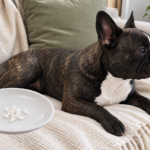
If you’re cooking salmon for dinner, it’s easy to set aside a little for your Frenchie before the sauce goes on. French Bulldogs can eat plain, thoroughly cooked salmon with all bones removed. A few soft flakes can be an occasional extra for a dog who tolerates fish.
The preparation matters more than the fancy label on the packet. Raw fish, smoked slices and a garlic-butter fillet all need different treatment from a plain cooked piece. Our guide to what French Bulldogs can eat covers the wider kitchen list; here’s how to handle salmon.
Key takeaways
- Offer salmon fully cooked, plain and carefully checked for bones.
- Avoid raw or undercooked salmon, smoked products and seasoned leftovers; call your vet after raw-fish exposure.
- Keep portions small, count them with other extras, and check first if your Frenchie has dietary restrictions.
What salmon adds to your dog’s diet
Salmon provides protein and omega-3 fatty acids. Those nutrients have useful roles in a balanced diet, but an occasional spoonful isn’t a treatment for itchy skin, sore joints or recurring ear trouble.
A complete salmon-based dog food and a home-cooked salmon topper also do different jobs. The complete food is formulated to supply a full set of nutrients; a fillet on its own isn’t. Choose the daily diet for your dog’s life stage and needs, with help from our guide to feeding a French Bulldog.
How to prepare a small salmon treat
- Choose fresh, boneless salmon. Even a boneless fillet needs another careful check for pin bones.
- Cook it without added fat or seasoning. Baking, steaming or poaching in plain water makes it easy to keep your dog’s portion separate.
- Check the center with a food thermometer. The FDA’s seafood-safety guidance recommends an internal temperature of 145°F, about 63°C. Don’t serve a raw or translucent center.
- Flake, inspect and cool. Remove any bones you find and offer small, soft pieces at a comfortable temperature.
Put raw trimmings and packaging straight into a bin your dog can’t reach. Wash hands, utensils and surfaces after handling raw fish, and refrigerate leftovers promptly. A piece that’s spoiled or been left out too long doesn’t become suitable because it’s going into a dog bowl.
Cooked, canned, smoked or skin: which forms work?
| Form | What to do |
|---|---|
| Plain cooked fillet | A small, cooled, boneless portion can be suitable. |
| Canned salmon | Choose water-packed, no-added-salt salmon; drain it and check for bones. |
| Cooked salmon skin | Keep any plain piece very small. It’s a fatty extra, so skip it for dogs with fat restrictions. |
| Raw fish or sushi | Don’t offer it. Contact your vet if your dog gets some. |
| Smoked salmon or lox | Leave it off the treat menu. Curing adds salt, and some smoked products aren’t fully cooked. |
| Garlic-butter or glazed salmon | Don’t share it. Prepare a separate plain portion. |
The veterinarian interviewed in the AKC’s salmon guide likewise recommends cooked, boneless fish without oils, sauces or seasoning. A salmon flavor doesn’t make every preparation suitable.
Why raw salmon deserves a clear warning
Salmon poisoning disease is a potentially fatal bacterial infection associated with eating infected raw or undercooked fish. A parasitic fluke can carry the bacterium Neorickettsia helminthoeca. According to VCA’s veterinary guidance, cases are most often seen in Washington, Oregon, northern California and southern Vancouver Island.
That regional pattern isn’t permission to feed raw fish elsewhere. Raw fish can present other food-safety risks, and the source of a kitchen fillet may not be obvious.
If your Frenchie eats raw salmon, call your vet promptly, even if they seem normal. Explain what they ate, roughly how much, when it happened and the fish’s source if known. Signs of salmon poisoning may take days to develop and can include vomiting, diarrhea, poor appetite, fever and weakness. Don’t wait for the full list of symptoms, and don’t try to make your dog vomit unless a veterinary professional instructs you.
Portions and sensitive stomachs
Start with a few small flakes rather than a full topping. There isn’t one tablespoon allowance that suits every Frenchie. Their weight, health, usual food and other treats all affect how much room they have for extras.
WSAVA recommends limiting treats to 10% of daily calories. Count salmon in that total, together with every other snack. Stop offering it if it causes digestive upset. Dogs on a prescribed diet or with a pancreatitis history need their vet’s approval before new additions.
FAQs about French Bulldogs eating salmon
Is salmon better than chicken for Frenchies with allergies?
There is no best protein for every Frenchie. Fish may suit an individual dog, but it can also cause an adverse reaction. Diagnosing a food allergy requires a controlled veterinary diet trial, not repeated supermarket protein swaps. Our French Bulldog allergy guide explains the broader picture.
Can French Bulldogs eat canned salmon?
Yes, an occasional small amount of plain, water-packed salmon with no added salt may be suitable. Read the label, choose boneless when possible and check the portion before serving. Canned salmon for people is still a topper, rather than complete dog food.
Is all smoked salmon raw?
No. Hot-smoking and cold-smoking use different temperatures; cold-smoking isn’t a cooking step. For a dog treat, choose plain cooked salmon instead: smoked products may contain substantial salt or other added ingredients.
Can a French Bulldog puppy eat salmon?
A healthy, weaned puppy may be able to have a small taste of plain cooked fish. Their main meals should remain complete puppy food. Ask your vet first if there are digestive symptoms, dietary restrictions or concerns about growth.
Can I replace meals with salmon and rice?
No. Those two ingredients alone don’t supply a balanced long-term diet. If you’re interested in cooking your dog’s meals, our homemade feeding guide explains why a properly formulated recipe matters. Work with a veterinary nutritionist before replacing complete food.