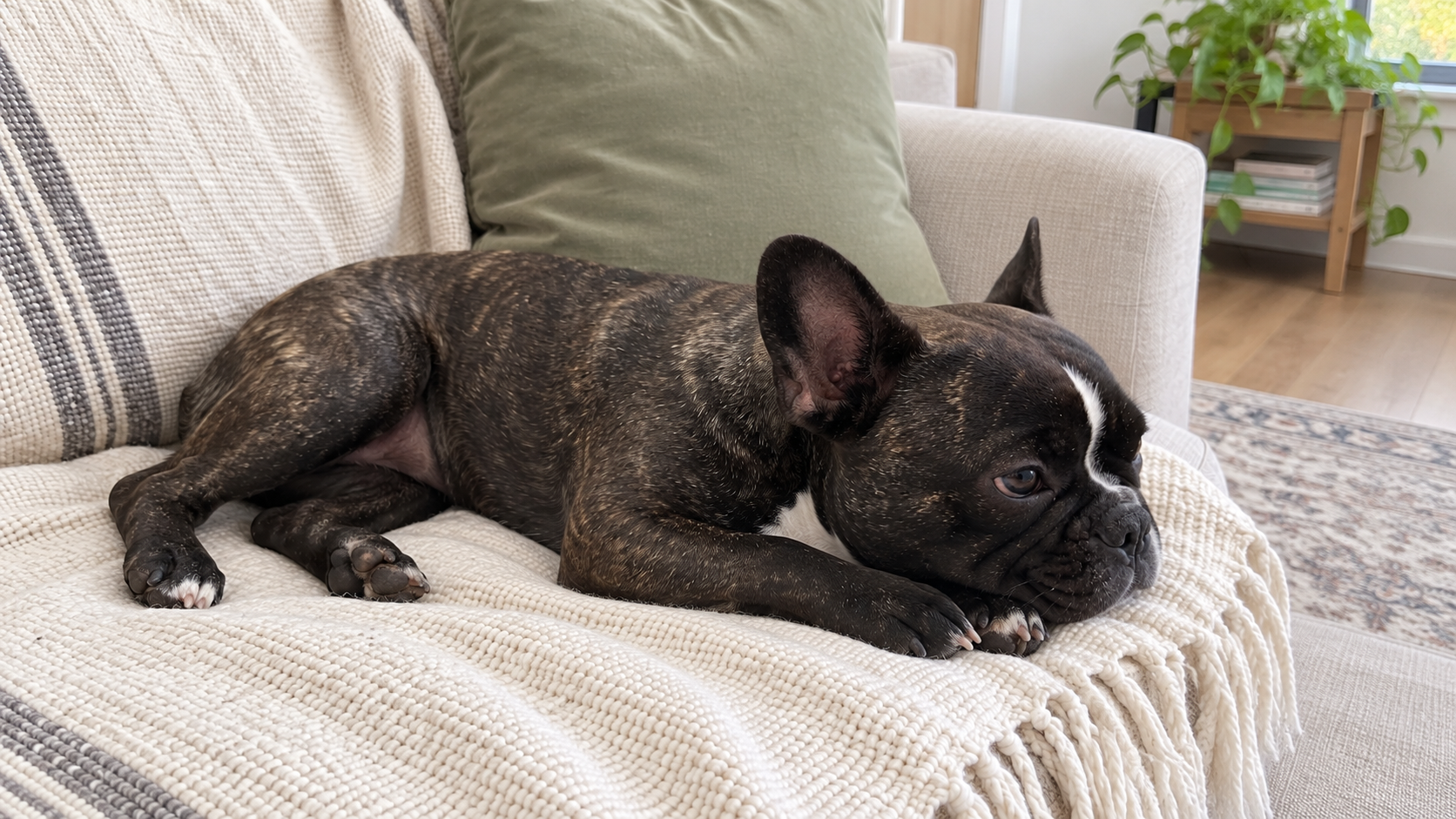

Nina snores at a volume that has, on more than one occasion, made guests check whether someone started a motorcycle in the living room. She snores on her back, paws in the air, completely unbothered. She snores sitting up. Once she fell asleep mid-chew and snored with the toy still in her mouth, which I did not know was acoustically possible.
But a familiar sound does not necessarily mean comfortable breathing. Sleeping sitting up, for example, belongs on the list of things to tell the vet, even when it has become part of the household routine. French Bulldog snoring needs to be considered alongside the other breathing and health issues Frenchies can face.
Key takeaways
- Frenchie snoring is common, but it can signal restricted airflow.
- Waking to breathe or sleeping upright needs veterinary attention.
- Weight and position affect noise; quieter does not always mean healthier.
Why French Bulldogs snore
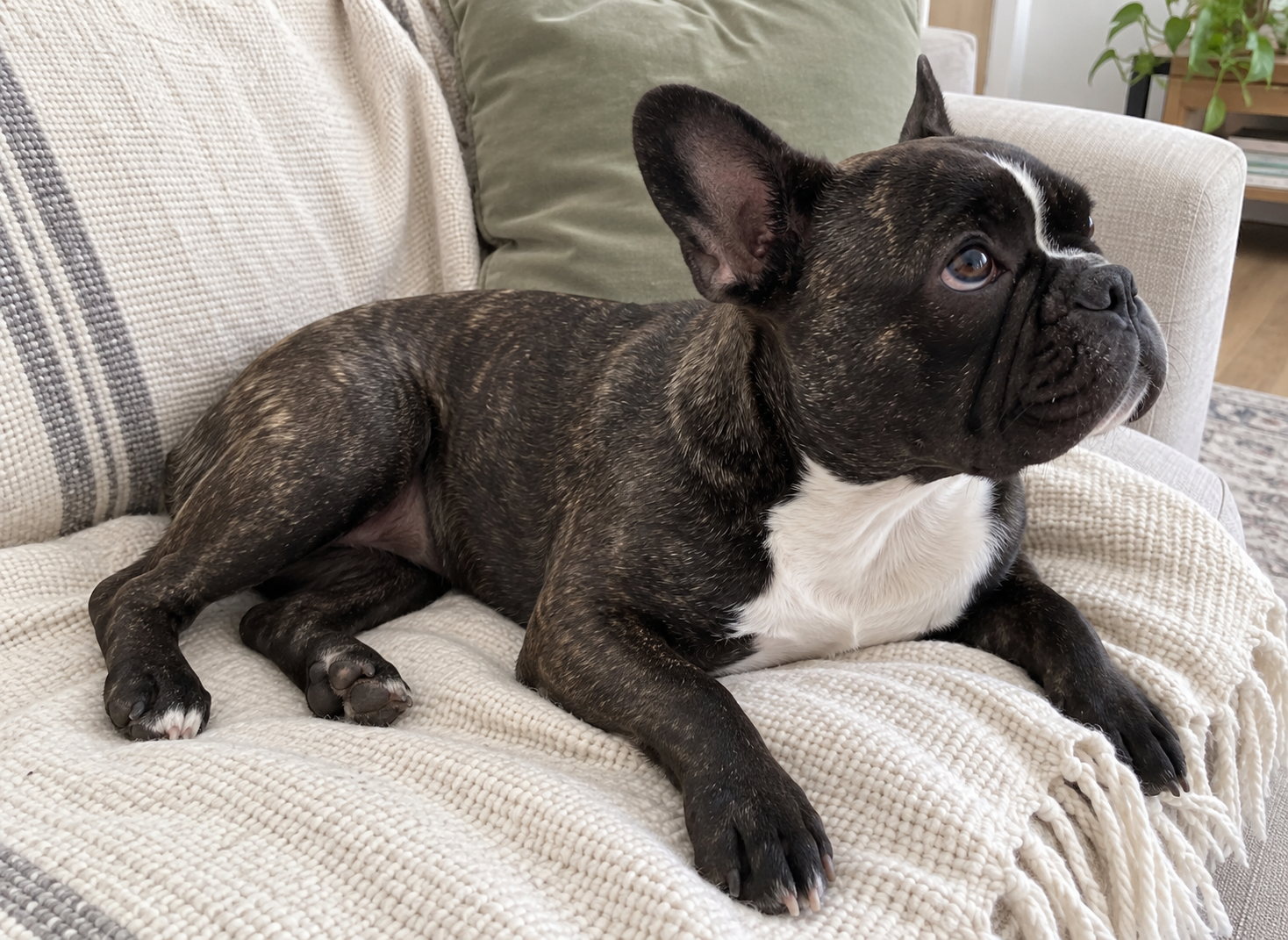
Snoring is the sound of soft tissue vibrating as air moves through the upper airway. A French Bulldog’s short skull can leave less room for that tissue; narrowed nostrils and an elongated soft palate can also restrict airflow. VCA explains why snoring is more common in flat-faced pets, and why the sound alone does not tell you whether an individual dog needs treatment.
Frenchies also make other noises, including the occasional reverse sneezing episode that sounds like a goose honking backwards. Those sounds can be easy to confuse. A video of what your dog is doing can help your vet assess the difference.
How much snoring is normal for a Frenchie?
There is no volume cutoff that tells you a Frenchie’s airway is healthy. Position can change the sound: Nina on her back could wake the neighbors. Nina on her side is a librarian. That is a useful observation to share, not a diagnosis.
Look at the whole pattern: whether sleep is settled, whether your dog wakes to catch a breath, and how comfortably they breathe while awake. A sound that has been there for years still deserves attention if breathing looks difficult. Veterinary guidance on noisy breathing specifically warns against treating noise at rest while awake or during light activity as normal for a flat-faced breed.
What can make French Bulldog snoring worse?
Weight. Excess weight can add to breathing difficulties. When Nina crept up two pounds one winter, the nighttime volume was honestly the first thing I noticed, before I noticed her shape. Ask your vet about her individual healthy weight and body condition; weight management can help, but it does not replace an airway assessment.
Sleeping position. Position can affect airflow and the noise you hear. Give your dog room to settle comfortably rather than forcing a particular pose. A raised-edge bed is not a treatment for obstruction, and needing to sleep sitting up or with the chin propped up is something to discuss with your vet.
Congestion and irritation. Smoke, dust and other irritants may contribute to noisy breathing. Tell your vet about discharge, coughing or seasonal changes rather than assuming that itchy skin and snoring share one cause.
The sleeping area. Keep bedding clean and the room free of smoke and heavy sprays. Comfortable surroundings matter, but changes to bedding or humidity cannot establish that an airway problem has resolved.
When snoring needs a vet’s attention
French Bulldogs are predisposed to brachycephalic obstructive airway syndrome, usually shortened to BOAS. It describes problems that restrict airflow, rather than one particular snoring sound. A large UK study found French Bulldogs more prone to brachycephalic airway disease than other dogs.
Arrange a veterinary assessment for:
- Gagging, retching or seeming to startle awake to breathe
- Restless sleep, or choosing to sleep sitting up or with the chin propped up
- Noisy or effortful breathing while awake, especially at rest
- Struggling after a few minutes of mild play
- Difficulty coping with warmth
Severe difficulty breathing, collapse or blue-gray gums is an emergency. Contact an emergency veterinary clinic immediately.
Your vet can assess the airway and discuss whether treatment, including surgery in some dogs, may help. The decision depends on the individual dog. General Frenchie care habits, including weight and heat management, support that plan.
This is one Frenchie parent’s experience, not a diagnosis. Let your vet listen to your own dog’s breathing before anyone on the internet reassures you, including me.
FAQs about French Bulldog snoring
Is it normal for French Bulldogs to snore loudly?
Snoring is common in French Bulldogs, but common does not mean harmless. The volume alone cannot establish whether airflow is adequate. Restless sleep, waking to breathe, sleeping upright or noisy breathing while awake deserves a veterinary assessment.
Why does my Frenchie only snore in certain positions?
Changing position can alter how soft tissues sit in the airway, changing the noise. Note what you see and share it with your vet. Being quieter in one position does not rule out an airway problem.
Can I do anything to reduce my Frenchie’s snoring?
Keep your dog at an appropriate weight, avoid smoke and heavy sprays, and provide a comfortable place to sleep. Ask your vet about the cause before choosing a treatment. Beds and home adjustments do not correct every cause of restricted airflow.
When should I worry about my Frenchie’s snoring?
Waking to catch a breath, sleeping sitting up, gagging, restless sleep or breathing effort while awake are reasons to contact your vet. Severe breathing difficulty or collapse needs emergency help.
Do French Bulldogs need surgery for snoring?
Some dogs with airway obstruction benefit from surgery, but snoring alone does not determine the treatment. Your vet will assess the signs and anatomy and discuss the appropriate options for your dog.
Why did my Frenchie’s snoring get worse suddenly?
Possible causes include congestion, inflammation or other airway changes. A sudden change warrants veterinary advice, particularly with discharge, coughing or behavior changes. Do not assume it is simply a new sleeping position.
How do I know if my Frenchie has BOAS?
You cannot confirm BOAS from a snore alone. Tell your vet about noisy breathing, disturbed sleep, exercise difficulty and heat intolerance. A clinical assessment is needed to identify the problem and decide what help is appropriate.