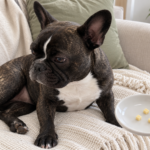
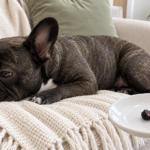
A ripe pear makes a soft, juicy little treat when a Frenchie is waiting beside the chopping board. Yes, French Bulldogs can eat pear flesh and washed skin. Remove the core, seeds and stem first, then cut a small portion into manageable bites.
The serving is a few pieces, rather than the rest of the pear you’re finished with. If you like sharing different fruits, our guide to fruit French Bulldogs can eat covers the preparation rules for other common choices.
Key takeaways
- French Bulldogs can eat a few small pieces of ripe, fresh pear.
- Wash the fruit and remove its core, seeds and stem before serving.
- Keep portions modest, skip syrup-packed pears, and ask your vet about swallowed cores or ongoing digestive symptoms.
How much pear can a Frenchie have?
Begin with one small piece to see whether your dog tolerates it. For a healthy adult, a thin slice divided into several little bites is a sensible occasional portion. There’s no need to work up to a quarter or half of the fruit.
The American Kennel Club’s pear guidance suggests that an occasional slice can be enough for a small dog. A whole pear is far more than you need for a snack, and too much can upset digestion.
Fruit belongs in the same treat budget as everything else your dog receives. Follow the WSAVA ceiling of 10% of daily calories from all treats combined; the rest should come from an appropriate complete diet.
If you’re using pear during a short training session, cut that one portion into several rewards before you begin. It’s easy to lose track when you keep reaching back to the chopping board. A little piece can mark a successful sit just as clearly as a much larger serving.
Prepare the pear before your dog gets a bite
PDSA’s dog-feeding guidance includes prepared pear among occasional fruit treats. Keep the preparation simple:
- Choose a ripe pear that is fresh and free of spoilage.
- Wash it thoroughly under running water.
- Cut it open and remove the stem, core and every visible seed.
- Slice or dice a small amount into pieces your dog can comfortably manage.
- Supervise while they eat and put the core out of reach.
Use ripeness to your advantage. A hard pear quarter is a poor choice for a dog that gulps food; a small amount of ripe flesh is easier to prepare appropriately. Mashing some prepared flesh is another way to offer it without handing over a large chunk.
Washed skin is generally safe, though some dogs tolerate peeled fruit better. Peeling doesn’t make an oversized serving suitable, and it doesn’t remove the need to take out the core and seeds.
Why the core and seeds stay out
Pear seeds contain cyanogenic compounds and shouldn’t be deliberately fed. The tough core and stem also introduce choking and digestive-obstruction concerns. These are separate reasons to prepare the fruit rather than passing over your leftovers.
PetMD’s veterinary-reviewed pear guide advises removing the core, seeds and stem and cutting the edible portion into small pieces. That preparation is useful for any dog, including a Frenchie whose usual response to a treat is to swallow first.
If your dog has already swallowed a whole pear or a large core, call your vet for advice. Describe the amount, whether it was chewed, the time it happened and your dog’s weight. A normal-looking dog isn’t proof that a large swallowed object will pass uneventfully.
Vomiting, abdominal pain, refusing food or unusual lethargy need prompt attention. Breathing difficulty or collapse is an emergency. Don’t induce vomiting or give a home remedy unless your veterinary team directs you.
Fresh pears, canned pears and frozen pieces
Fresh, ripe pear is the simplest choice. You control the portion and can check exactly what’s in it.
Pears canned in syrup add sugar a dog doesn’t need. Avoid using them as regular treats. If you’re looking at fruit packed in water, check the ingredients rather than assuming every can has the same contents; fresh pear remains the straightforward option.
Frozen pear should be plain, cored and cut before freezing. Let hard pieces soften before offering them, especially if your Frenchie tends to gulp. Freezing does not remove seeds or make a large piece safe.
Pear jam, pastries, fruit mixes and desserts need a separate ingredient check. Raisins and xylitol are examples of ingredients that can turn a fruit-based snack into a dangerous food for dogs. If either may have been eaten, contact your vet promptly.
When to leave pears out
Ask your vet before adding fruit if your Frenchie has diabetes, a digestive condition or a veterinary-prescribed diet. The same applies during a food-elimination trial: an extra ingredient can complicate the plan even if other dogs eat it comfortably.
If you’re investigating itchiness, ear trouble or other possible reactions, our guide to French Bulldog allergies gives context for that conversation. Don’t diagnose an allergy from one episode of loose stool after a new snack.
Pears contain fiber and water, but that does not make them a treatment for constipation. Repeated straining, discomfort or trouble passing stool calls for veterinary advice. Adding more fruit can create a second digestive problem while the original cause goes unchecked.
Keep fallen pears and compost out of reach too. An accessible tree gives your dog an uncontrolled supply of whole fruit, and windfalls may be spoiled. A fresh portion you prepare yourself is easier to assess than whatever was found under the tree.
FAQs about French Bulldogs and pears
Can French Bulldogs eat Asian pears?
Yes, prepared Asian pear flesh can be offered in small amounts. Remove the core, seeds and stem, and pay attention to the firmer texture when cutting the pieces.
Can French Bulldog puppies have pear?
Check with your vet about new treats once your puppy is weaned and settled on a balanced puppy diet. If pear is appropriate, offer a tiny soft piece under supervision rather than copying an adult dog’s portion.
Can pears give dogs diarrhea?
Yes, particularly when a dog eats too much or isn’t used to them. Stop serving pear if it causes digestive upset. Contact your vet if diarrhea persists, contains blood or comes with vomiting, pain or unusual tiredness.
Can I give my Frenchie pear every day?
There is no nutritional need to. Keep it occasional unless your veterinary team has helped fit it into the diet. If you do share fruit frequently, track all treats together rather than giving each fruit its own daily allowance.