
Key takeaways
- Use fresh water with a small amount of a familiar, suitable ingredient for an occasional dog mocktail.
- Keep alcohol, xylitol, caffeine, grapes, onion and garlic out of the bowl.
- Serve separately, supervise, and count food ingredients toward your dog’s daily treat allowance.
Dog cocktails and mocktails should be alcohol-free treats made with a little familiar food and fresh water. A splash of suitable broth or some mashed fruit can make a party bowl feel special. Keep plain drinking water available, and check every ingredient, including anything sold as a human “mocktail.”
I’d put the effort into a simple drink and a comfortable place for the dog to settle. If you’re planning snacks too, our guide to treats for French Bulldogs helps you choose them without turning one celebration into a whole extra meal.
What makes a dog mocktail different?
A cocktail name is just a theme here. There is no alcohol, cocktail mixer or supplement needed. These drinks are for a healthy dog to enjoy occasionally; they aren’t a treatment for dehydration, poor appetite or an upset stomach.
A human drink doesn’t become dog-friendly when you leave out the spirits. Its other ingredients still matter. A grape-based drink, caffeinated tea, sweetened syrup or dairy-heavy mixture may be unsuitable. Pet Poison Helpline warns that alcohol can poison dogs, including when it is consumed in mixed drinks.
Nina is allergic to chicken, so a recipe containing chicken broth wouldn’t be an option for her. That is a useful reminder to check the protein in a broth, even when the front of the carton says “for dogs.” Your dog’s own tolerated foods matter more than the drink’s name.
Check the base before you mix anything
Fresh water
Plain water is the easiest starting point. Use a clean bowl and drinking-quality water. You can add a little prepared fruit or cucumber for interest, while leaving a separate bowl of plain water available.
Broth
Choose a ready-to-serve broth made for dogs whose full ingredients and feeding directions suit your dog. Check for onion, garlic, leek, chives, added salt and any protein your dog must avoid. “Low sodium” only tells you something about salt; it doesn’t confirm the rest of the ingredients.
Don’t use stock cubes, gravy, the liquid from a seasoned roast or broth containing bones or fragments. Cooking and straining don’t make onion-seasoned broth appropriate: VCA’s veterinary toxicology guidance includes cooked and liquid forms of these plants among the hazards.
Follow the product’s preparation and feeding directions. A concentrated powder needs to be prepared as directed before you use any in a drink. Diluting a broth changes its strength, but it doesn’t erase its ingredients or calories.
Fruit and pumpkin
Use plain produce your dog already tolerates. Wash it, remove the parts that shouldn’t be eaten, and mash or strain away pieces your dog could gulp. The ASPCA’s snack guidance includes cucumber, blueberries and plain cooked pumpkin, and suggests cucumber water as an occasional treat.
For watermelon, remove the rind and seeds before mashing the flesh. Our watermelon preparation guide explains those precautions. Skip juice blends, fruit syrups and pumpkin pie filling.
Five simple dog mocktail ideas
Choose one idea using an ingredient your dog has eaten comfortably before. The amounts below describe small mixtures, not a recommended serving for every dog. Offer a little first, keep the rest aside, and use a smaller amount if your vet or the broth label requires it.
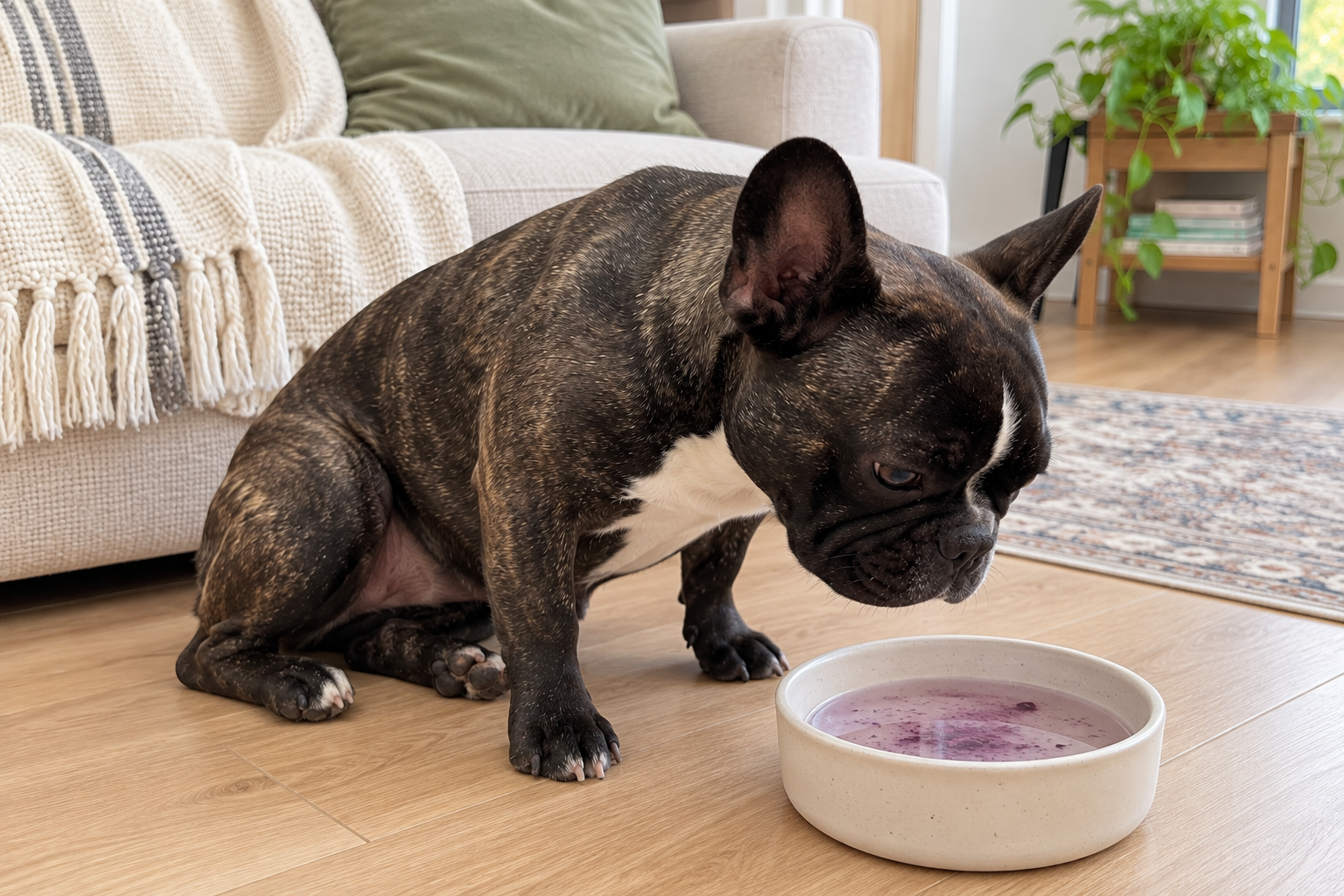
1. Blueberry blush
Mix: Crush one washed blueberry into 2 tablespoons of water. Strain out any remaining pieces if your dog tends to gulp.
For a dog who hasn’t had blueberries before, introduce a tiny amount of the fruit separately on another day. A party isn’t the best moment to try several unfamiliar foods at once.
2. The broth “martini”
Mix: 1 teaspoon of suitable ready-to-serve dog broth with 2 tablespoons of fresh water. Stir in a clean, shallow dog bowl. Serve cool or at room temperature, with no garnish needed.
This is the savory option. Leave out rosemary sprigs, olives, cocktail picks and salt rims. There is no need to warm the broth to make a party drink.
3. Watermelon splash
Mix: 1 teaspoon of mashed watermelon flesh, with all rind and seeds removed, with 2 tablespoons of water. Mash thoroughly or strain before pouring into the bowl.
Keep it simple rather than adding coconut milk, cream or juice. Watermelon supplies the color without a long ingredient list.
4. Cucumber cooler
Prepare: Wash and thinly slice a piece of cucumber. Add a slice to a small bowl of fresh water, refrigerate briefly, then remove the slice before serving.
The flavor will be mild. Skip mint, herbal extracts and essential oils; the cucumber is enough for this version.
5. Pumpkin “puppuccino”
Mix: 1 teaspoon of plain cooked or canned pumpkin with 2 tablespoons of water, whisking until smooth. The ingredient list should be pumpkin, without pie spices, sugar or sweeteners.
This makes a thin pumpkin drink rather than a whipped-cream topping. Don’t use it as a home treatment for persistent diarrhea or constipation.
Ingredients I’d leave off the drinks table
- Alcohol: Keep beer, wine, spirits and alcohol-containing mixers away from dogs.
- Xylitol: Check syrups, nut butters and sugar-free products. The FDA notes that labels may also call it birch sugar or wood sugar.
- Caffeine and chocolate: No coffee, caffeinated tea, energy drinks or cocoa-flavored additions.
- Grapes and raisins: Keep them and grape-containing drinks out of the recipes.
- Seasoned broth: Onion, garlic, leek and chive can be hidden in stocks and savory mixes.
- Rich extras: Cream, coconut milk, salty rims and generous peanut-butter toppings add complications a simple drink doesn’t need.
The ASPCA’s food-hazard list explains why many of these ingredients are dangerous. It also notes that coconut flesh and milk can cause digestive upset. “Natural” and “unsweetened” aren’t complete safety checks.
Serving drinks at a dog-friendly gathering
Use a stable, unbreakable bowl at floor level. Skip stemware, straws, cocktail umbrellas, skewers and decorative fruit wedges. Supervision doesn’t make a breakable glass a sensible dog bowl.
Ask each dog’s owner about dietary restrictions before offering food. Serve dogs separately, with their own bowls, rather than setting down a communal punch bowl. Keep the human drinks elsewhere and clear spills promptly.
Fruit, pumpkin and broth all count as extras. The WSAVA treat guidance recommends keeping treats below 10% of daily calories. That allowance includes the birthday biscuit, training treats and anything used to hide medication. A vet may recommend a stricter limit or no extras for a particular dog.
Dogs on an elimination diet or a prescription diet, or with a medical condition affecting what they can eat or drink, need their veterinary team’s approval before trying these mixtures. Fresh water in a festive bowl is a perfectly good way to include them.
Making ahead and keeping things cool
Freshly mixed is simplest. If you prepare ingredients ahead, refrigerate them promptly in clean, covered containers at 40°F/4°C or colder. Follow the broth manufacturer’s shorter use-by instructions; homemade cooked broth should be used within the usual three-to-four-day leftover window. The USDA’s food-handling guidance also limits perishable food at room temperature to two hours, or one hour above 90°F/32°C.
Discard a dog’s unfinished drink instead of returning it to the batch. Wash bowls between uses. If you freeze an eligible mixture for storage, thaw it in the refrigerator; don’t offer a hard block or add a chew stick as a popsicle handle.
A summer mocktail doesn’t protect a Frenchie from overheating. Flat-faced dogs are especially vulnerable. If your dog is panting heavily, weak, confused or struggling to breathe, stop the activity and seek urgent veterinary help. PDSA’s heatstroke advice explains immediate cooling while help is arranged. Don’t wait to see whether a flavored drink fixes the problem.
FAQs about dog cocktails and mocktails
Can dogs drink a human mocktail if it has no alcohol?
Don’t assume so. Check the complete recipe, including syrups, fruit, caffeine, garnishes and sweeteners. A purpose-made water-based mixture with one familiar ingredient is easier to assess than a restaurant drink.
Can I use coconut water?
I’d use plain water instead. There is no need to add coconut water as an electrolyte supplement to a healthy dog’s party drink. If your dog needs help with hydration or has dietary restrictions, ask the veterinary team which fluids are appropriate.
Can dogs have sparkling water or juice?
Neither is needed for these recipes. Use still water and a little prepared fruit. Don’t treat every sparkling or fruit drink as interchangeable: flavored products and blends can contain ingredients unsuitable for dogs.
Are “dog beer” and “dog wine” the same as alcohol?
Some products use those names for pet treats. Read the full label, confirm there is no alcohol, and check ingredients, calories and feeding directions. A pet-themed name alone doesn’t establish suitability.
How much should a French Bulldog have?
There isn’t a universal half-cup or one-cup serving. What matters is the amount of food in the mixture, your dog’s treat allowance, tolerance and health. Start with a small taste of a familiar ingredient and keep fresh water freely available.
What if my dog drinks alcohol or a xylitol-containing mixer?
Contact your vet or an animal poison service immediately, even if your dog seems fine. Save the container or ingredient list and note the amount and time. Don’t induce vomiting or give a home remedy unless a veterinary professional directs you to do so; Pet Poison Helpline’s emergency instructions explain the next steps.