
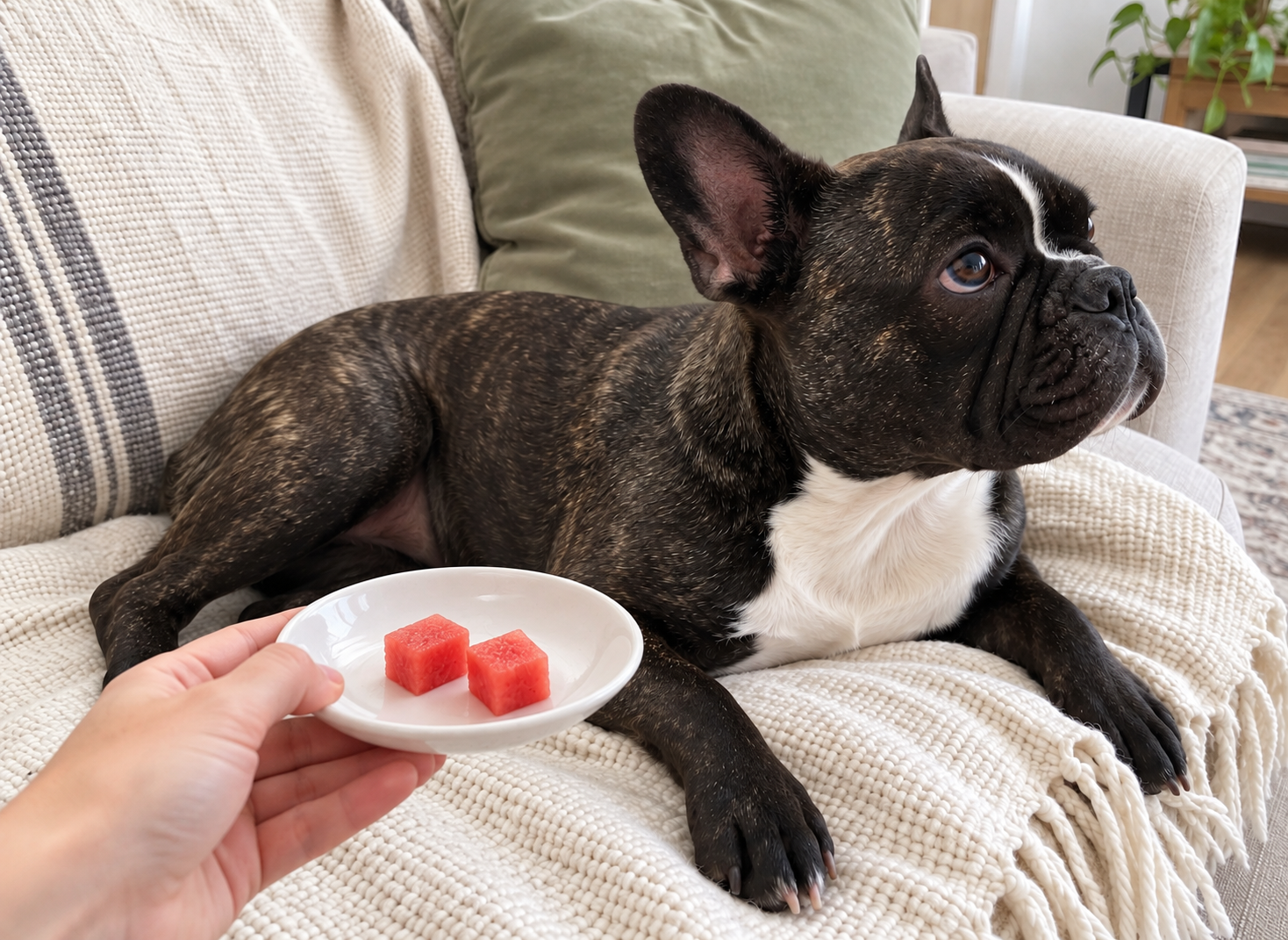

Yes, French Bulldogs can eat a little watermelon flesh with the rind and seeds removed. Serve small, soft pieces, start with a tiny taste and include it in the day’s treat allowance. A whole wedge is not a suitable serving for your dog to work through.
Watermelon is one of the options in our French Bulldog food-safety guide. Its high water content makes it a pleasant snack, but drinking water and protection from heat still come first.
Key takeaways
- Offer small amounts of plain watermelon flesh with rind and seeds removed.
- Start with a tiny taste and count it with every other treat.
- Call your vet if rind is swallowed; watermelon cannot prevent or treat overheating.
Which parts of watermelon can a Frenchie eat?
The soft flesh: generally suitable as an occasional treat. Choose sound fruit and serve it without syrup, salt, seasoning or sweetener.
The rind: leave it out, including the firm pale layer beneath the green skin. Tough rind can be difficult to chew or digest and may cause stomach upset, choking or an intestinal obstruction. Purina’s watermelon guidance specifically includes both the outer skin and the harder inner flesh in the rind to remove.
The seeds: remove them before serving. A seedless melon makes preparation easier, but still inspect the flesh. Seeds are a physical hazard rather than a reason to describe watermelon as poisonous. The AKC warns about choking and possible blockage, particularly after eating many seeds. A stray seed doesn’t mean a blockage is inevitable, but a dog that has eaten many seeds or seems unwell needs advice.
I’d prepare the dog’s portion before taking the rest to the table. That makes it much less likely someone hands over a wedge with a rind “handle” or leaves the leftovers within reach.
How much watermelon can a French Bulldog eat?
A few small pieces can be enough for an adult dog that tolerates it. For a first introduction, offer only a tiny bit of soft flesh and keep the rest of the food routine unchanged. You don’t need to keep increasing the serving because the first taste went well.
Watermelon is about 92% water, but the remaining portion still contributes calories. MedVet lists it as a low-calorie treat that still needs moderation. A big bowl can upset a dog’s stomach even if it seems generous for the calorie count.
Use your dog’s individual daily feeding plan. All treats combined should stay within AAHA’s 10% calorie limit, unless your vet has set a different restriction. That includes chews, training rewards and toppers as well as fruit. Our French Bulldog portion guide helps put those extras in context.
“One cube” isn’t a useful universal dose: cubes can be very different sizes. Cut small, manageable pieces for your own dog’s size and eating habits, and don’t hand over a large chunk simply because a serving chart calls it one piece.
How to prepare and serve watermelon
- Wash the outside before cutting. Use a clean knife and board.
- Remove the whole rind. Keep only the soft flesh for the dog.
- Check for seeds. Remove visible seeds even from a melon sold as seedless.
- Cut or mash a small serving. Soft pieces should be easy for your dog to manage. Stay nearby while they eat.
- Clear the board and bin. Rind and discarded seeds should be out of reach before the dog gets the treat.
Fresh or refrigerator-cold flesh is the simplest option. You can also mash a small portion onto a suitable feeding surface. Don’t feed pieces on a fork or skewer to a dog that might grab the utensil.
What about frozen watermelon?
Use the same seed-and-rind preparation, and keep the portion small. For a dog that gulps or has difficulty chewing, chilled flesh or a little partly thawed mash is a more manageable choice than a hard cube. Supervise, and stop if your dog struggles with the texture.
There is no need to add yogurt, peanut butter or other ingredients. Plain fruit makes it easier to track the serving and notice whether it agrees with your dog. If you use a feeding toy, it needs to suit your dog and remain intact.
Watermelon does not protect a Frenchie from heatstroke
A cold snack can feel refreshing. It doesn’t make a hot walk safe, compensate for an overheated room or treat heatstroke. Keep fresh drinking water available and plan activity around conditions your dog can comfortably handle.
Cornell explains that short-muzzled dogs have a harder time cooling themselves through panting. Heavy panting and drooling, breathing difficulty, weakness, confusion or collapse call for urgent veterinary attention. Move your dog into a cool area and contact emergency care; don’t delay to offer fruit.
If your dog is reluctant to drink, don’t keep substituting watermelon and assume hydration is covered. A change in drinking, especially alongside illness or heat stress, is a reason to seek advice.
When to ask the vet before offering it
- Diabetes or another prescribed diet: the treat needs to fit that plan.
- Weight loss: low-calorie doesn’t mean unlimited. Ask what amount fits alongside meals and other rewards.
- A sensitive stomach or current digestive symptoms: postpone new foods rather than testing fruit during a flare.
- A food-allergy trial: don’t add extras without approval.
Nina has a chicken allergy, which is a reason to check the whole ingredient list of a packaged treat. A watermelon label doesn’t tell you everything in the recipe. It also doesn’t establish how an individual dog will tolerate plain fruit. See our guide to French Bulldog allergies if you are trying to sort out a recurring reaction.
What if your Frenchie ate watermelon rind?
Remove the leftovers and call your veterinarian promptly. Describe the amount, the approximate size of the pieces, when it happened and any symptoms. The vet can decide whether your dog needs to be seen; don’t wait for a large swallowed piece to cause obvious trouble.
Repeated vomiting, belly pain, refusal of food or marked tiredness can signal a problem. PDSA’s gut-blockage guidance advises urgent contact after swallowing something concerning and says not to induce vomiting at home. Breathing difficulty or choking needs emergency care immediately.
FAQs about French Bulldogs eating watermelon
Can French Bulldog puppies eat watermelon?
Ask your vet before adding treats to a puppy’s diet. If approved, a tiny amount of soft, seedless, rind-free flesh is enough for an introduction. Complete puppy food should supply the main nutrition; watermelon doesn’t need to become a daily topping.
Can a Frenchie have watermelon every day?
A small, tolerated serving may fit some dogs’ diets, but an occasional snack is enough. Don’t increase the amount simply because it’s mostly water, and count it with the other treats.
Why did my dog get diarrhea after watermelon?
Too much fruit, a new food or swallowed rind could be involved, but diarrhea has other causes too. Stop offering watermelon. Contact your vet if the problem persists or comes with vomiting, blood, pain, poor appetite or lethargy. Don’t keep testing smaller servings while your dog is unwell.
Can French Bulldogs drink watermelon juice?
A little mashed flesh is easier to portion than a drink. Water should remain the normal drink. Avoid sweetened juice blends, sports drinks and syrups; check ingredients after an accidental exposure rather than assuming watermelon flavor means safe.
Are watermelon candies or ice pops safe?
Human sweets aren’t a good substitute for fruit. Some sugar-free products contain xylitol, which can poison dogs. The FDA recommends calling a vet immediately after suspected xylitol ingestion. A dog-formulated product still needs an ingredient and portion check.
Is watermelon better than banana for a Frenchie?
They offer different textures, and either needs a small serving that suits the dog. Watermelon’s moisture doesn’t make it essential. Our banana guide covers that fruit’s peel and portion questions, while the fruit overview helps compare other choices.


