

Every few weeks at the park, someone spots a silvery Frenchie trotting past and whispers “is that one of those rare grey ones?” like they’ve seen a unicorn. I used to nod along. Then I fell down the coat genetics rabbit hole one night, Nina snoring against my leg, and found out the awkward truth.
There is no grey French Bulldog. There’s a blue one wearing a marketing name. If you’re shopping for a puppy, or just wondering why the identical dog gets three different labels in three different ads, here’s the untangling.
Key takeaways:
- “Grey” is a listing word, not a genetic one. The dogs people call grey or gray are blue Frenchies, carrying two copies of the dilution gene (d/d) that turns black pigment slate-silver.
- Blue is not an AKC standard color. The breed standard’s old word for this coat is “mouse,” and it sits on the disqualification list, which matters for showing but not for loving a pet.
- Dilute-coated dogs can develop color dilution alopecia, a thinning-coat condition, so ask hard questions about the parents’ coats before paying a premium price.
Is grey a real French Bulldog color?
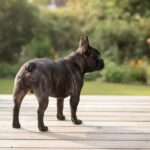
No, not officially, and not genetically either. What sellers call a grey French Bulldog is a blue French Bulldog: a dog with two copies of the recessive dilution gene at the D locus, which waters black pigment down to a smoky, slate-silver shade. Spell it grey or gray, the genetics don’t care. Breeders lean on “grey” because it photographs well in a search listing and sounds softer than “dilute,” but there’s no separate grey gene hiding anywhere. It’s one shade in the wider map of French Bulldog colors, sitting firmly in the non-standard wing.
Grey vs blue vs lilac, decoded
The names multiply faster than the genes do. Here’s the whole mess in one table.
| What the ad says | What it is genetically | What you see |
|---|---|---|
| Grey / gray | Blue: two copies of dilution (d/d) | Slate or silvery coat, usually with darker adult eyes |
| Blue | Same dog, honest label (d/d) | Same slate-silver coat |
| Lilac | Dilution plus chocolate (d/d and b/b together) | Paler, lavender-silver coat, lighter eyes, pinkish-grey nose |
| Platinum | Cream coat over dilute genes | Pale cream body, blue-grey nose and eye rims give it away |
| Mouse | The breed standard’s historical word for the dilute coat | Same dog again, written on a disqualification list |
So a lilac is a blue with an extra ingredient, a platinum is a dilute in a cream overcoat, and grey is blue with better SEO. One family of genes, five price tags.
The coat honesty section
Dilute coats come with an asterisk called color dilution alopecia, or CDA. In some dilute dogs the hair follicles are structurally fragile, and somewhere between six months and three years the coat starts thinning, often along the back and flanks, sometimes down to patchy bald spots with flaky skin. Not every blue dog gets it, plenty keep a full coat for life, but it has no cure, only management with gentle grooming and vet-guided skin care. When I asked our vet how she’d shop for a dilute puppy, her answer was simple: look at the parents’ coats in person, both of them, and be suspicious if you’re only ever shown puppy photos. Thinning usually shows by adulthood, so full-coated dilute parents are a genuinely reassuring sign, though the breed’s existing list of health issues applies to blue dogs just as much as any other Frenchie.
Not a standard color, and what that means for the price
Blue can’t be shown in AKC conformation. The French Bull Dog Club of America’s color guide spells out that the standard’s “mouse” disqualification refers to exactly this dilute grey coat. None of that stops AKC registration, and none of it makes a blue dog less of a pet, but it does puncture the “rare and prestigious” sales pitch: the color was left out of the standard on purpose, over a century ago.
Price-wise, blue and grey Frenchies typically run $4,500 to $6,500 in the US, with lilac climbing higher still. The scam radar should ping when a seller stacks rarity words (“rare grey lilac platinum!”), refuses a video call, has no health testing to show, or prices a “grey” far above what blues go for elsewhere. High demand for this shade has made it a favorite for deposit scams and puppy mills, and a deposit sent for a silvery puppy that doesn’t exist is the most expensive grey of all.
FAQ: grey French Bulldogs
How much does a grey French Bulldog cost?
About $4,500 to $6,500 from US breeders, since grey is the same thing as blue. Lilac and other stacked dilutes go higher. Anything dramatically cheaper, especially with pressure to send a deposit fast, deserves serious suspicion.
Are grey French Bulldogs rare?
Not anymore. The dilute gene is recessive but widespread, and blue has been bred heavily for years because it sells. “Rare” in a listing is a pricing strategy, not a census.
What’s the difference between a grey and a blue French Bulldog?
Nothing. They’re the same dog with the same d/d dilute genetics. Grey, gray, and blue are interchangeable labels, with blue being the term breeders and geneticists actually use.
Do grey French Bulldogs have blue eyes?
As puppies, usually, but most eyes darken to amber or brown by a few months old. Permanently light eyes show up more often in lilac and Isabella dogs than in standard blues.
Is a grey French Bulldog recognized by the AKC?
No, not as a show color. A blue or grey Frenchie can be AKC registered, but the coat falls under the standard’s “mouse” disqualification, so it can’t compete in conformation.
Are grey French Bulldogs unhealthy?
Not automatically. They face the same breed-wide issues as every Frenchie, plus one extra risk, color dilution alopecia, that can thin the coat over time. Meeting full-coated parents and buying from a health-testing breeder shortens those odds considerably.