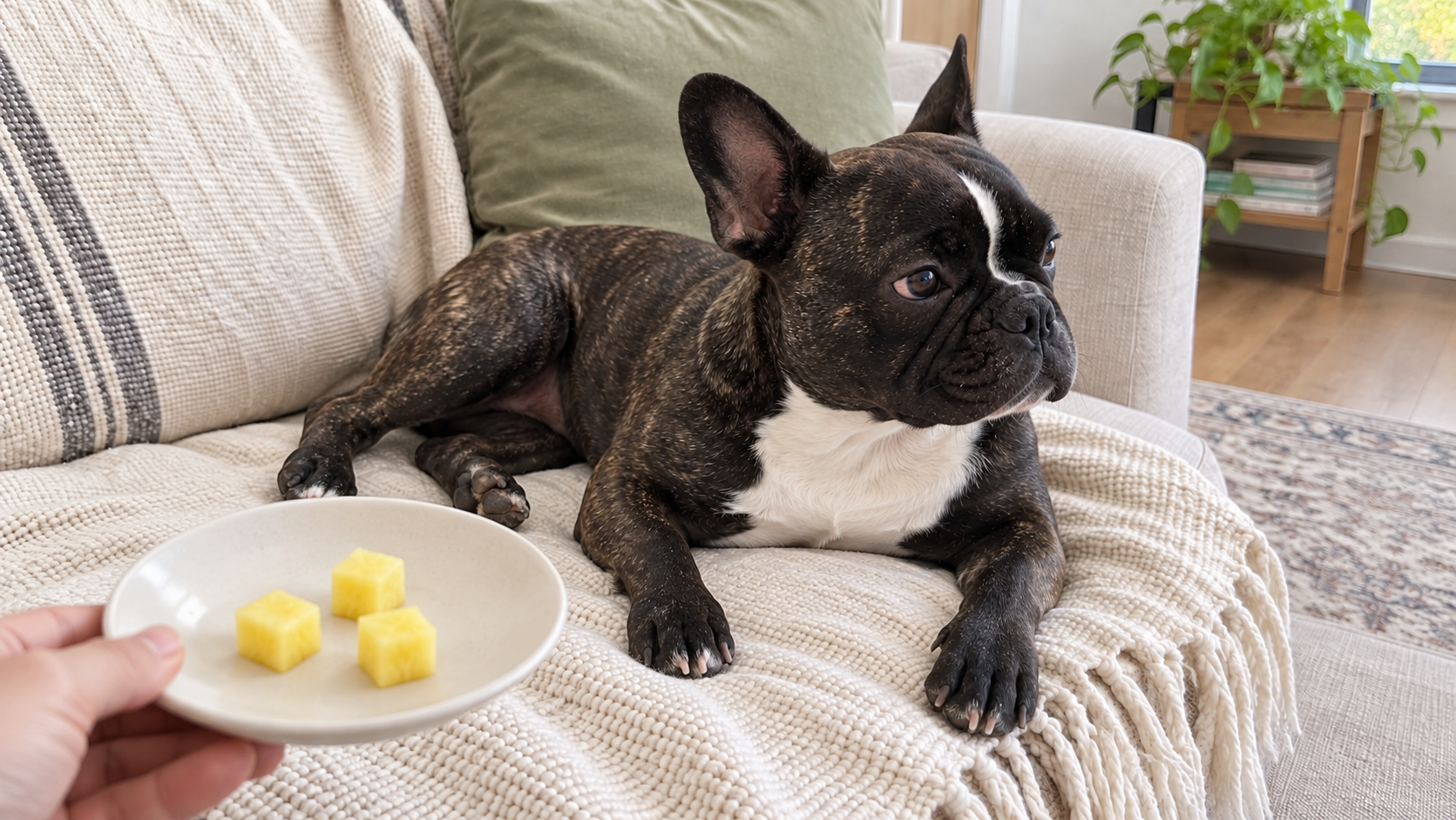

The fiddly part of sharing pineapple with a Frenchie is the preparation. The soft yellow fruit can be a treat; the tough core and spiky peel belong somewhere your dog can’t retrieve them.
Yes, French Bulldogs can eat a little plain pineapple flesh. Remove the skin, leaves and core, then cut a small taste into easy-to-manage pieces. As with the other fruits that are safe for French Bulldogs, portion size and your individual dog’s health determine whether it’s a useful snack.
Key takeaways
- Frenchies can have small amounts of plain pineapple flesh, with the skin, core and leaves removed.
- Start with a tiny piece; too much fruit can upset the stomach and add unnecessary calories.
- Pineapple isn’t a proven fix for poop eating. Call your vet promptly if your dog swallows the core.
How to prepare pineapple for a Frenchie
Start with ripe fruit that you would eat yourself. Remove all the peel, trim away the remaining tough “eyes,” cut out the central core and discard the leaves. Cut the soft flesh into small pieces, choosing a size your dog can manage comfortably. If your Frenchie tends to gulp, mash a little rather than offering a slippery cube.
The AKC’s pineapple advice supports small amounts of prepared fresh fruit and warns against the tough parts. There is no benefit to leaving a little core attached to make the treat last longer.
- Start tiny. One small piece is enough for the first taste.
- Keep it plain. Serve fruit without syrup, seasoning, a glaze or other new foods.
- Supervise. Give it when your dog is calm, rather than tossing pieces for them to catch.
- Put the scraps away. A discarded core in an open bin can be more tempting than the carefully prepared serving.
If your dog doesn’t like the taste, leave it there. Pineapple isn’t something a Frenchie needs to learn to enjoy.
How much pineapple can a French Bulldog eat?
For an adult who tolerates it, one or two small pieces occasionally is a cautious practical starting point. “Chunk” can mean anything from a tiny sliver to a large wedge, so don’t use a piece count as a reason to serve larger pieces.
All the day’s treats need to fit into the same allowance, generally no more than about 10% of daily calories. That includes pineapple, chews, training rewards and anything added to dinner. If you’re unsure of the overall food allowance, start by checking your Frenchie’s daily portions rather than estimating from how eagerly they ask for more.
Pineapple contains natural sugars and fiber, and its acidity may bother some dogs. More isn’t better. Stop offering it if you notice loose stool, vomiting or discomfort, and ask your vet about persistent or significant symptoms. Keep other new foods out of the first introduction so the change is easier to track.
Is pineapple good for Frenchies?
It can be an enjoyable extra, but it doesn’t fill a nutritional gap in a suitable complete diet. Purina’s nutrition guidance makes that distinction: dogs should already receive their needed nutrients from their main food.
Claims about bromelain, pineapple’s protein-digesting enzyme, sometimes turn a fruit snack into a supposed digestive treatment. Don’t use pineapple to treat gas, food allergy or poor digestion. Those problems need a plan based on the cause.
A dog with diabetes, a prescribed diet or ongoing gastrointestinal symptoms needs the vet’s approval before trying it. For a dog on a weight-loss plan, ask which rewards fit the calorie target. Being overweight doesn’t make a tiny piece poisonous, but it makes unplanned extras less helpful.
Fresh, frozen, canned or dried?
Fresh or plain frozen pineapple
Fresh flesh is the easiest option to portion. Plain frozen pineapple can also be used, but check for added ingredients and let it soften before cutting or mashing. PetMD’s veterinarian-reviewed guidance advises softening frozen pieces to reduce the risk of tooth damage.
A cold bite may be enjoyable, but it isn’t heatstroke prevention. On a hot day, concentrate on keeping your Frenchie cool with a cool environment, suitable activity limits and access to water.
Canned pineapple and juice
Skip syrup-packed fruit and don’t offer the can’s liquid as a drink. Juice-packed and unsweetened products aren’t all identical, so “canned” doesn’t automatically mean toxic. Still, fresh or plain frozen fruit is a simpler choice, with less need to untangle added sugars and serving information.
If your dog stole a small piece of plain canned pineapple, check the ingredients and contact your vet if you’re concerned about the amount or see symptoms. Treat a product containing a toxic ingredient very differently from a tiny bite of ordinary fruit. Fresh water should remain the everyday drink.
Dried pineapple, desserts and cooked dishes
Drying removes water and concentrates the amount of fruit in each bite, making overfeeding easy. Candied pineapple adds sugar on top. Keep those for people, along with pineapple cake, sweetened yogurt and rich desserts.
Plain cooked pineapple isn’t inherently poisonous, but a pineapple dish may contain unsuitable ingredients. Don’t share pineapple from a seasoned savory meal, pizza or dessert without considering everything else on it. If your dog eats a product containing xylitol, call for veterinary advice immediately.
Does pineapple stop dogs from eating poop?
There’s no strong scientific evidence that feeding pineapple reliably stops coprophagia, the veterinary term for eating feces. The familiar claim is that it changes the stool’s taste. Reports that it worked for one dog don’t establish a dose or a dependable treatment.
The useful first steps are more practical: pick up stools promptly, supervise toilet trips and reward your dog for moving away. Keep litter boxes and other animals’ waste out of reach. Don’t punish the dog after the fact.
VCA’s coprophagia guidance recommends considering medical as well as behavioral causes. Arrange a vet check if the behavior is new or persistent, especially alongside weight loss, increased appetite, diarrhea or unusual stools. Feeding more pineapple while waiting for it to work can introduce a second digestive problem.
What if your Frenchie eats pineapple core or skin?
Call your vet promptly. Explain what was swallowed, the approximate size, when it happened and your dog’s weight. Tough fibrous pieces can lodge in the digestive tract; don’t wait for a day or two to see whether signs develop before seeking advice.
Breathing difficulty, collapse or suspected choking is an emergency. Repeated vomiting, a painful or swollen belly, lethargy and refusal to eat also need urgent assessment. Don’t induce vomiting or give a home remedy unless a veterinary professional tells you to.
FAQs about French Bulldogs and pineapple
Can French Bulldog puppies have pineapple?
Ask your vet first. A weaned puppy eating solid food may be able to have a tiny piece of soft, prepared flesh, but fruit is optional. Avoid giving it during digestive upset, and don’t let treats displace their complete puppy food.
Can Frenchies eat pineapple every day?
Occasional small servings are the simpler approach. There’s no need for a daily pineapple habit, and a Frenchie with a restricted diet may need to skip it entirely. Individual tolerance matters more than a schedule.
Can my dog have a lick of pineapple?
A small lick of plain fresh flesh isn’t generally a concern for a healthy dog. That’s different from licking a cocktail, dessert or sweetened product. Check the other ingredients before assuming the same answer applies.
Is canned pineapple poisonous?
Pineapple flesh doesn’t become poisonous because it is canned. The concerns are syrup, added ingredients and portion size. Fresh or plain frozen fruit is preferable, and a dog with symptoms or a known dietary restriction needs individualized advice.
Is there a pineapple dose for poop eating?
No reliable, evidence-based treatment dose has been established. Don’t increase the fruit serving to chase an effect. Prevent access to stools and work with your vet on the underlying behavior or medical issue.