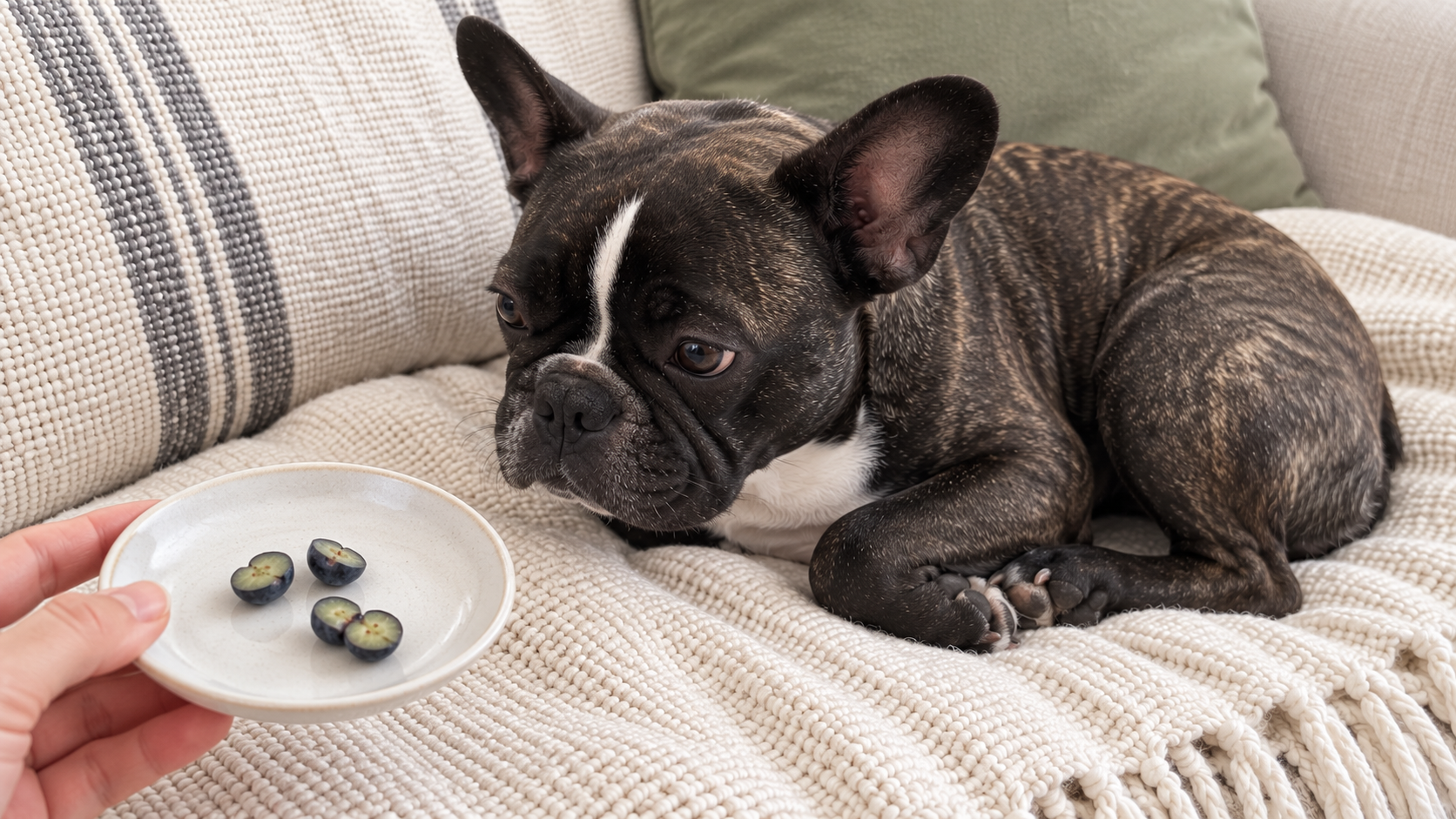

Blueberries look ready-made for a dog treat: small, easy to count and no peeling required. The small, round shape is also a reason to pause if your Frenchie tends to gulp food.
Yes, French Bulldogs can eat plain blueberries in small amounts. Rinse them and squash, halve or mash them for a dog who doesn’t chew carefully. They’re one of several dog-safe fruits you can share with a Frenchie, provided the serving stays small and your dog’s health plan allows it.
Key takeaways
- Plain blueberries are safe for most Frenchies in small portions; wash and squash them for enthusiastic gulpers.
- Start with one berry and keep fruit within the allowance for all daily treats.
- Skip muffins and sweetened products. Blueberries don’t replace balanced meals or treatment for itching and digestive problems.
Are blueberries good for French Bulldogs?
As an occasional reward, yes. They offer fiber, water and plant compounds called antioxidants, without needing a coating or seasoning. VCA includes blueberries among possible training treats, and their size makes it easy to set a few aside before you start.
The “superfood” label can make this sound more dramatic than it needs to be. Your Frenchie doesn’t need blueberries to make a suitable complete diet healthy. Studies involving antioxidant-enriched diets don’t establish that a few berries will prevent cancer, cure itchy skin or preserve an individual dog’s memory.
The practical benefit is straightforward: if your dog likes them and tolerates them, you have another small reward available. If they drop the berry on the floor and stare at you, their regular food may be a better choice. Hill’s veterinary nutrition advice also stresses that berries can’t replace balanced nutrition or veterinary care.
How many blueberries can a Frenchie have?
Start with one squashed berry. For an adult who tolerates them, a few berries at a time is enough. A small pre-counted portion is easier to manage than repeatedly dipping into the carton while your dog waits beside you.
There isn’t a proven French-Bulldog-specific daily dose. Published portion charts are general guidance, and berry size varies. Your dog’s body condition, age, other treats and medical needs matter more than reaching a particular number.
Keep all extras together at no more than about 10% of daily calories, as recommended in AAHA’s feeding guidance. That includes chews, food used to hide tablets and other fruit. It doesn’t mean 10% blueberries plus another allowance for biscuits.
For a Frenchie watching their weight, taking rewards from the measured daily food ration is another option. If you prefer prepared rewards for walks, compare the calorie information on training treats for French Bulldogs and decide the session’s allowance in advance.
Fresh, frozen or mashed: how to serve them
Use sound, ripe berries. Rinse them under running water and remove any stems. Offer a small amount while your dog is calm and you can watch them eat.
- Squashed or halved: a useful default for a Frenchie who swallows treats quickly.
- Mashed into dinner: stir a little through the normal meal rather than adding a whole handful on top.
- On a lick mat: spread a thin smear of mashed fruit. Keep the mat supervised and wash it afterward.
- Previously frozen: choose unsweetened berries and let them soften before squashing. Hard whole berries are a poor choice for a gulper.
PetMD’s veterinarian-reviewed blueberry advice identifies choking as a concern for small dogs and fast eaters and recommends cutting or mashing. If your dog coughs, gags or seems to struggle with swallowing meals, ask your vet about that pattern rather than trying different treat shapes on your own.
Blueberries can also be mixed with a little plain, unsweetened yogurt if your dog already tolerates dairy. Check for unsafe sweeteners and count the yogurt too. There’s no need to add it; mashed berries work on their own.
A chilled treat is pleasant on a warm day, but it doesn’t make hot weather safe. Keep your Frenchie’s heat precautions in place: a berry isn’t protection against overheating.
Can blueberries cause diarrhea or an allergic reaction?
Too many can upset a dog’s stomach, and some dogs simply don’t tolerate them well. Introduce one new food at a time and stop if you notice vomiting, loose stool or discomfort. A larger portion won’t make a reluctant digestive system get used to fruit faster.
Persistent itching, paw licking or recurring ear trouble needs a proper assessment. Blueberries neither diagnose nor treat food allergy. VCA explains that food allergy requires a controlled elimination diet; casual ingredient swaps and a single symptom after a snack don’t provide the same answer.
During a prescribed elimination trial, don’t add berries unless your vet approves them. The same check applies to diabetes, ongoing gastrointestinal illness and other conditions with specific dietary restrictions. Dogs on a successful treatment diet often benefit most from keeping their extras predictable.
What about muffins, yogurt cups and dried blueberries?
A blueberry muffin comes with more than blueberries. Sugar and fat can make it an unsuitable reward, and recipes can include chocolate, raisins or unsafe sweeteners. Flavored yogurt, pie filling, jam and syrup-packed fruit need the same caution. Plain berries are the simpler choice.
Xylitol can be life-threatening for dogs. If it’s in a product your dog ate, call your veterinarian or an animal poison service straight away.
Dried and freeze-dried fruit have less water, so a familiar-looking spoonful can contain much more fruit than you expect. Check ingredients and serving information rather than swapping them for fresh berries scoop for scoop. A commercial dog treat containing blueberries should be judged as a whole product, including its calories and other ingredients.
FAQs about French Bulldogs and blueberries
Can Frenchies eat blueberries every day?
A few may fit a healthy adult dog’s daily plan, but there’s no need for a daily serving. Keep the total treat allowance in mind and stop if they cause symptoms. A prescribed diet or medical condition can change the answer.
Can French Bulldog puppies have blueberries?
Check with your vet before adding fruit to a puppy’s routine. If approved, offer a tiny mashed taste once the puppy is eating solid food. Avoid whole or hard-frozen berries, and keep almost all nutrition coming from their complete puppy diet.
Are blueberries a laxative for dogs?
They contain fiber, and too much may lead to loose stool, but that doesn’t make them a constipation treatment. Straining, repeated unproductive attempts or a painful abdomen need veterinary advice. Increasing fruit could delay the care your dog needs.
Can dogs eat wild blueberries?
Correctly identified blueberries aren’t inherently unsafe, but an unidentified berry outdoors is a different matter. Don’t let your Frenchie forage from an unknown plant. If they eat unknown berries, photograph the plant and contact your vet for guidance.
Are blueberries better than other fruit?
There’s no single best fruit for every Frenchie. Preparation, portion size and tolerance matter more. A small piece of watermelon with the rind and seeds removed is another option; neither fruit is essential.
What if my dog eats a lot of blueberries?
Remove the remaining fruit and call your vet for advice if the amount was large for your dog or symptoms appear. Repeated vomiting, severe diarrhea, lethargy or abdominal pain needs prompt attention. Breathing difficulty or suspected choking is an emergency.
Can Frenchies eat grapes if they can eat blueberries?
No. Grapes and raisins can cause kidney injury, and the dangerous amount is unpredictable. Contact a vet immediately after grape or raisin ingestion, even if your dog seems well.